
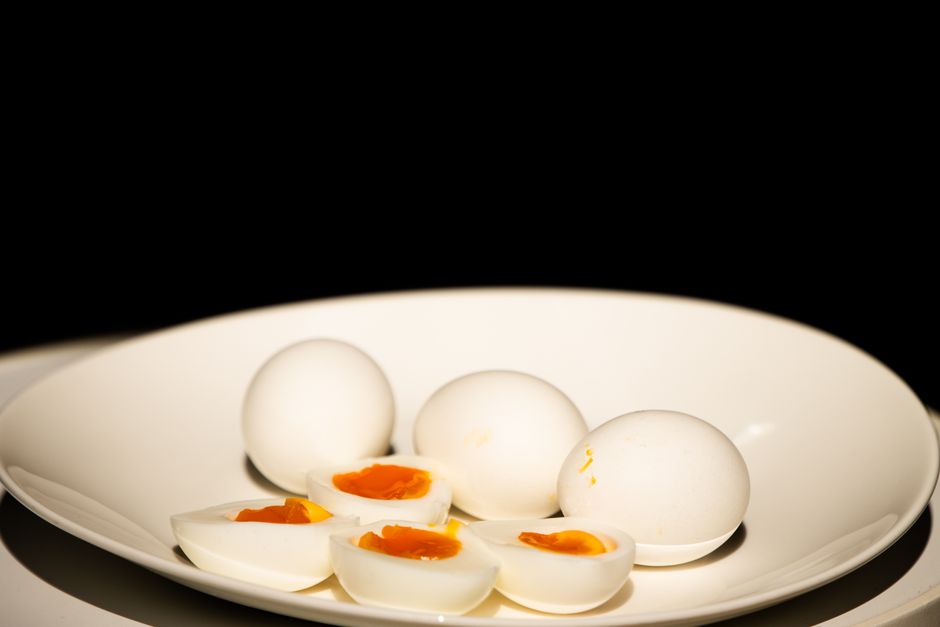
Eggs are one of the simplest foods to cook, yet boiling them confuses a lot of people. The short answer: soft-boiled eggs take about 4 to 6 minutes, medium eggs take 7 to 8 minutes, and hard-boiled eggs take 10 to 12 minutes once the water is at a rolling boil. Those times assume large eggs straight from the refrigerator. Smaller eggs cook faster. Larger eggs need more time. Altitude, pan size, and how many eggs you drop in all shift the clock a little.
What matters more than any single number is understanding why eggs behave the way they do in hot water. Once you know what heat does to egg white and yolk, you can adjust times yourself instead of memorizing a chart.
How Long To Let Eggs Boil for Soft, Medium, and Hard Yolks
Boiling time is really yolk-setting time. Egg white firms up first, around 140°F to 149°F. The yolk thickens later, starting near 149°F and turning fully solid around 158°F to 176°F. That gap is why a soft-boiled egg can have a fully cooked white and a runny yolk at the same time.
For large eggs placed into already-boiling water:
| Doneness | Boiling Time | Yolk Texture |
|---|---|---|
| Soft-boiled | 4–6 minutes | Liquid or jammy center |
| Medium-boiled | 7–8 minutes | Creamy, partly set |
| Hard-boiled | 10–12 minutes | Fully firm, pale yellow |
These times are for the boiling phase only. They do not include the minutes it takes to bring water to a boil. If you start eggs in cold water and heat everything together, the timing changes and becomes harder to control.
Why Do Boiled Egg Times Vary So Much?
No single number works for every kitchen because several variables affect how fast heat reaches the yolk. The biggest ones are egg size, starting temperature, and how much water is in the pot.
- Egg size: A medium egg may need 1 to 2 minutes less than a large egg. An extra-large or jumbo egg may need 1 to 2 minutes more.
- Starting temperature: Cold eggs straight from the fridge take longer than eggs that have sat at room temperature.
- Water volume: A small pot with little water loses heat when eggs go in and takes longer to return to a boil.
- Number of eggs: A crowded pot cools down more and recovers more slowly.
- Altitude: At higher elevations, water boils below 212°F, so eggs need more time to reach the same doneness.
This is why a recipe that works perfectly for one person can produce a runny yolk for another. The technique matters as much as the timer.
Should You Start Eggs in Cold Water or Boiling Water?
Both methods work, but they produce slightly different results and have different trade-offs. Starting eggs in cold water and bringing everything to a boil is gentler. It reduces the chance of shells cracking from sudden temperature shock. The downside is that timing is less precise because the moment boiling begins can vary.
Starting eggs in already-boiling water gives you a clear starting point. You know exactly when the clock begins. The risk is cracking if you drop cold eggs into furiously boiling water. Lower them in gently with a spoon to reduce that risk.
Many home cooks prefer the boiling-water start for consistency. Professional kitchens often use it because it makes timing repeatable across batches. Neither method is wrong. Just pick one and stay consistent so your times become reliable.





How Do You Get Easy-to-Peel Hard-Boiled Eggs?
Peeling problems come down to how the egg white bonds to the inner shell membrane. Fresh eggs are harder to peel because their whites have a lower pH and cling more tightly to the membrane. As eggs age, they lose carbon dioxide through the shell, the pH rises, and the white pulls away more easily.
For easier peeling, use eggs that are at least 7 to 10 days old. If you only have fresh eggs, a few approaches may help:
- Add a small amount of baking soda to the boiling water. This raises the pH of the water and can make peeling easier, though results vary.
- Transfer eggs immediately to an ice water bath after boiling. The cold shock helps the egg contract away from the shell.
- Tap the egg all over, roll it gently on a hard surface, and peel under cool running water.
The ice bath also stops the cooking process. Without it, residual heat keeps cooking the egg even after you remove it from the pot, which can push a perfectly medium yolk into hard territory.
What Happens If You Boil Eggs Too Long?
Overcooked eggs develop a greenish-gray ring around the yolk. This is iron from the yolk reacting with sulfur from the white, forming iron sulfide. It is harmless. It does not make the egg unsafe to eat. It just looks unappealing and signals that the egg was cooked past the ideal point.
Long boiling also makes the white rubbery and the yolk dry and crumbly. The flavor becomes more sulfurous. For hard-boiled eggs, 10 to 12 minutes is usually the sweet spot. Going past 15 minutes increases the chance of that green ring and a chalky texture.
If you want hard-cooked eggs with a creamy yolk rather than a dry one, pull them at 10 minutes, then ice bath immediately. The carryover heat will finish the job without overcooking.
Does Boiling Destroy Nutrients in Eggs?
Cooking eggs does change some nutrients, but boiling is one of the gentler methods. The protein in eggs becomes more digestible when cooked. Raw egg whites contain avidin, a protein that binds biotin and can interfere with its absorption. Cooking deactivates avidin, which is one reason cooked eggs are generally preferred over raw.
Some heat-sensitive vitamins, like certain B vitamins, may decrease slightly with longer cooking times. The effect is modest for typical boiling times. Hard-boiling for 10 to 12 minutes does not strip eggs of their nutritional value. Eggs remain a good source of high-quality protein, vitamin D, choline, and several B vitamins after boiling.
One clarification worth making: the idea that boiling eggs destroys all their nutrients is not supported by evidence. Some loss occurs with any cooking method, but boiled eggs are still a nutrient-dense food.
Can You Boil Eggs Ahead of Time and Store Them?
Yes, and this is one of the most practical things about boiled eggs. Hard-boiled eggs keep in the refrigerator for about one week, according to food safety guidance from the U.S. Department of Agriculture. Keep them in their shells until you are ready to eat them. The shell protects the egg and helps it stay fresh longer.
Once peeled, hard-boiled eggs should be eaten within a few days. Store them in a covered container in the refrigerator. Do not leave boiled eggs at room temperature for more than two hours. That two-hour rule applies to most perishable foods and is a standard food safety recommendation.
Soft-boiled eggs do not store as well because the runny yolk is more perishable. If you want to make eggs ahead, hard-boil them. They hold up better and are more versatile for salads, snacks, and meal prep.
Do You Need to Add Salt or Vinegar to the Water?
Adding salt to boiling water does not meaningfully raise the boiling point at the amounts used in home cooking. You would need a very high concentration of salt to change the boiling temperature by even a small amount. So salt does not speed up cooking in any practical way.
Vinegar is sometimes added to reduce egg white leaking if a shell cracks. The acid can help the white coagulate faster when it hits the water. It does not prevent cracking in the first place. If you add vinegar, use a small amount so it does not affect flavor.
Neither salt nor vinegar is required. They are optional and their effects are minor. The most reliable factors for good boiled eggs are timing, temperature control, and an ice bath at the end.
Frequently Asked Questions
How long do you boil eggs for hard-boiled?
Hard-boiled large eggs take 10 to 12 minutes in already-boiling water. Start counting once the water returns to a rolling boil after adding the eggs.
How long do you boil eggs for soft-boiled?
Soft-boiled large eggs take 4 to 6 minutes in already-boiling water, depending on how runny you want the yolk. The white will be set while the yolk stays liquid or jammy.
Can you boil eggs for too long?
Yes, boiling eggs past about 15 minutes can cause a green ring around the yolk and a rubbery white. The green ring is harmless but signals overcooking.
Do you put eggs in cold or boiling water?
Both work, but starting eggs in boiling water gives more precise timing. Starting in cold water is gentler on the shells but makes the start time less clear.
