
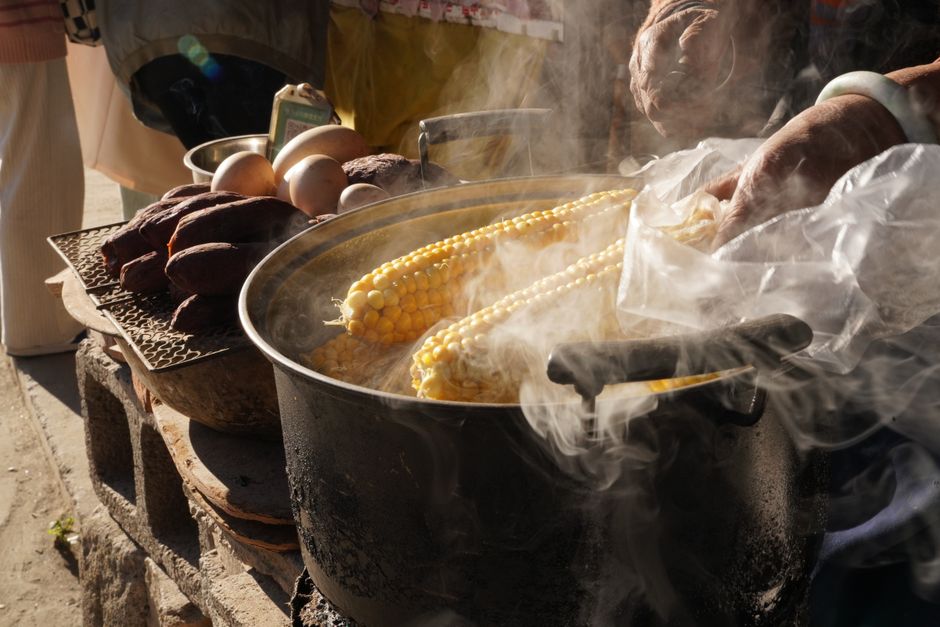
Boiling corn on the cob takes between 4 and 10 minutes depending on how you like it. For sweet, tender kernels that still have a little crunch, boil shucked ears for 4 to 5 minutes. If you prefer softer corn, go up to 8 minutes. Anything past 10 minutes and the kernels start to get mushy and lose flavor. The clock starts when the water returns to a full boil after you drop the corn in.
How Long Do You Boil Corn On The Cob For? The Exact Timeline
The short answer is 4 to 10 minutes. But the exact time depends on a few things you control.
For standard yellow or white sweet corn, 4 to 5 minutes at a rolling boil is enough. The corn is already safe to eat raw — boiling just warms it and softens the starches. If you bought corn the same day from a farm stand, 4 minutes is often perfect. The kernels will be bright, juicy, and snappy.
If you like your corn softer or you are cooking older corn that is a few days past harvest, go with 7 to 8 minutes. Older corn has more starch and less sugar. The extra time helps break down the starches so the corn tastes sweet again.
At 10 minutes, the texture changes noticeably. The kernels become plump and tender but lose that pop. Some people prefer this. Just do not go past 10 minutes. After that, the corn releases sugars into the water and the flavor goes flat. The texture turns mushy and the kernels wrinkle.
Here is a quick timeline reference:
| Doneness | Boil Time | Texture |
|---|---|---|
| Crunchy-tender | 4 minutes | Bright, juicy, slight snap |
| Classic tender | 5–6 minutes | Soft but not mushy |
| Soft | 7–8 minutes | Tender, plump kernels |
| Very soft | 9–10 minutes | Mushy edge, still edible |
Does Boiling Time Change If You Leave the Husks On?
Yes. Corn boiled in the husk takes longer because the husk insulates the kernels from the hot water.
If you boil corn with the husks on, add 5 to 8 minutes to the total time. You are not just cooking the kernels — you are steaming them inside the husk. The husk also traps moisture, which some people like because it keeps the corn from getting waterlogged.
The method is simple. Trim the silks sticking out of the top but leave the husk intact. Soak the whole ear in cold water for 10 minutes first. This stops the husk from burning and adds steam. Then boil for 10 to 15 minutes total. The corn steams inside, and the husk peels off easily after cooking.
Does it taste different? Some people say yes. The corn ends up slightly less sweet than shucked corn boiled directly in water. The steam inside the husk does not dissolve surface sugars the same way boiling water does. But the texture is consistently tender and never mushy.
If you are cooking for a crowd and want to keep corn warm for a while, the husk-on method works well. The husk holds heat longer than bare corn.
What Does Research on Boiling Corn Show About Nutrient Loss?
Research shows that boiling corn causes some loss of water-soluble nutrients. Vitamin C and several B vitamins leach into the cooking water. A 2012 study in the Journal of Food Science found that boiling sweet corn reduced vitamin C content by about 25 percent compared to raw corn. Steaming and microwaving caused less loss.
But here is what most articles do not tell you. Corn is not a major source of vitamin C in most diets. You get far more vitamin C from a single orange or bell pepper. The bigger concern is folate, which also leaches into water. Boiling can reduce folate in corn by around 15 to 20 percent.
What does not change much? Fiber, carbohydrates, and most minerals like potassium and magnesium stay in the kernels. The calories remain the same.
The practical takeaway is this. If you boil corn, do not throw away the water. Use it as a base for soup, rice, or cooking beans. That water contains the nutrients that leached out. You get them back by using the water in another dish.
As of 2026, current research still supports that 4 to 6 minutes of boiling is the best balance between texture and nutrient retention for sweet corn. Longer boiling does not destroy more nutrients in a meaningful way — the loss happens in the first few minutes. After that, you are just changing texture.




What Happens If You Overboil Corn?
Overboiling corn changes it in three ways. The texture turns mushy. The flavor becomes flat. And the color fades from bright yellow to a dull, pale shade.
Here is what happens chemically. Corn kernels contain pectin, a natural fiber that holds plant cells together. Heat breaks down pectin. At 4 minutes, the pectin softens just enough to make the kernels tender. At 15 minutes, the pectin has broken down so much that the cells separate. The kernel collapses and becomes mushy.
The flavor loss is more straightforward. Corn’s sweetness comes from natural sugars. Those sugars dissolve in hot water. The longer corn sits in boiling water, the more sugar leaves the kernels and enters the water. After 12 to 15 minutes, the water tastes sweet and the corn tastes bland.
Some people try to fix overboiled corn by adding salt or butter. That masks the problem but does not fix the texture. The corn will still be mushy.
One common myth is that adding sugar to the water prevents flavor loss. This is not true. The sugar in the water does not go back into the corn. It just makes the water sweeter. If you drink the water or use it for cooking, that helps. But the corn itself will not reabsorb sugar.
The only reliable fix for bland corn is to stop boiling before 10 minutes. If you accidentally overboil, use the corn in soups, chowders, or corn salad where the texture matters less.
Is It Better to Boil or Steam Corn?
Steaming corn takes longer but gives you more control over texture. Boiling is faster but can waterlog the kernels if you leave them in too long.
Here are the differences:
Which one is better? It depends on what you want. If you want bright, snappy corn with a clean corn taste, steaming is slightly better. The kernels stay drier and the flavor is more concentrated.
If you want corn that is evenly cooked and ready fast, boiling is fine. Just set a timer. Do not guess.
Some people also microwave corn in the husk. That takes 3 to 5 minutes per ear. The corn steams inside its own husk. Current research suggests this method preserves more nutrients than boiling because the cooking time is short and the kernels are not submerged in water.
But the difference is small. For most people, boiling works perfectly well. Do not let perfect be the enemy of good corn.
Common Mistakes People Make When Boiling Corn
Most mistakes come from adding things to the water that do not help or boiling too long.
Adding salt to the water. Salt toughens corn kernels. It draws moisture out of the corn and makes the skins chewy. Add salt after cooking, not during. If you must salt the water, use less than half a teaspoon for a large pot.
Adding milk or sugar. Some recipes claim milk makes corn creamier. It does not. Milk proteins can curdle in boiling water and leave residue on the kernels. Sugar in the water does not make the corn sweeter — it just sweetens the water. Skip both.
Boiling frozen corn the same way as fresh. Frozen corn is already blanched. It only needs 2 to 3 minutes in boiling water to heat through. Boiling frozen corn for 8 minutes turns it into mush.
Dropping corn into cold water. If you put corn in cold water and then bring it to a boil, the kernels spend too long in warm water. This starts the sugar loss before the water even boils. Always bring the water to a full boil first, then add the corn.
Letting corn sit in hot water after cooking. Once you turn off the heat, the corn keeps cooking. If you are not serving immediately, pull the corn out and put it on a plate. Covering the pot with the lid on keeps the corn cooking and can push it past done in 2 minutes.
Frequently Asked Questions
Should I boil corn with the husk on or off?
Boil with the husk off for faster cooking in 4 to 5 minutes. Boil with the husk on if you want steamed corn that takes 10 to 15 minutes and stays warm longer.
Can I add salt to the water when boiling corn?
No. Salt toughens the kernels. Add salt and butter after cooking instead.
How do I know when boiled corn is done?
Pierce a kernel with a fork. If it feels tender but still offers slight resistance, it is done. The color should be bright yellow and the kernels should look plump.
Is it safe to eat corn raw?
Yes. Sweet corn is safe to eat raw. Boiling is for texture and warmth, not safety.
