
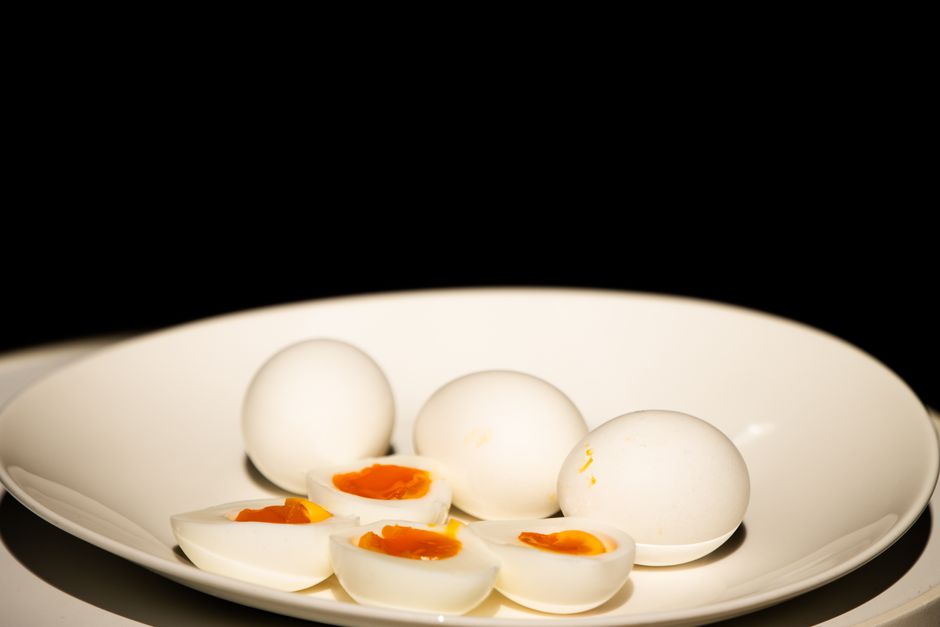
A soft-boiled egg with a runny yolk and a just-set white is one of the simplest breakfasts you can make. The exact time depends on your stove, your pot, and your altitude, but the standard range is reliable. For a soft yolk with a fully set white, boil large eggs for 6 to 7 minutes. At 6 minutes the yolk is quite runny, and at 7 minutes it is thicker but still soft. This guide explains the timing, the method, and how to adjust it to get exactly the egg you want.
How Long To Boil Eggs For Soft Yolk
The answer is 6 to 7 minutes for large eggs straight from the refrigerator into boiling water. Timing starts the moment the eggs hit the boiling water, not when you turn on the stove. If you prefer a yolk that barely holds its shape, aim for 6 minutes. If you want a yolk that is soft but almost set, go for 7 minutes.
Egg size changes the time. Medium eggs need about 30 seconds less. Extra-large eggs need about 30 seconds more. If your eggs are at room temperature rather than cold from the fridge, reduce the time by about 30 seconds. The difference is small, but it matters if you want consistency.
What Happens Inside The Egg As It Cooks
Egg white and egg yolk set at different temperatures. The white proteins begin to coagulate around 144°F (62°C) and are fully set by about 180°F (82°C). The yolk proteins start to thicken around 149°F (65°C) and become firm at higher temperatures.
This temperature gap is why a soft-boiled egg works at all. The white surrounds the yolk and heats faster, so it sets while the yolk remains liquid. The timing method simply controls how long the center of the egg stays below the temperature where the yolk fully firms up.
At 6 minutes, the center of a large egg reaches roughly 158°F (70°C). That is hot enough to set the white but not hot enough to fully set the yolk. At 7 minutes, the center is closer to 165°F (74°C), which thickens the yolk noticeably.
The Standard Method For Soft-Boiled Eggs
This method is the most reliable way to get consistent results. It works for any quantity of eggs as long as they fit in a single layer in the pot.
- Bring a pot of water to a rolling boil. Use enough water to cover the eggs by at least an inch.
- Lower the eggs gently into the water with a spoon. Dropping them can crack the shells.
- Start your timer immediately. Do not wait for the water to return to a boil.
- Keep the water at a gentle boil, not a violent rolling boil, which can bounce the eggs and crack them.
- When the timer goes off, remove the eggs and place them in an ice water bath for 1 to 2 minutes.
The ice bath stops the cooking instantly. Without it, residual heat continues to cook the yolk for another minute or two. If you skip the ice bath, your 6-minute egg can end up closer to a 7-minute egg by the time you eat it.
For easy peeling, tap the shell gently on the counter and roll the egg under your palm to crack it all over. Peel under running cold water. Fresh eggs are harder to peel than older eggs because the membrane clings to the shell. If peeling is a struggle, use eggs that are a week or more old.





How To Adjust For Your Stove And Pot
Your stove and pot affect the timing more than you might expect. A wide pot with more water takes longer to return to a boil after you add cold eggs. A narrow pot with less water recovers faster. This is why the same 6-minute recipe can produce different results in different kitchens.
If your first attempt is undercooked, add 30 seconds next time. If it is overcooked, subtract 30 seconds. After two or three tries, you will have the exact time for your setup. Write it down. This is the only way to get truly consistent results.
Altitude also matters. Water boils at lower temperatures at higher elevations, so eggs cook more slowly. At 5,000 feet, water boils at about 203°F (95°C) instead of 212°F (100°C). You may need to add 1 to 2 minutes to the cooking time. At sea level, the standard times work as written.
Soft-Boiled vs. Medium-Boiled vs. Hard-Boiled
The same boiling method works for every doneness level. Only the time changes. This table shows the standard times for large eggs straight from the refrigerator into boiling water.
| Doneness | Time | Yolk Texture |
|---|---|---|
| Soft-boiled | 6 minutes | Runny, liquid center |
| Soft-boiled | 7 minutes | Thick but soft, barely holds shape |
| Medium-boiled | 8 to 9 minutes | Soft and creamy, no longer runny |
| Hard-boiled | 10 to 12 minutes | Fully set, firm |
At 10 minutes the yolk is fully set but still moist. At 12 minutes it is dry and crumbly. Longer than 12 minutes can create a greenish-gray ring around the yolk. This comes from iron in the yolk reacting with sulfur in the white. It is harmless and only affects appearance, but it signals the egg is overcooked.
Is It Safe To Eat A Runny Yolk
Runny yolks are safe for most healthy adults, but there are real risks. The concern is Salmonella, a bacteria that can be present inside eggs even when the shell looks clean. Cooking eggs until both the white and yolk are firm kills the bacteria.
The white reaches a safe temperature before the yolk in a soft-boiled egg. The yolk may not reach 160°F (71°C), the temperature that kills Salmonella instantly. At 6 minutes, the yolk is often below this temperature.
People at higher risk should avoid runny yolks entirely. This includes pregnant women, young children, older adults, and anyone with a weakened immune system. For these groups, eggs should be cooked until both the white and yolk are firm. If you are in a higher-risk group, stick to hard-boiled eggs or cook the yolk to at least 160°F (71°C).
Refrigerated eggs reduce but do not eliminate the risk. Salmonella grows slowly at refrigerator temperatures, so keeping eggs cold limits bacterial growth. Pasteurized eggs are available in some stores and are a safer option for soft yolks, though they are harder to find and more expensive.
Common Mistakes That Ruin Soft-Boiled Eggs
The most common mistake is starting the timer too early. The timer must start when the eggs enter the boiling water, not when you turn on the heat. Starting the timer at the wrong point adds a minute or more of actual cooking time.
The second most common mistake is skipping the ice bath. Eggs continue cooking from residual heat after you remove them from the water. A 6-minute egg left on the counter for 3 minutes becomes a 7-minute egg. The ice bath is not optional if you want precise results.
Another mistake is using water that is not boiling vigorously enough. If the water is only simmering when you add the eggs, the cooking time stretches and becomes unpredictable. The water should be at a full rolling boil before the eggs go in.
Why Some Eggs Are Harder To Peel
Peeling difficulty is not about cooking time. It is about egg freshness and the pH of the egg white. Fresh eggs have a lower pH, which makes the inner membrane stick to the shell. As eggs age, they absorb air, the pH rises, and the membrane separates from the shell more easily.
If you buy eggs from a farm or a farmers market, they may be very fresh and very hard to peel. Store-bought eggs are usually a few weeks old by the time you buy them and peel more easily. For soft-boiled eggs, peeling is less of an issue because you often eat them from the shell with a spoon.
Adding vinegar or salt to the water does not make eggs easier to peel. This is a common kitchen myth. The pH of the egg white matters, not the pH of the water. If you need easy-to-peel eggs, buy them a week or more before you plan to cook them.
How To Serve Soft-Boiled Eggs
The classic way to eat a soft-boiled egg is in an egg cup. Slice off the top with a knife or a special egg topper, and scoop out the yolk and white with a small spoon. Season with salt and pepper to taste.
Soft-boiled eggs also work well over toast, rice, or salads. The runny yolk acts as a sauce. For toast, mash the egg with a fork and spread it. For rice dishes, place the whole peeled egg on top and break it open so the yolk runs over the grain.
If you plan to peel a soft-boiled egg, cool it in the ice bath for the full 2 minutes. This firms the white slightly and makes the egg easier to handle without breaking. Peel gently under running water to avoid tearing the delicate white.
Frequently Asked Questions
How long do you boil eggs for a runny yolk?
Boil large eggs for 6 minutes for a runny yolk. At 7 minutes the yolk is thicker but still soft.
Do you start the timer when the water boils or when you put the eggs in?
Start the timer the moment the eggs go into the boiling water. This is the only way to get consistent results.
Can you eat soft-boiled eggs while pregnant?
No, pregnant women should avoid runny yolks because of the risk of Salmonella. Cook eggs until both the white and yolk are firm.
Why is my soft-boiled egg hard to peel?
Fresh eggs are harder to peel because the membrane sticks to the shell. Use eggs that are at least a week old for easier peeling.
