
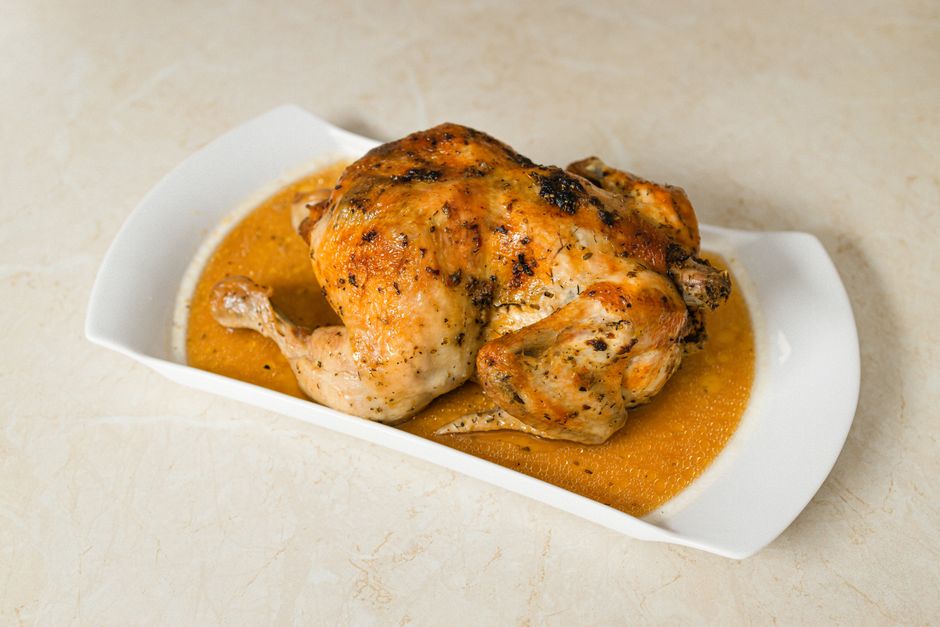
Baking chicken is simple, but getting the timing right matters for both safety and texture. The answer depends on the cut you are cooking, the oven temperature, and whether the meat has a bone. For boneless, skinless chicken breasts at 400°F, plan on 20 to 30 minutes. Bone-in pieces and thighs need longer, usually 35 to 45 minutes. The only reliable way to know the chicken is done is to check the internal temperature with a meat thermometer — it must reach 165°F at the thickest part.
What Is the Safe Internal Temperature for Chicken?
The USDA sets the safe minimum internal temperature for all poultry at 165°F. This temperature kills Salmonella and Campylobacter, the bacteria most often linked to chicken.
You must check the temperature in the thickest part of the meat, avoiding bone and fat. The thermometer should read 165°F before you remove the chicken from the oven. Carryover cooking will raise the temperature a few degrees while the meat rests, but you should not rely on that to reach safety.
How Long Should You Bake Chicken Breasts?
Boneless, skinless chicken breasts bake fastest. At 400°F, they typically take 20 to 30 minutes depending on thickness. A thinner breast might be done at 18 minutes, while a thicker one could need 30.
Bone-in, skin-on breasts take longer because the bone conducts heat slowly and the meat is usually thicker. Plan for 35 to 45 minutes at 400°F. The skin helps keep the meat moist, but it also insulates, so the internal temperature rises more slowly.
The single biggest mistake is baking by time alone. Breasts vary in size from about 4 ounces to over 10 ounces. A 4-ounce breast and a 10-ounce breast cannot cook in the same time. Use the thermometer, not the clock, as your final judge.
How Long Should You Bake Chicken Thighs and Legs?
Dark meat — thighs and drumsticks — contains more fat and connective tissue than white meat. This makes it more forgiving. It stays moist even if it cooks slightly past 165°F. In fact, many cooks prefer thighs at 175°F to 185°F because the higher temperature breaks down connective tissue for a more tender bite.
Bone-in, skin-on chicken thighs take about 40 to 45 minutes at 400°F. Boneless thighs cook faster, usually 25 to 30 minutes. Drumsticks follow a similar timeline to bone-in thighs.
Dark meat does not dry out as easily as breasts, so the timing window is wider. Still, check the temperature. Undercooked dark meat near the bone is both unsafe and unpleasant to eat.




How Long Should You Bake a Whole Chicken?
A whole chicken takes significantly longer than individual pieces. At 375°F, a 4- to 5-pound bird typically needs 1 hour and 15 minutes to 1 hour and 30 minutes. A larger bird, around 6 to 7 pounds, may need up to 2 hours.
The safe endpoint is the same: 165°F. But with a whole chicken, you must check multiple spots. Take the temperature in the inner thigh near the breast and in the thickest part of the breast. The thigh typically finishes last because it is denser and closer to the cavity.
Let the chicken rest for 10 to 15 minutes after removing it from the oven. This allows the juices to redistribute and makes carving easier. The internal temperature will continue to rise slightly during this time.
Does Oven Temperature Change the Baking Time?
Yes. Higher oven temperatures cook chicken faster, but they also increase the risk of a dry exterior before the center reaches temperature. Lower temperatures cook more gently but take longer.
Common approaches include:
- 350°F: A moderate temperature. Boneless breasts take 25 to 35 minutes. Bone-in pieces take 45 to 55 minutes.
- 375°F: A balanced middle ground. Whole chickens do well here.
- 400°F: A hotter oven for crisper skin. Individual pieces cook well at this temperature.
- 425°F: High heat for maximum browning. Watch carefully because the exterior can overcook before the center is safe.
No oven temperature changes the safety threshold. The chicken still must reach 165°F internally, regardless of how hot or fast you cook it.
Why Does Chicken Sometimes Come Out Dry?
Dry chicken is almost always overcooked chicken. Breasts are especially prone because they contain very little fat. Once the internal temperature passes 165°F, the muscle fibers squeeze out moisture quickly.
Brining helps. A simple saltwater brine for 30 minutes to a few hours before baking adds moisture and seasoning to the meat. Even a dry brine — rubbing salt directly on the surface and letting it sit — improves texture.
Another factor is resting. Cutting into chicken immediately after baking releases the juices onto the cutting board instead of keeping them in the meat. Resting for 5 to 10 minutes for pieces and 10 to 15 minutes for a whole bird allows the proteins to relax and reabsorb moisture.
If you consistently overcook chicken, consider pulling it from the oven at 160°F for breasts. Carryover cooking will bring it to 165°F during the rest. This is safe because the temperature continues climbing after removal. For thighs, pulling at 170°F to 175°F works well for the same reason.
Can You Bake Chicken From Frozen?
Yes, but it takes about 50 percent longer than thawed chicken. A frozen boneless breast might need 35 to 45 minutes at 400°F. A frozen whole chicken can take 2 hours or more.
The safety rule still applies: the internal temperature must reach 165°F. The risk with frozen chicken is uneven cooking. The outside can brown and appear done while the center remains frozen or undercooked. Always verify with a thermometer inserted into the thickest part.
For best results, thaw chicken in the refrigerator overnight before baking. This gives you more control over the cooking process and reduces the risk of a raw center.
How to Tell if Chicken Is Done Without a Thermometer
You cannot reliably tell if chicken is done by looking at it. Color is not a dependable indicator. Fully cooked chicken can still look pink near the bone, and properly cooked meat is not always white throughout.
Some people use the juice test — piercing the meat and checking that the juices run clear. This is not a reliable safety check. The only accurate method is a thermometer reading of 165°F.
A digital instant-read thermometer costs little and removes all guesswork. Insert it into the thickest part of the meat, wait a few seconds for the reading to stabilize, and you have your answer. This is the standard used by professional kitchens and food safety authorities.
Does Marinating or Stuffing Change the Baking Time?
Marinating does not significantly change baking time. A marinade adds flavor and can improve moisture, but the chicken still cooks at roughly the same rate.
Stuffed chicken is different. If you bake a whole chicken with stuffing inside the cavity, the stuffing must also reach 165°F. This often adds time because the cold stuffing lowers the internal temperature of the bird. The stuffing can slow cooking by 15 to 30 minutes depending on the amount and starting temperature.
For food safety, the USDA recommends cooking stuffing separately whenever possible. If you do stuff the bird, fill the cavity loosely and check the stuffing temperature in the center before serving.
Frequently Asked Questions
How long does chicken take to bake at 400°F?
Boneless, skinless chicken breasts take 20 to 30 minutes at 400°F. Bone-in pieces and thighs take 35 to 45 minutes.
Is chicken safe to eat at 160°F?
No, 165°F is the safe minimum internal temperature for all poultry according to the USDA. If you pull chicken at 160°F, carryover cooking may raise it to 165°F during rest, but you should verify the final temperature.
How long does a whole chicken take to bake at 375°F?
A 4- to 5-pound whole chicken takes about 1 hour and 15 minutes to 1 hour and 30 minutes at 375°F. Check that the thigh and breast both reach 165°F.
Can you bake chicken without a thermometer?
You can, but it is not recommended. Color and clear juices are not reliable indicators of doneness. A meat thermometer is the only accurate way to confirm chicken has reached 165°F.
