
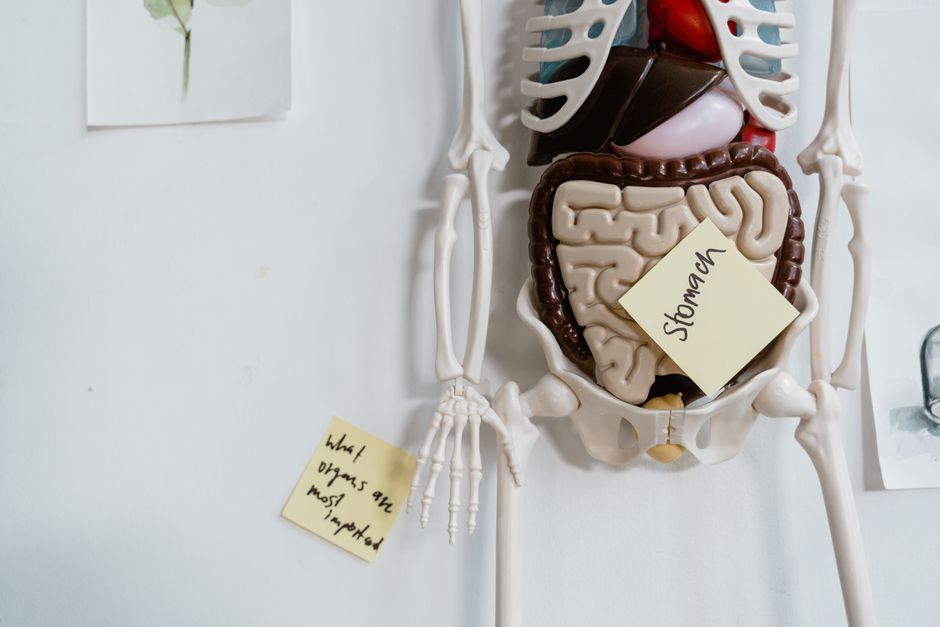
Your large bowel, also called the large intestine, is about 5 feet long. That is roughly 1.5 meters. It runs from the end of your small intestine to your anus. This tube is wider than your small intestine but much shorter. Most people picture a longer digestive tract, but the large bowel does its main job in those 5 feet.
How Long Is Your Large Bowel Compared to the Small Intestine?
The small intestine is much longer. It measures about 20 feet. That is nearly four times the length of the large bowel. The names can be confusing. The small intestine is called “small” because it is narrower, not shorter.
The large bowel is wider in diameter. Its main job is to absorb water and salts from digested food. The small intestine absorbs most of your nutrients. By the time food reaches the large bowel, most of the useful material is already out of it.
Your large bowel also houses billions of bacteria. These microbes ferment leftover fiber and produce some vitamins, like vitamin K and some B vitamins. This bacterial community is often called your gut microbiome.
What Are the Sections of the Large Bowel?
The large bowel is not one simple tube. It has several named parts. Each part has a specific position in your abdomen.
- Cecum: A pouch at the start. The appendix attaches here.
- Ascending colon: Travels up the right side of your abdomen.
- Transverse colon: Crosses the upper abdomen from right to left.
- Descending colon: Travels down the left side.
- Sigmoid colon: An S-shaped curve near the pelvis.
- Rectum: The final straight section that stores stool.
- Anal canal: The last inch or two, ending at the anus.
Each section contributes to the same overall process. Water absorption happens mostly in the first half. Stool formation and storage happen in the latter sections.
How Does the Length Affect Digestion?
Food moves through the large bowel slowly. It can take anywhere from 12 to 48 hours for material to travel the full 5 feet. This slow pace gives the bowel time to pull water back into your body.
If material moves too fast, water does not get absorbed. The result is diarrhea. If material moves too slowly, too much water is removed. The result is constipation. This is why hydration matters so much for bowel health.
The large bowel also moves material with wave-like muscle contractions. These are called peristaltic waves. They are stronger after meals. This is why many people feel the urge to have a bowel movement after eating.
One common misconception is that the bowel “detoxes” the body. The liver and kidneys do that work. The large bowel absorbs water and forms stool. It does not have a special detox role that other organs cannot do.





Does Bowel Length Vary Between People?
Yes, there is natural variation. Some people have a slightly longer or shorter large bowel. This variation is normal and rarely causes problems on its own.
Some medical conditions can change the effective length of the bowel. Surgical removal of part of the colon is one example. This is called a colectomy. People can live well without their full colon, though they may need more careful attention to hydration and diet.
Certain conditions can cause the bowel to stretch or dilate. This is different from being naturally longer. A stretched bowel does not function as well. It can happen in severe chronic constipation or in conditions like toxic megacolon, which is a medical emergency.
How Is Bowel Length Measured?
Doctors rarely measure the full length of a living person’s large bowel. It is not needed for most medical care. Length is usually described during surgery or in autopsy studies.
Imaging tests like CT scans or MRIs can show the position and shape of the colon. They do not give an exact length measurement in routine practice. A colonoscopy allows a doctor to see the inside of the colon, but the scope does not measure total length precisely.
Research measurements come mostly from surgical and cadaver studies. These consistently report an average length around 5 feet. This consistency across studies gives doctors confidence in the number.
What Happens When the Large Bowel Is Shorter or Longer Than Average?
A naturally shorter colon is rarely a problem. The bowel simply does its job in less space. Some people are born with variations in how the bowel is positioned or attached. Most of these cause no symptoms.
A longer colon is called dolichocolon. Some people with this condition have no symptoms at all. Others may experience more constipation or abdominal discomfort. The evidence here is mixed. Some studies link a longer colon to symptoms, while others find no clear connection.
Surgical shortening of the colon is a different situation. When part of the colon is removed, the remaining bowel adapts over time. It absorbs more water to compensate. Most people adjust well, but some need to be more careful about staying hydrated.
Do Bowel Habits Change as You Age?
Yes. The muscles of the large bowel can weaken with age. Transit time may slow down. This means material stays in the bowel longer. Constipation becomes more common in older adults.
Medications also play a role. Many common drugs, including some pain relievers and blood pressure medications, can slow bowel movements. This is often a bigger factor than age itself.
Staying physically active helps keep bowel movements regular. Movement stimulates the natural contractions of the colon. A diet with adequate fiber and fluid also supports normal transit time.
What Is a Normal Bowel Movement Frequency?
Normal frequency ranges widely. Some healthy people have three bowel movements per day. Others have three per week. Both can be perfectly normal for the individual.
More important than frequency is consistency. Stool that is hard, dry, and difficult to pass suggests constipation. Stool that is loose and urgent suggests diarrhea. Any sudden change in your usual pattern deserves attention.
Blood in the stool, unexplained weight loss, or persistent abdominal pain are reasons to see a doctor. These symptoms should not be ignored. They can indicate conditions that need evaluation.
How Can You Keep Your Large Bowel Healthy?
Diet and lifestyle matter more than bowel length. A healthy large bowel does its job regardless of whether it is 4.5 or 5.5 feet long.
- Eat enough fiber. Adults should aim for about 25 to 30 grams daily from food.
- Drink plenty of water. Fiber without fluid can worsen constipation.
- Stay physically active. Regular movement supports bowel contractions.
- Do not ignore the urge to go. Holding stool can lead to constipation.
- Limit processed foods. They tend to be low in fiber and high in fat.
Fiber is not digested by your body. It stays intact as it travels through the large bowel. There, it adds bulk to stool and helps it move along. Soluble fiber, found in oats and beans, absorbs water and forms a gel. Insoluble fiber, found in wheat bran and vegetables, adds roughage.
When Should You See a Doctor About Bowel Issues?
Occasional changes in bowel habits are common. They often resolve on their own. But some symptoms warrant medical attention.
See a doctor if you notice blood in your stool, persistent changes in bowel habits lasting more than a few weeks, unexplained weight loss, or severe abdominal pain. These symptoms do not always mean something serious. But they deserve proper evaluation.
Colorectal cancer screening is recommended for most adults starting at age 45. This is based on established guidelines. Screening can find problems early, when they are most treatable. Talk to your doctor about when you should start and how often to be screened.
Your bowel length is rarely the cause of symptoms. Most bowel problems come from diet, hydration, medications, or underlying medical conditions. Focus on the habits you can control rather than worrying about the exact length of your colon.
Frequently Asked Questions
How long is the large bowel in feet?
The large bowel averages about 5 feet long. Individual variation is normal and rarely causes symptoms.
Is the large bowel longer than the small intestine?
No. The small intestine is about 20 feet long, making it nearly four times longer than the large bowel.
What is the main function of the large bowel?
The large bowel absorbs water and salts from digested food and forms stool. It also houses bacteria that ferment fiber and produce some vitamins.
Can you live without your large bowel?
Yes. People can live without their full colon after surgical removal. The remaining bowel adapts, though hydration and diet may need more attention.
