
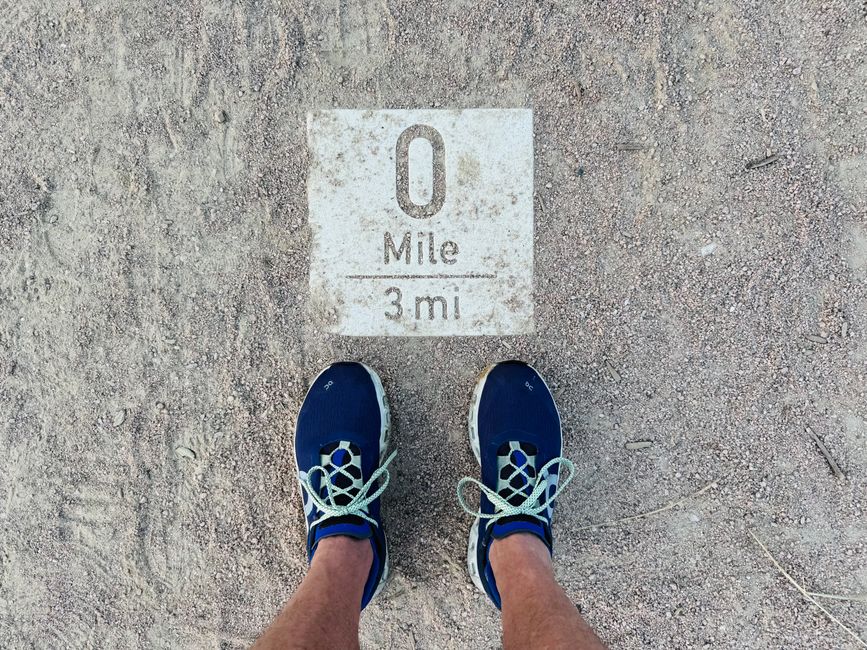
Walking a mile takes most people between 15 and 22 minutes. Your exact time depends on your pace, fitness level, age, and the terrain you are walking on. A brisk walker covers a mile in about 15 minutes, while a casual stroll can take closer to 20 minutes or more.
What Is the Average Time to Walk a Mile?
Research consistently shows that the average adult walking speed is between 3 and 4 miles per hour. At that pace, one mile takes between 15 and 20 minutes.
Walking at 3 mph is a comfortable, natural pace for most people. Walking at 4 mph is a brisk pace where you are breathing harder but can still hold a conversation. Most health organizations use 3 mph as the standard reference for moderate-intensity walking.
Your personal average depends on several factors. Age plays a role — younger adults tend to walk faster than older adults. Leg length matters because taller people naturally take longer strides. Fitness level also affects pace, as does whether you are walking on flat pavement, a treadmill, or a hiking trail.
How Long Is It To Walk a Mile at Different Paces?
The table below shows common walking speeds and the time needed to cover one mile at each pace.
| Pace | Speed (mph) | Minutes per Mile |
|---|---|---|
| Slow stroll | 2.0–2.5 | 24–30 |
| Comfortable walk | 3.0 | 20 |
| Brisk walk | 3.5–4.0 | 15–17 |
| Very fast walk | 4.5 | 13 |
| Power walking | 5.0 | 12 |
The 20-minute mile at 3 mph is the standard most people can sustain comfortably. A brisk 15-minute mile requires more effort and is closer to the upper end of what most walkers can maintain for a full mile.
Walking faster than 5 mph becomes difficult for most people without switching to a run. The natural walking-to-running transition point for most adults occurs around 4.5 to 5 mph.
What Factors Change Your Walking Time?
Several variables can add or subtract minutes from your mile time. Understanding these helps you set realistic expectations.
Terrain is one of the biggest factors. Walking uphill slows most people to 2 mph or less, which means 30 minutes or more per mile. Walking downhill is faster but harder on your knees. Uneven surfaces like trails, sand, or grass require more energy and slow you down compared to smooth pavement.
Body weight affects pace. Heavier individuals expend more energy per step, which can reduce walking speed. This is not a judgment — it is simple physics. Carrying extra weight requires more oxygen and fuel per movement.
Age and fitness influence both natural pace and how long you can sustain a brisk speed. A well-conditioned 60-year-old may outpace a sedentary 30-year-old. Regular walking training improves your pace over time.
Weather matters more than most people expect. Extreme heat, cold, wind, or rain can slow you down significantly. Walking into a strong headwind can add several minutes per mile. Heat and humidity increase your heart rate and perceived effort, naturally slowing your pace.
Footwear changes your efficiency. Supportive walking shoes allow a more natural gait. Wearing inappropriate shoes like flip-flops or dress shoes forces you to take shorter, more cautious steps.





How Many Steps Are in a Mile?
The average person takes about 2,000 to 2,500 steps per mile. This range exists because step length varies by height and stride.
A person who is 5 feet 2 inches tall with a shorter stride may need closer to 2,500 steps per mile. A person who is 6 feet tall may cover a mile in about 2,000 steps. Fitness trackers and pedometers use your height to estimate step length and calculate distance.
The often-quoted figure of 10,000 steps per day equals roughly 4 to 5 miles. This number originated as a marketing campaign for a Japanese pedometer in the 1960s, not from medical research. Current evidence suggests that health benefits increase with step count, but the optimal number varies by age and health status.
How Long Does It Take to Walk a Mile for Weight Loss?
Walking one mile burns roughly 80 to 100 calories for a 150-pound person. Heavier individuals burn more; lighter individuals burn fewer. The exact number depends on your weight, pace, and walking efficiency.
At a brisk 15-minute mile pace, walking burns more calories per minute than a casual stroll. However, the total calorie difference between a 15-minute mile and a 20-minute mile is modest. What matters more for weight loss is total distance walked over time, not speed.
Walking one mile daily is a good starting point but is unlikely to produce significant weight loss on its own. Most weight-loss guidelines recommend building up to 150 minutes of moderate-intensity walking per week, which equals about 7 to 10 miles. Combining regular walking with dietary changes produces the most reliable results.
Some research suggests that walking after meals helps regulate blood sugar levels. A short 10- to 15-minute walk after eating can improve glucose clearance, though the effect is modest compared to overall dietary quality.
How Long Does It Take to Walk a Mile by Age?
Walking speed naturally declines with age, but the change is gradual and highly individual.
Healthy adults in their 20s and 30s typically walk at 3.0 to 3.5 mph. Adults in their 40s and 50s often maintain similar speeds if they remain active. By the 60s and 70s, natural walking speed often drops to 2.5 to 3.0 mph. Adults over 80 commonly walk at 2.0 to 2.5 mph.
These are population averages, not individual predictions. A fit 70-year-old can easily outwalk a sedentary 40-year-old. The research on walking speed in older adults focuses on frailty and health outcomes. Studies have found that walking speed below 2 mph in older adults is associated with higher risks of disability and mortality, while speeds above 3 mph indicate good functional health.
If you are walking for fitness, do not compare your mile time to someone else’s. Compare your current time to your own past performance. Improvement over weeks and months is the meaningful measure.
How to Measure Your Walking Pace Accurately
You can measure your walking pace with simple tools or use a GPS device for greater accuracy.
Manual measurement requires a known distance and a timer. Walk a measured mile on a track or use a marked route. Time yourself from start to finish. Divide 60 by your minutes per mile to get your speed in miles per hour.
Smartphone apps and GPS watches provide real-time pace data. These devices calculate speed using satellite positioning. Accuracy is generally good on open routes but can vary in areas with tall buildings, dense tree cover, or heavy cloud cover.
Treadmills measure belt speed directly and are highly accurate for pace. However, treadmill walking requires slightly less effort than outdoor walking because there is no wind resistance and the belt assists your stride. Your treadmill pace may not match your outdoor pace at the same speed setting.
For fitness purposes, perceived exertion is a reliable backup measure. A brisk walking pace is one where you breathe noticeably harder but can still speak in full sentences. If you cannot speak comfortably, you are walking too fast for moderate-intensity exercise.
Is a 15-Minute Mile a Good Walking Pace?
A 15-minute mile is a brisk pace that qualifies as moderate-intensity exercise for most adults. This pace equals 4 mph and requires genuine effort.
Walking at this speed for 30 minutes covers 2 miles and meets the daily physical activity recommendation for most adults. The Physical Activity Guidelines for Americans recommend 150 minutes of moderate-intensity aerobic activity per week. Walking at 4 mph for 150 minutes covers about 10 miles weekly.
If you cannot sustain a 15-minute mile yet, start slower. A 20-minute mile at 3 mph still provides health benefits. Gradually increase your speed over several weeks by incorporating short intervals of faster walking into your routine.
Frequently Asked Questions
How long does it take the average person to walk a mile?
The average adult walks a mile in 15 to 20 minutes at a pace of 3 to 4 mph. Most people settle into a comfortable 20-minute mile without special effort.
Is walking a mile in 15 minutes good?
Yes, a 15-minute mile is a brisk pace that qualifies as moderate-intensity exercise. It requires consistent effort and is a reasonable fitness goal for healthy adults.
How many calories do you burn walking a mile?
A 150-pound person burns roughly 80 to 100 calories walking one mile. The exact number depends on your weight, pace, and walking surface.
Does walking a mile a day make a difference?
Walking one mile daily provides light health benefits and is a good starting habit. Building up to 2 to 3 miles per day produces more meaningful improvements in cardiovascular fitness and weight management.
