
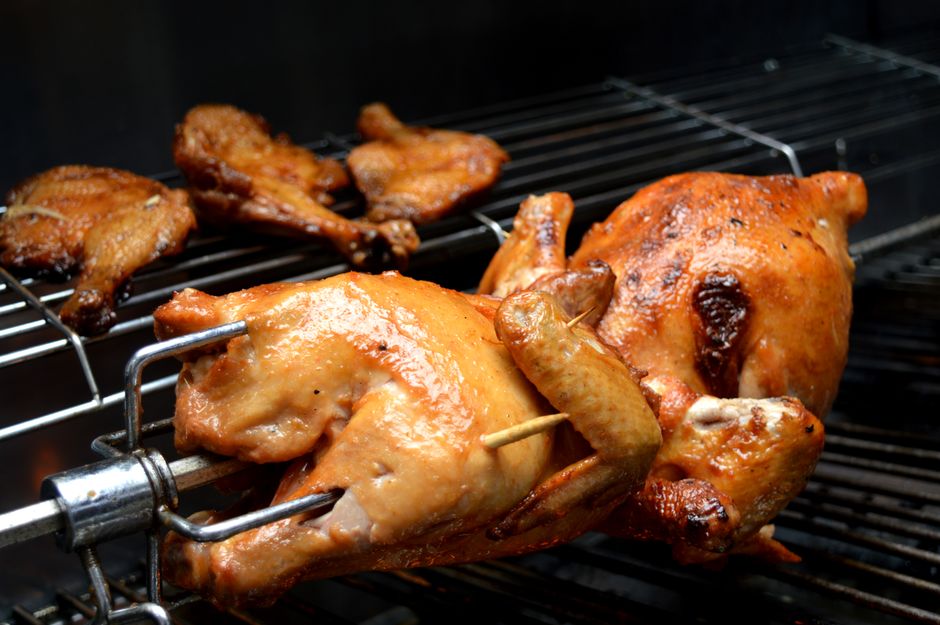
Roasting a whole chicken takes between 1 hour and 15 minutes and 2 hours, depending on the bird’s weight and your oven temperature. At 350°F (175°C), the standard recommendation is to cook a chicken for 20 minutes per pound, plus an extra 10-15 minutes. A 4-pound chicken takes roughly 1 hour and 20 minutes. A 6-pound bird takes about 2 hours. The only reliable test is an instant-read thermometer inserted into the thickest part of the thigh — it must reach 165°F (74°C).
What Is the Best Temperature to Roast a Chicken?
Most recipes call for 350°F (175°C), and this is a solid choice for even cooking. At this temperature, the breast stays moist while the dark meat cooks through at roughly the same rate. The USDA confirms that cooking poultry to an internal temperature of 165°F kills harmful bacteria like salmonella and campylobacter.
Some cooks prefer 425°F (218°C) for crispier skin and faster cooking. At this higher heat, a 4-pound chicken may be done in 55-65 minutes. The trade-off is that the breast can dry out if you are not careful. The skin browns faster, so you may need to tent the bird with foil partway through to prevent burning. Research published in the Journal of Food Science found that higher cooking temperatures produce a more flavorful crust due to the Maillard reaction, but the difference in moisture loss is minimal if you monitor internal temperature closely.
Lower temperatures like 325°F (163°C) work well for larger birds over 6 pounds. The longer cooking time allows the heat to penetrate the thickest parts without overcooking the outer layers. This method adds roughly 5-10 minutes per pound compared to 350°F.
How Long For A Roast Chicken at Different Weights?
The cooking time scales predictably with weight, but oven accuracy varies. Below is a practical guide based on USDA recommendations for a chicken roasted at 350°F. Always use a thermometer — these times are starting points, not guarantees.
| Weight | Cooking Time at 350°F | Rest Time |
|---|---|---|
| 3 – 4 pounds | 1 hour to 1 hour 15 minutes | 10-15 minutes |
| 4 – 5 pounds | 1 hour 15 minutes to 1 hour 30 minutes | 10-15 minutes |
| 5 – 6 pounds | 1 hour 30 minutes to 1 hour 45 minutes | 10-15 minutes |
| 6 – 7 pounds | 1 hour 45 minutes to 2 hours | 15-20 minutes |
| 7 – 8 pounds | 2 hours to 2 hours 15 minutes | 15-20 minutes |
These times assume the chicken is at room temperature before roasting. A cold bird straight from the fridge adds 10-15 minutes to the total cook time. Stuffing the cavity also increases cooking time by 15-20 minutes because the stuffing must reach 165°F as well.
How Do You Know When a Roast Chicken Is Done?
Relying on time alone is a mistake. Ovens run hot or cold, and chicken shape varies. The CDC and USDA both state that the only safe method is measuring internal temperature with a food thermometer. Insert the probe into the innermost part of the thigh, avoiding the bone. The temperature must reach 165°F (74°C).
Some people use the “juices run clear” test, where you pierce the thigh and check if the liquid is pink or clear. This method is unreliable. Research from the USDA found that juices can appear clear even when the chicken has not reached a safe temperature. Do not trust it.
A second spot to check is the thickest part of the breast. It should also read 165°F. If the breast hits 165°F but the thigh is at 160°F, the thigh will continue cooking during the rest period. Let the chicken rest for 10-20 minutes before carving. This allows the juices to redistribute and the carryover cooking to raise the temperature by 5-10 degrees.





What Affects How Long a Chicken Takes to Roast?
Several factors change cooking time beyond just weight. Oven calibration is a big one. A 2017 study from the University of California found that home ovens can be off by as much as 50°F from the set temperature. An oven that runs cool adds 20-30 minutes to your cook time. An oven thermometer placed in the center of the oven fixes this problem cheaply.
The starting temperature of the chicken matters. A chicken taken straight from the refrigerator at 38°F takes longer than one left on the counter for 30 minutes. Letting the bird sit at room temperature for 20-30 minutes before roasting reduces cooking time by roughly 10%.
- Bone-in vs. boneless: Bone-in chicken takes longer because bone conducts heat slower than meat. A boneless roast cooks 25-30% faster.
- Stuffed vs. unstuffed: Stuffing the cavity adds 15-20 minutes because the stuffing acts as an insulator and must also reach 165°F.
- Oven door opening: Every time you open the oven door, the temperature drops 25-50°F. Opening it multiple times can add 10-15 minutes to the total cook time.
- Pan type: A dark metal pan absorbs more heat and can speed cooking by 5-10 minutes compared to a shiny stainless steel pan.
Does Brining Change How Long To Roast a Chicken?
Brining a chicken — soaking it in salt water before cooking — changes the meat’s structure and moisture content. Wet brining adds water weight, which can increase cooking time slightly. A brined chicken may take 5-10 minutes longer per pound because the extra moisture inside the cells takes more energy to heat through.
Dry brining, where you rub salt on the skin and let it rest in the fridge, does not add significant weight. It draws moisture out of the skin initially, then the salt dissolves and is reabsorbed. Dry brining has minimal effect on cooking time. Some people report that dry-brined chicken cooks more evenly because the salt helps break down proteins, allowing heat to penetrate more consistently. Evidence for this is anecdotal — no large study has confirmed a significant time difference.
If you brine, pat the chicken dry before roasting. Excess surface moisture creates steam in the oven, which slows browning and can add 5-10 minutes to achieve crispy skin.
Common Mistakes That Ruin a Roast Chicken
The most common error is overcooking the breast while waiting for the thighs to finish. The breast is lean and dries out quickly above 165°F. The thighs are dark meat and remain juicy up to 185°F. One solution is to cook the chicken breast-side down for the first 30 minutes, then flip it. This keeps the breast submerged in juices and slows its cooking rate.
Another mistake is not letting the chicken rest. Cutting into a hot chicken causes juices to run out onto the cutting board, leaving dry meat. The resting period allows the protein fibers to relax and reabsorb moisture. A 10-minute rest is the minimum. For a 6-pound bird, 20 minutes is better.
Some cooks rely on pop-up timers that come with some store-bought chickens. These timers are notoriously unreliable. A Consumer Reports study found that these timers often trigger at 170-180°F, which is well past the point where breast meat has dried out. Remove the pop-up timer and use your own thermometer.
Finally, overcrowding the pan with vegetables can trap steam and prevent the skin from crisping. Vegetables release moisture as they cook, creating a humid environment. If you want crispy skin, roast the chicken alone on a rack in a shallow pan. Add vegetables during the last 30-40 minutes.
Frequently Asked Questions
How long for a roast chicken at 350°F?
At 350°F, cook a whole chicken for 20 minutes per pound. A 4-pound bird takes about 1 hour and 20 minutes.
Should I cover a roast chicken while it cooks?
Do not cover it if you want crispy skin. Covering traps steam and softens the skin. Only cover if the skin is browning too fast.
Can I cook a roast chicken from frozen?
The USDA advises against roasting a frozen whole chicken because the outside cooks while the inside stays dangerously cold. Thaw completely first.
How long should a roast chicken rest before carving?
Rest the chicken for 10-20 minutes. This allows juices to redistribute and carryover cooking to finish the thigh meat.
