

You put eggs in a pot, add water, bring it to a boil, then turn off the heat and let them sit covered for exactly 10-12 minutes. That is the simple answer for large eggs at room temperature. The exact time depends on how firm you want the yolk and whether your eggs are cold from the fridge. This guide walks through the precise times, the science behind why it works, and what to avoid so you never end up with green yolks or rubbery whites again.
What Is the Exact Cooking Time for Hard Boiled Eggs?
For large eggs straight from the refrigerator, the standard method is the “cold start” technique. Place eggs in a single layer in a saucepan. Cover them with cold water by at least one inch. Bring the water to a full rolling boil over high heat. Once boiling, immediately remove the pot from the burner and cover it with a lid. Let the eggs sit in the hot water for exactly 10 minutes for a firm but creamy yolk. For a fully hard yolk with no softness at all, let them sit for 12 minutes. For a slightly softer center that is still mostly set, 9 minutes works.
Medium eggs need about 1 minute less. Extra-large or jumbo eggs need about 1-2 minutes more. If your eggs are at room temperature, subtract 1 minute from these times. The key is that the eggs never actually boil after the initial boil. They cook entirely in residual heat. This prevents the proteins from overcooking and becoming rubbery.
Does Starting Eggs in Cold Water or Boiling Water Matter?
Yes, it matters a lot. Starting eggs in cold water and bringing them up to temperature gradually gives you more consistent results. The egg white sets evenly from the outside in. If you drop eggs directly into boiling water, the sudden heat shocks the outer white and can cause it to cook too fast while the center stays undercooked. The shell is also more likely to crack from the thermal shock.
The cold start method also makes peeling easier. The gradual heating helps the inner membrane separate from the shell. Research from food science labs at the American Egg Board confirms that older eggs peel more easily than fresh eggs, but the cooking method matters just as much. Cold start consistently produces eggs that peel cleaner than the boiling water drop method.
Some people swear by adding vinegar or baking soda to the water. Vinegar can help coagulate the white if a shell cracks. Baking soda raises the pH and can make peeling easier, but it can also give the white a slightly rubbery texture. Neither is necessary if you follow the timing correctly.
How Long Do You Cook Hard Boiled Eggs For Different Yolk Textures
| Yolk Texture | Cold Start Time (large, fridge-cold eggs) | Yolk Appearance |
|---|---|---|
| Soft boiled, runny center | 6-7 minutes | Liquid gold, white fully set |
| Medium boiled, jammy | 8-9 minutes | Slightly soft, spreadable, not runny |
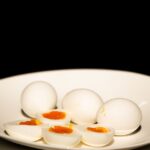
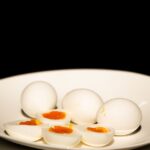
| Hard boiled, creamy center | 10 minutes | Firm but moist, bright yellow |
| Hard boiled, fully firm | 12 minutes | Dry, pale yellow, crumbly |
These times assume you remove the pot from heat immediately after boiling and keep the lid on the entire time. If you leave the pot on the burner after boiling, the water stays at a rolling boil and the eggs overcook quickly. That is the most common mistake people make. The water temperature inside a covered pot off the heat stays around 180-190°F, which is ideal for gentle cooking. A rolling boil at 212°F makes the whites tough and the yolks chalky.



What Causes Green Rings Around Hard Boiled Egg Yolks?
A green or gray ring around the yolk is not harmful, but it looks unappealing and signals overcooking. It happens when eggs are boiled too long or cooled too slowly. The iron in the yolk reacts with sulfur in the white to form ferrous sulfide. This chemical reaction starts at around 158°F and speeds up as temperature rises.
The fix is simple. After the eggs finish cooking, drain the hot water immediately and transfer the eggs to a bowl of ice water. Let them sit for at least 5 minutes. This rapid cooling stops the cooking process instantly. It also contracts the egg inside the shell slightly, which helps with peeling. Eggs left to cool at room temperature will continue cooking from residual heat and are far more likely to develop green rings.
The USDA confirms that hard boiled eggs with green rings are safe to eat. But the texture is drier and the flavor can be slightly sulfurous. Proper timing and an ice bath prevent this entirely.
How to Peel Hard Boiled Eggs Without Destroying Them
Peeling frustration is the number one complaint about hard boiled eggs. The freshness of the egg matters. Fresh eggs have a lower pH in the white, which makes the membrane stick tightly to the shell. Eggs that are 7-10 days old peel much more easily. This is not a myth. Food science research shows that as eggs age, carbon dioxide escapes through the shell pores, raising the pH of the white and weakening the bond between the membrane and shell.
If you only have fresh eggs, there are workarounds. After the ice bath, gently crack the shell all over by rolling the egg on a countertop. Start peeling from the wider end where the air pocket sits. Running the egg under cold water while peeling helps wash away small shell fragments and gets under the membrane.
Some people find that steaming eggs instead of boiling them produces easier-to-peel results. Steaming at 212°F for 12 minutes for hard boiled eggs works similarly to the cold start method. The steam heats the egg quickly but still gently. The American Egg Board notes that steaming can produce slightly more consistent results for peeling, but the difference is small compared to using week-old eggs.
How Long Do Hard Boiled Eggs Last in the Refrigerator
Hard boiled eggs in the shell last up to one week in the refrigerator. Peeled eggs should be eaten within 2-3 days for best quality. Store peeled eggs in a covered container with a damp paper towel to keep them from drying out. Do not leave hard boiled eggs at room temperature for more than 2 hours. Bacteria grow quickly between 40°F and 140°F.
The CDC recommends refrigerating hard boiled eggs within 2 hours of cooking. If you are taking them to a picnic or potluck, keep them in a cooler with ice packs. Hard boiled eggs are a common source of foodborne illness when left out too long because the protective outer cuticle is removed during cooking.
Do not freeze hard boiled eggs. The whites become watery and rubbery when thawed. The texture is unpleasant. If you have too many eggs to eat within a week, consider pickling them instead. Pickled hard boiled eggs can last 3-4 months in the refrigerator if stored properly in a vinegar-based brine.
Frequently Asked Questions
How long do you cook hard boiled eggs for from cold water?
Place eggs in cold water, bring to a boil, then remove from heat and cover. Let them sit for 10-12 minutes depending on desired yolk firmness. Then transfer to an ice bath immediately.
Can you overcook hard boiled eggs?
Yes. Overcooking makes the white rubbery and the yolk dry and chalky. It also causes the green ring around the yolk. Stick to the recommended times and use an ice bath to stop cooking.
How do you know when hard boiled eggs are done?
Timing is the most reliable method. You cannot tell by looking at the shell. Use a timer and follow the cold start method. After cooking, spin the egg on a countertop — a cooked egg spins smoothly while a raw egg wobbles.
Why are my hard boiled eggs hard to peel?
Fresh eggs are harder to peel because the membrane sticks tightly to the shell. Using eggs that are 7-10 days old makes peeling easier. The cold start method and an ice bath also help separate the membrane from the shell.
