
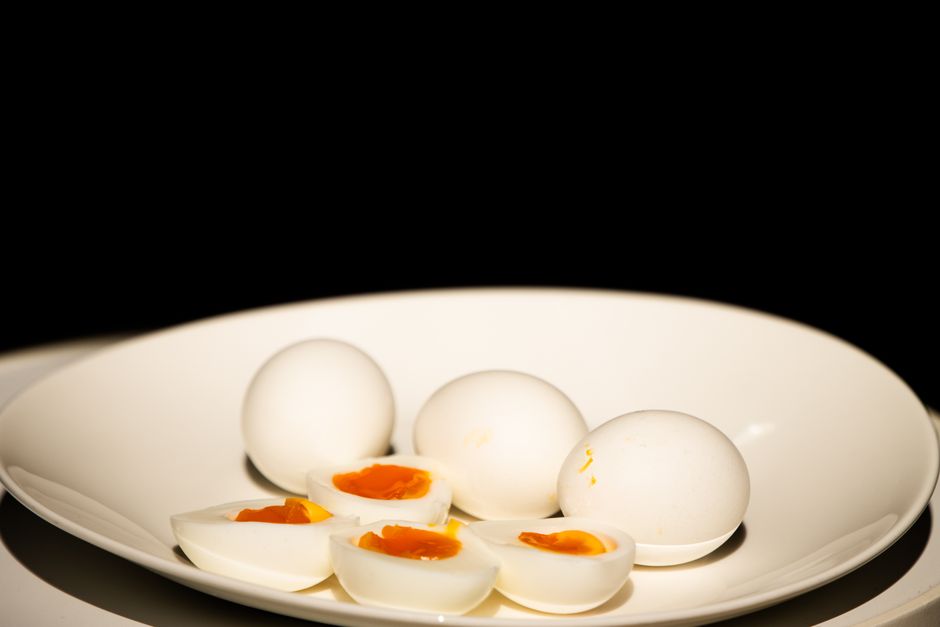
A single large hard-boiled egg contains about 6.3 grams of protein. That number is remarkably consistent across eggs from different brands and farms. The protein is split between the white and the yolk, with the white holding roughly 60 percent and the yolk holding the rest. This makes hard-boiled eggs one of the most convenient and complete protein sources you can eat.
How Much Protein In A Hard Boiled Egg Compared to Other Protein Sources?
A large hard-boiled egg delivers 6.3 grams of protein for about 78 calories. That is a better protein-to-calorie ratio than most cuts of beef and many plant-based proteins. For comparison, a 3-ounce serving of cooked chicken breast has about 26 grams of protein for 142 calories. An egg gives you roughly the same protein density but in a much smaller package.
Other common protein sources stack up this way:
- One large hard-boiled egg: 6.3 grams protein, 78 calories
- One cup of cooked lentils: 18 grams protein, 230 calories
- One cup of whole milk: 8 grams protein, 149 calories
- One tablespoon of peanut butter: 4 grams protein, 94 calories
- One ounce of cheddar cheese: 7 grams protein, 113 calories
Eggs are also a complete protein. That means they contain all nine essential amino acids your body cannot make on its own. Most plant proteins are incomplete, meaning you have to combine different foods to get all the amino acids you need. Eggs give you everything in one bite.
Does How Much Protein In A Hard Boiled Egg Change Based on Egg Size?
Yes, egg size matters. The 6.3-gram figure applies to a large egg, which is the standard size sold in most US grocery stores. But eggs come in six sizes, and the protein content changes with each one.
Here is the breakdown by size according to USDA data:
| Egg Size | Protein (grams) | Calories |
|---|---|---|
| Jumbo | 7.9 | 90 |
| Extra Large | 7.0 | 85 |
| Large | 6.3 | 78 |
| Medium | 5.5 | 66 |
| Small | 4.8 | 57 |
| Peewee | 3.9 | 48 |
The protein difference between a jumbo and a medium egg is about 2.4 grams. That is not huge for a single egg, but it adds up if you eat three or four eggs regularly. If you are tracking protein precisely, weigh your eggs or check the carton label. Most cartons list the size and the protein per egg.
What Part of the Hard Boiled Egg Has the Most Protein?
The egg white holds the majority of the protein. A large egg white contains about 3.6 grams of protein. The yolk contains about 2.7 grams. So the white has roughly 57 percent of the total protein, and the yolk has 43 percent.
Many people throw away the yolk because of old warnings about cholesterol. That is a mistake if your goal is protein. The yolk is nutrient-dense. It contains nearly half the protein of the whole egg plus most of the vitamins and minerals. The yolk also has healthy fats that help your body absorb fat-soluble vitamins like vitamin D and vitamin A.
Research published in the American Journal of Clinical Nutrition found that dietary cholesterol from eggs has a small effect on blood cholesterol for most people. The bigger driver of high cholesterol is saturated fat and trans fat, not the cholesterol in food. For most healthy adults, eating the whole egg is fine and gives you more protein than the white alone.





Does Boiling an Egg Change Its Protein Content?
No. Cooking an egg does not change the amount of protein in it. The protein molecules do not disappear when heated. What changes is the structure of the protein, not the quantity.
Raw egg protein is coiled up in long chains. When you boil the egg, the heat causes those chains to unwind and then bond together in new ways. That is what turns liquid egg white into a solid white solid. This process is called denaturation. It makes the protein easier to digest, not harder.
A study in the Journal of Nutrition found that cooked egg protein is about 91 percent digestible. Raw egg protein is only about 51 percent digestible. So boiling actually makes the protein more available to your body. You absorb more protein from a hard-boiled egg than you would from drinking a raw egg.
The same applies to other cooking methods. Scrambled, poached, and fried eggs all have the same protein content as a hard-boiled egg of the same size. The only difference is the added fat from cooking oil or butter.
How Much Protein In A Hard Boiled Egg Do You Actually Absorb?
Your body absorbs most of the protein from a hard-boiled egg. The digestibility of cooked egg protein is around 91 percent. That means from a large egg with 6.3 grams of protein, your body absorbs roughly 5.7 grams. The rest passes through your digestive system.
This absorption rate is high compared to many other protein sources. Plant proteins like beans and lentils have digestibility rates between 70 and 80 percent. Soy protein is closer to 90 percent. Whey protein from dairy is around 95 percent. Eggs sit near the top of the list for whole foods.
Your body uses that absorbed protein for muscle repair, enzyme production, immune function, and many other processes. The amino acid profile of eggs is well matched to human needs. Eggs are particularly rich in leucine, the amino acid that triggers muscle protein synthesis. That makes them a good choice after exercise.
Some people claim that eating eggs with certain foods blocks protein absorption. There is no strong evidence for that. As long as your digestive system is healthy, the protein from a hard-boiled egg is highly bioavailable regardless of what else you eat with it.
Common Misconceptions About Protein In Hard Boiled Eggs
One common myth is that brown eggs have more protein than white eggs. The shell color is determined by the breed of the hen, not by the nutritional content. Brown and white eggs of the same size have identical protein amounts. The USDA confirms this.
Another myth is that egg protein is destroyed by overcooking. Overcooking can make the white rubbery and the yolk chalky, but the protein molecules remain intact. The texture changes, not the nutritional value. A hard-boiled egg boiled for 12 minutes has the same protein as one boiled for 8 minutes.
Some people believe that eating only egg whites is better for protein intake because the yolk is fatty. As discussed earlier, the yolk contains nearly half the protein. Removing the yolk cuts your protein by about 43 percent per egg. If you are eating three eggs for protein, skipping the yolks means you are getting the protein equivalent of less than two whole eggs.
There is also a persistent claim that pasteurized eggs have less protein. Pasteurization uses heat to kill bacteria, but the temperature is far lower than what is needed to break down protein. Pasteurized and unpasteurized eggs of the same size have the same protein content.
Frequently Asked Questions
How many grams of protein are in a hard-boiled egg without the yolk?
A large hard-boiled egg white contains about 3.6 grams of protein. The yolk contains the remaining 2.7 grams.
Is the protein in a hard-boiled egg better than raw egg protein?
Yes, cooked egg protein is about 91 percent digestible while raw egg protein is only about 51 percent digestible. Your body absorbs more protein from a hard-boiled egg.
How many hard-boiled eggs should I eat for protein after a workout?
Eating two to three hard-boiled eggs provides 12.6 to 18.9 grams of protein, which is a reasonable amount for post-exercise recovery for most people.
Does the protein in a hard-boiled egg decrease if I refrigerate it for days?
No, refrigeration does not change the protein content. A hard-boiled egg stored in the shell in the refrigerator for up to one week has the same protein as a freshly boiled egg.
