
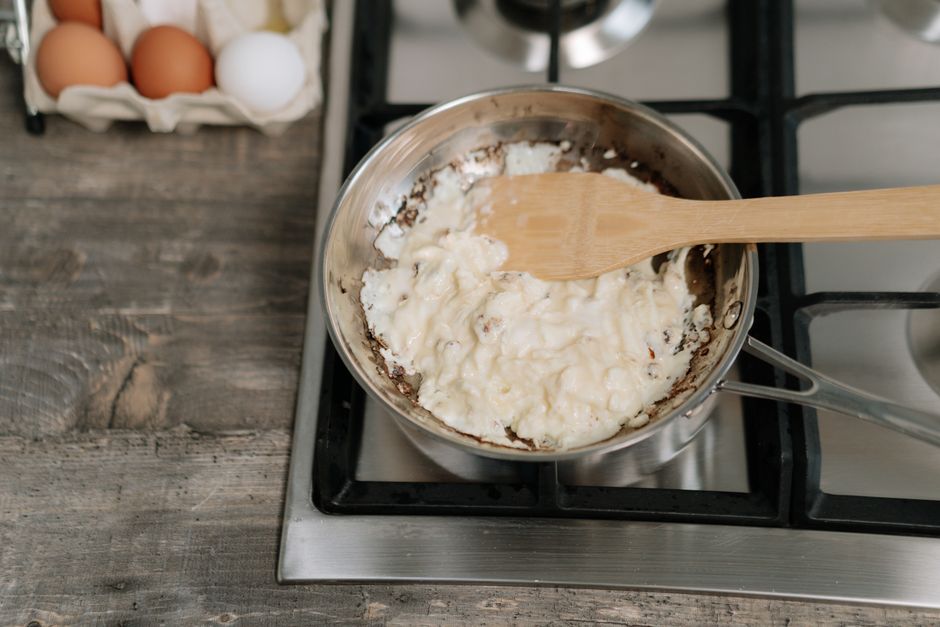
Scrambled eggs are a quick, protein-rich meal, but they don’t stay safe to eat for long once they leave the pan. Cooked scrambled eggs are safe to refrigerate for up to three to four days, but only if you chill them promptly and keep them at the right temperature. After that window, the risk of foodborne illness rises quickly, and the safest choice is to throw them out.
How Long Are Scrambled Eggs Good For in the Refrigerator?
Cooked scrambled eggs last three to four days when stored properly in the refrigerator. This is the same guideline that applies to most cooked egg dishes.
To get the full shelf life, you need to refrigerate them within two hours of cooking. If the room is warmer than 90°F — like a hot kitchen or an outdoor brunch — that window shrinks to one hour. Bacteria multiply rapidly at room temperature, and eggs are especially vulnerable because they are moist and protein-rich.
Store the eggs in a shallow, airtight container. A shallow container helps them cool quickly and evenly. Leave them uncovered until they cool to room temperature, then seal the lid and place them in the fridge. This prevents condensation from forming, which can create a watery texture and speed up spoilage.
How Long Do Scrambled Eggs Last at Room Temperature?
Scrambled eggs should not sit at room temperature for more than two hours. In hot conditions, that limit drops to one hour.
This is not a suggestion. It is a food safety standard based on how quickly bacteria like Salmonella and Staphylococcus aureus can multiply in the “danger zone” between 40°F and 140°F. In that temperature range, bacterial populations can double in as little as 20 minutes.
If you left scrambled eggs out overnight, do not reheat them and eat them. The bacteria may have produced toxins that survive reheating. Even if the eggs look and smell fine, they are not safe. Throw them away.
How to Tell If Scrambled Eggs Have Gone Bad
Your senses are reliable indicators of spoilage, but they are not foolproof. Harmful bacteria do not always change the look, smell, or taste of food.
Still, these are clear signs that scrambled eggs have spoiled:
- Off smell: A sour, sulfurous, or rotten odor means the eggs are bad.
- Change in texture: Fresh scrambled eggs are moist and soft. If they become slimy, excessively watery, or develop a dry, rubbery film, discard them.
- Discoloration: Gray, green, or pink tints are not normal. Throw the eggs out.
- Visible mold: Any fuzzy spots mean the eggs are contaminated. Mold on cooked eggs is rare but possible, especially if the container was not sealed.
If the eggs pass all these checks but are already four days old, do not eat them. The absence of visible spoilage does not guarantee safety.





Why Do Scrambled Eggs Spoil Faster Than Whole Eggs?
Whole eggs in their shells last weeks in the refrigerator. Scrambled eggs last days. The difference comes down to processing.
Cooking destroys the egg’s natural protective barriers. The shell and the egg’s own antimicrobial proteins are gone. Whisking introduces air and mixes the yolk and white together, creating a perfect environment for bacteria to grow.
The cooking process itself also matters. If eggs are undercooked, any bacteria that survived cooking can continue to multiply. If they are overcooked, the texture degrades and moisture is released, which also supports bacterial growth. The goal is to cook eggs until both the white and yolk are firm, which means the internal temperature reached at least 160°F.
Can You Freeze Scrambled Eggs?
Yes, scrambled eggs freeze well, and freezing extends their shelf life significantly. Properly frozen and thawed scrambled eggs are safe to eat for up to three months.
Freezing does change the texture. Eggs can become slightly watery or rubbery when thawed because freezing damages the protein structure. Many people still find them acceptable for breakfast burritos, casseroles, or quick reheated meals.
To freeze scrambled eggs:
- Cool the cooked eggs completely in the refrigerator first.
- Portion them into airtight freezer-safe containers or resealable bags.
- Remove as much air as possible before sealing.
- Label with the date and freeze.
Thaw frozen scrambled eggs in the refrigerator overnight. Reheat them thoroughly to 165°F before eating. Do not thaw eggs at room temperature — that puts them back in the danger zone.
Best Ways to Reheat Scrambled Eggs Safely
Reheating scrambled eggs is safe as long as they were stored properly and are within the three-to-four-day window. The reheated eggs must reach an internal temperature of 165°F.
The microwave is the fastest method. Cover the eggs with a damp paper towel to add moisture and prevent them from drying out. Heat in 30-second intervals, stirring between each, until steaming hot throughout.
A stovetop works well too. Add a small pat of butter or a splash of milk to a nonstick pan over low to medium heat. Add the eggs and stir gently until they are hot. This method gives you more control and avoids the rubbery texture microwaves can cause.
Do not reheat eggs more than once. Each reheat cycle brings the eggs back through the danger zone, giving bacteria another opportunity to multiply. If you are not going to eat all the leftovers, portion them out before reheating.
Food Safety Guidelines That Apply to Scrambled Eggs
Eggs are one of the leading sources of Salmonella infection in the United States. This is why food safety rules around eggs are strict.
The two-hour rule is the single most important guideline. Cooked food, including scrambled eggs, must be refrigerated within two hours of cooking. That clock starts when the eggs finish cooking, not when you sit down to eat.
Raw eggs have their own rules. Raw eggs in the shell can be stored in the refrigerator for three to five weeks. Once you crack them, use them within two days. Leftover raw egg mixture from making scrambled eggs should be cooked within two days or discarded.
Cross-contamination is another risk. Use a clean utensil to serve the eggs. Do not put a fork that touched raw egg back into the cooked eggs. Wash your hands, the counter, and any equipment that touched raw eggs with hot soapy water.
What About Egg Substitutes and Plant-Based Scrambles?
Liquid egg substitutes, like those sold in cartons, follow the same three-to-four-day rule once cooked. They are pasteurized, which reduces the initial bacterial load, but they still spoil after cooking.
Plant-based egg alternatives are different. Products made from tofu, chickpea flour, or mung bean protein do not carry the same Salmonella risk as real eggs. However, they still contain moisture and protein, so they can support bacterial growth.
Treat plant-based scrambles the same way you would treat real eggs. Refrigerate within two hours and consume within three to four days. When in doubt, throw it out.
Common Mistakes That Shorten the Shelf Life
Several habits can make scrambled eggs spoil faster than they should.
Leaving eggs on the stove while you eat breakfast is the most common error. By the time you finish eating and clear the table, the eggs may have already been out too long. Refrigerate leftovers immediately after serving.
Storing eggs in a deep container is another mistake. A large batch of eggs in a deep bowl cools slowly, and the center can stay in the danger zone for hours. Use shallow containers to speed up cooling.
Adding ingredients changes the math. Eggs mixed with cheese, milk, or vegetables may spoil faster because those ingredients have their own spoilage timelines. Use the shortest timeline of any ingredient in the dish.
Keeping eggs in the refrigerator door is also not ideal. The door experiences temperature fluctuations every time it opens. Store eggs on an interior shelf where the temperature is more stable.
Frequently Asked Questions
Can I eat scrambled eggs left out overnight?
No. Scrambled eggs left at room temperature for more than two hours should be thrown away. Bacteria multiply rapidly in that time, and reheating will not destroy the toxins they produce.
How long are scrambled eggs good for in the fridge?
Cooked scrambled eggs are safe to eat for three to four days when refrigerated promptly in an airtight container. After four days, discard them even if they look and smell fine.
Can I freeze scrambled eggs to make them last longer?
Yes, scrambled eggs freeze well for up to three months. The texture may change slightly, but they remain safe to eat if thawed in the refrigerator and reheated to 165°F.
How can I tell if scrambled eggs have gone bad?
A sour smell, slimy texture, discoloration, or visible mold means the eggs are spoiled. However, harmful bacteria can be present without any visible signs, so follow the three-to-four-day rule regardless.
