
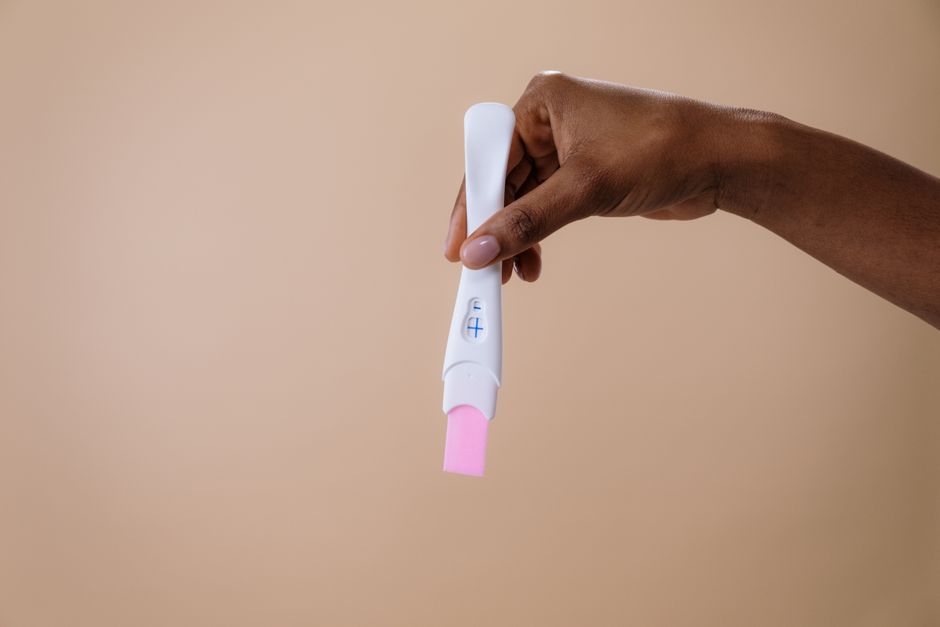
Most home pregnancy tests can detect pregnancy as early as 10 to 12 days after ovulation, but testing on the first day of your missed period gives the most reliable result. For the most accurate outcome, wait until at least one day after your expected period start date and test with your first morning urine.
How Does A Home Pregnancy Test Work?
Home pregnancy tests detect a hormone called human chorionic gonadotropin, or hCG. The body only produces this hormone after a fertilized egg implants in the uterine lining. Implantation typically happens 6 to 10 days after ovulation.
Once implantation occurs, hCG levels double roughly every 48 to 72 hours in early pregnancy. The test strip uses antibodies that bind to hCG molecules in your urine. When enough hCG is present, the test line appears.
This is why timing matters. Test too early, and your hCG levels may still be too low for the test to detect. Your result would be negative even if you are pregnant.
How Early Can You Take A Pregnancy Test Best Timing
The earliest you can reliably test depends on when you ovulated, not when you had sex. Sperm can survive in the reproductive tract for up to five days. Conception can happen days after intercourse.
If you track ovulation with an app or ovulation predictor kits, you can count forward. A highly sensitive test may detect hCG in urine about 10 days after ovulation. But not all women will have detectable hCG that early. Some will not test positive until several days later.
For the most dependable result, wait until the first day of your missed period. At that point, approximately 14 days have passed since ovulation in a typical 28-day cycle. Most women will have enough hCG in their urine for a positive result by then.
How Sensitive Are Early Detection Tests?
Early detection tests are labeled as such because they can measure lower levels of hCG than standard tests. Standard tests typically detect hCG at levels of 25 mIU/mL or higher. Early detection tests may detect levels as low as 10 mIU/mL.
This lower threshold allows some tests to show a positive result up to five days before your missed period. However, a negative result that early does not mean you are not pregnant. It may simply mean your hCG has not reached the detection threshold yet.
If you test early and get a negative result, wait three to four days and test again. If you are pregnant, your hCG levels will have risen significantly in that time.


Why Testing With First Morning Urine Matters
Urine concentration affects test accuracy. First morning urine is the most concentrated because you have not been drinking fluids overnight. Higher hCG concentration makes a positive result more likely.
If you test later in the day, your urine may be diluted. This is especially true if you have been drinking water or other fluids. Diluted urine can produce a false negative, particularly in early pregnancy when hCG levels are still low.
If you must test during the day, try to hold your urine for at least four hours before testing. Avoid drinking large amounts of fluid in that time. This helps concentrate the hCG in your sample.
What Do Different Results Mean?
A positive test result is highly accurate. Home pregnancy tests are about 99% accurate when used correctly. A positive result almost always means you are pregnant.
A negative result is less definitive. It could mean you are not pregnant, or it could mean you tested too early. It could also mean your urine was too diluted or you did not follow the test instructions correctly.
If you get a negative result but your period does not arrive within a week, test again. If you continue to get negative results and still miss your period, contact your healthcare provider. Some medical conditions can cause missed periods and negative pregnancy tests.
Can Medications Affect Pregnancy Test Results?
Most common medications do not affect pregnancy test results. This includes birth control pills, antibiotics, pain relievers, and fertility medications that do not contain hCG.
Fertility medications that contain hCG can cause a false positive. These include some injectable medications used during fertility treatment, such as those used to trigger ovulation. If you are taking fertility medications, ask your doctor which ones contain hCG and how they may affect your test.
Alcohol and recreational drugs do not change hCG levels in your urine. They will not affect the accuracy of a home pregnancy test.
When Should You See A Doctor?
If you get a positive home pregnancy test, make an appointment with your healthcare provider. They can confirm the pregnancy with a blood test or another urine test and discuss next steps.
Contact your doctor sooner if you have any of these symptoms with a positive test: heavy bleeding, severe cramping on one side, or fainting. These could be signs of an ectopic pregnancy, which requires medical attention.
If you have irregular periods, you may not know when your period is due. In that case, wait at least 21 days after unprotected sex before testing. This gives your body enough time to produce detectable hCG if you are pregnant.
Digital Versus Line Tests: Does It Matter?
Digital tests display the words “pregnant” or “not pregnant” on a screen. Line tests show one or two pink lines. Both types work the same way and have similar accuracy.
Digital tests are often less sensitive than early detection line tests. They typically require higher hCG levels to show a positive result. If you want to test before your missed period, a line test labeled “early detection” is usually the better choice.
The main advantage of digital tests is clarity. There is no confusion about whether a faint line counts as positive. But a faint line on a line test is still a positive result. Any visible line, no matter how light, means hCG is present.
Common Mistakes That Cause False Results
- Testing too early before hCG levels are detectable
- Reading the result after the recommended time window has passed
- Using diluted urine from testing later in the day
- Not following the specific instructions for your test brand
- Checking the test result too quickly before it has developed
Most test instructions say to read the result within 5 to 10 minutes. Reading after that time can produce an “evaporation line,” which looks like a faint positive but is not a real result.
If you are unsure about a result, take another test. Using two different brands can also help confirm. When in doubt, a blood test at a doctor’s office is the most definitive answer.
Frequently Asked Questions
How many days after ovulation can I take a pregnancy test?
You can test as early as 10 days after ovulation with a sensitive early detection test. Testing at 14 days after ovulation, around the time of your missed period, gives the most reliable result.
Can a pregnancy test be positive before a missed period?
Yes, some sensitive tests can detect pregnancy up to five days before your missed period. However, a negative result before your missed period does not rule out pregnancy.
Is first morning urine really necessary for a pregnancy test?
First morning urine gives the most accurate result because it has the highest concentration of hCG. If you test later in the day, hold your urine for at least four hours first.
How long should I wait after a negative test to test again?
Wait three to four days before testing again. This gives your hCG levels time to rise if you are pregnant.
