
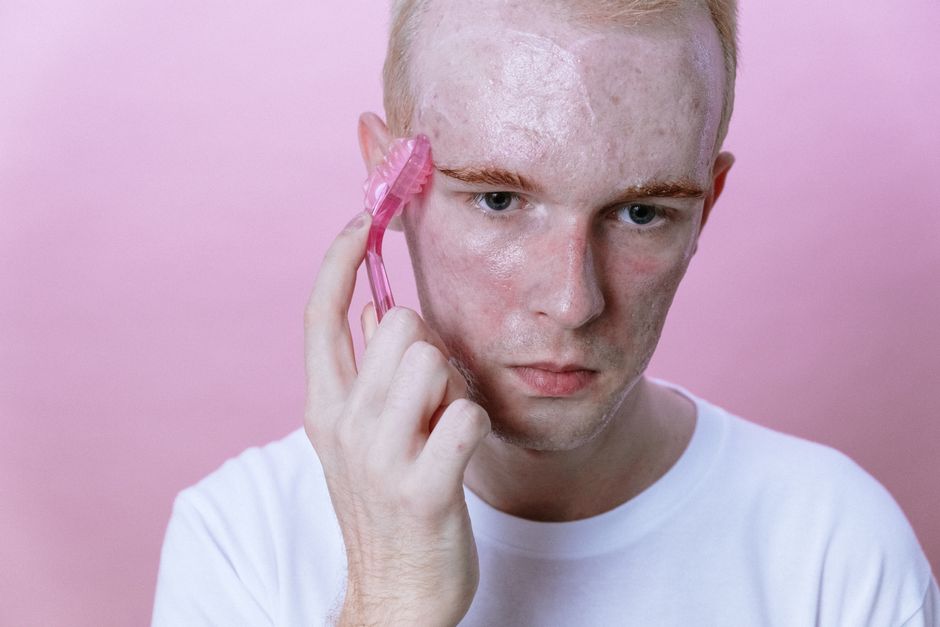
Acne starts when a hair follicle becomes blocked. The blockage traps oil and dead skin cells inside the pore. Bacteria that normally live on your skin then multiply in that trapped oil, and your immune system responds with inflammation. That combination — oil, bacteria, and inflammation — is what creates a pimple.
How Does Acne Form Oil Bacteria And Inflammation
The process begins inside a structure called a pilosebaceous unit. That is the medical name for a hair follicle and its attached oil gland. Every hair on your body grows from one of these units. The oil gland produces sebum, which is the skin’s natural oil.
Sebum is not the enemy. It keeps your skin lubricated and waterproof. Problems start when the lining of the follicle sheds dead skin cells too quickly. Those cells mix with the sebum and form a plug. This plug blocks the opening of the pore.
Once the pore is blocked, sebum keeps building up behind the plug. The trapped oil becomes a food source. A bacteria called Cutibacterium acnes — previously known as Propionibacterium acnes — naturally lives on everyone’s skin. In a healthy open pore, it stays at low numbers. In a blocked pore, it multiplies rapidly.
Your immune system detects the bacterial overgrowth. It sends white blood cells to the area to fight the infection. That immune response is inflammation. Inflammation causes redness, swelling, pain, and pus. The visible pimple is the end result of this entire chain of events.
What Role Does Sebum Production Play
Sebum production is largely controlled by hormones called androgens. Both males and females produce androgens. These hormones signal the oil gland to grow and produce more sebum.
During puberty, androgen levels rise sharply. That is why acne is most common in teenagers. But hormones continue to influence oil production throughout adult life. Women often experience acne flare-ups around their menstrual cycle because hormone levels fluctuate.
Some people naturally produce more sebum than others. This is largely genetic. If your parents had oily skin and acne, you are more likely to have the same pattern. High sebum production alone does not cause acne, but it increases the chance that a pore will become blocked.
Not everyone with oily skin develops acne. The key difference is how quickly the follicle lining sheds cells. Some people shed cells at a normal rate, so even high oil production does not cause blockages. Others shed cells too quickly, which makes them more prone to plugged pores.
Why Does Cutibacterium Acnes Cause Problems
Cutibacterium acnes is not a harmful invader. It is a normal part of your skin’s microbiome. In healthy pores, it actually helps maintain balance. The problems only start when the environment changes.
Trapped oil creates an ideal environment for C. acnes. It is an anaerobic bacterium, meaning it thrives in low-oxygen conditions. A plugged pore has very little oxygen. The trapped oil provides abundant food. Under these conditions, the bacterial population explodes.
The bacteria produce enzymes that break down sebum into fatty acids. These fatty acids are irritating to the follicle lining. They also release proteins that trigger an immune response. The combination of bacterial waste products and immune activity damages the follicle wall.
When the follicle wall breaks, the contents spill into the surrounding skin. This is what turns a small blocked pore into an inflamed lesion. The body’s immune response to the spilled contents is what causes the visible redness and swelling of a pimple.




What Makes Inflammation Worse or Better
Inflammation is your body’s natural defense mechanism. It is not inherently bad. The problem is when the inflammatory response becomes excessive or prolonged.
Some people have a stronger inflammatory response to C. acnes than others. This is partly genetic. Research has identified variations in immune system genes that affect how aggressively the body reacts to the bacteria. People with these variations tend to develop more inflamed acne lesions.
Certain habits can increase inflammation. Picking or squeezing pimples pushes bacteria and oil deeper into the skin. This causes more tissue damage and a larger inflammatory response. The result is often a bigger, more painful pimple that takes longer to heal.
Harsh scrubbing has a similar effect. It damages the skin barrier and increases irritation. Some research suggests that diets high in refined sugar and dairy may increase inflammation in some people. The evidence is not strong enough to recommend a specific diet for acne, but some individuals notice improvements when they reduce these foods.
What Are the Different Types of Acne Lesions
Not all pimples look the same. The type of lesion depends on where the blockage occurs and how much inflammation develops.
Blackheads and whiteheads are non-inflamed lesions. They form when the pore is blocked but the follicle wall does not break. Blackheads look dark because the trapped oil is exposed to air and oxidizes. They are not dirt. Whiteheads stay closed at the skin surface.
Papules are small, red, raised bumps. They form when the follicle wall breaks and inflammation reaches the surrounding skin. They do not contain visible pus.
Pustules are similar to papules but contain pus. The pus is a mixture of dead white blood cells, bacteria, and oil. These are the classic “pimples” most people picture.
Nodules and cysts are deep, large, painful lesions. They form when the follicle wall breaks deep within the skin. These lesions carry the highest risk of scarring. They often require medical treatment because topical products cannot reach them effectively.
Why Does Acne Leave Scars
Scarring happens when inflammation damages the collagen in your skin. Collagen is the protein that gives skin its structure and strength. When the follicle wall breaks and contents spill into the dermis — the deeper layer of skin — the body repairs the damage with new collagen.
The repair process is not always smooth. Sometimes the body produces too little collagen, leaving a depressed or pitted scar. Other times it produces too much, creating a raised scar. The deeper the inflammation, the more likely scarring becomes.
This is why dermatologists strongly advise against picking at pimples. Picking increases the depth and duration of inflammation. It also introduces bacteria from your fingers into the wound. Both factors increase the risk of permanent scarring.
Not everyone who gets acne develops scars. The tendency to scar is partly genetic. Some people’s skin heals cleanly even after significant inflammation. Others develop scars from relatively mild lesions. Early treatment of inflamed acne is the most reliable way to reduce scarring risk.
What Treatments Target Each Step of the Process
Different acne treatments work at different points in the chain of events. Understanding the process helps explain why certain treatments are used.
Benzoyl peroxide kills C. acnes bacteria. It also has mild peeling effects that help unclog pores. It is available over the counter in strengths from 2.5% to 10%. It works quickly but can cause dryness and irritation.
Salicylic acid helps shed the dead skin cells that form the plug. It is a beta-hydroxy acid that penetrates into the pore and loosens the blockage. It does not kill bacteria. It is most effective for blackheads and whiteheads.
Topical retinoids like adapalene and tretinoin normalize the shedding of follicle lining cells. They prevent the initial plug from forming. This makes them effective for both inflammatory and non-inflammatory acne. They require consistent use for several weeks before results appear.
Topical antibiotics like clindamycin reduce bacterial populations on the skin. They are usually combined with benzoyl peroxide to reduce the risk of bacterial resistance. They are prescription medications.
Oral medications are reserved for moderate to severe acne. Oral antibiotics reduce both bacteria and inflammation. Hormonal therapies like birth control pills reduce androgen-driven sebum production in women. Isotretinoin, a powerful retinoid, shrinks oil glands and affects all steps of the process. It is highly effective but carries significant side effects and requires close medical supervision.
Frequently Asked Questions
Can diet cause acne?
Diet is not a direct cause of acne, but certain foods may worsen it in some people. Research suggests high-glycemic foods and dairy may increase breakouts in susceptible individuals, though the evidence is not strong enough for universal dietary recommendations.
Does washing your face more prevent acne?
Washing twice a day with a gentle cleanser is sufficient. Over-washing strips the skin of natural oils, which can trigger increased oil production and worsen irritation.
Why do some pimples turn into painful cysts?
Deep lesions form when the follicle wall breaks deep within the skin, spilling contents into the dermis. This triggers a stronger inflammatory response and creates larger, more painful nodules or cysts.
Can popping a pimple make it worse?
Yes. Squeezing pushes bacteria and oil deeper into the skin, increases inflammation, and raises the risk of scarring. It is best to let pimples heal naturally or use appropriate topical treatments.
