
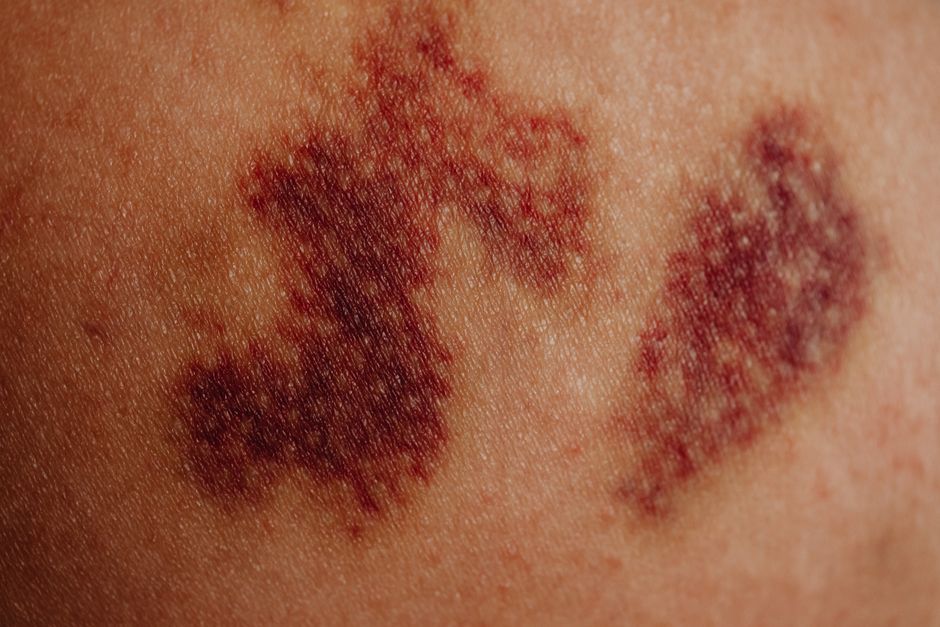
Most bruises heal on their own in about two weeks, and there is no cream, pill, or home remedy that makes them disappear faster. What you can do is protect the area, ease pain safely, and watch for signs that a bruise needs medical attention. The single most useful step in the first day or two is cold therapy, which limits how much blood leaks into the tissue.
What Actually Happens Under Your Skin
A bruise is bleeding. When small blood vessels under the skin break, blood leaks into the surrounding tissue. That pooled blood is what you see as discoloration.
Your body then does something remarkable. It breaks that blood down and carries it away. This is why bruises change color over time. Hemoglobin, the oxygen-carrying protein in red blood cells, degrades in stages. A fresh bruise is often red or purple. After a few days it can look blue, green, or yellow. The yellow stage is the tail end, when the breakdown products are being cleared.
That color progression is normal and expected. It is not a sign that something is wrong, and it is not a sign that a treatment is working.
Bruising happens more easily in some people than others. Age thins the skin and the blood vessel walls. Some medications affect clotting. So does alcohol. Sun damage plays a role too. If you bruise easily and often, that pattern itself is worth mentioning to a clinician.
How Do You Make Bruises Go Away Faster?
You cannot speed up the underlying healing process. What you can do is reduce how much the bruise grows in the first place, which sometimes means a smaller bruise from the start.
Cold is the main tool. Applying a cold pack to a fresh injury narrows blood vessels and can limit further bleeding into the tissue. The standard approach is to wrap ice or a cold pack in a thin cloth and apply it for short intervals during the first day or two. Never put ice directly on bare skin. Doing so can cause a cold burn.
After the first couple of days, some clinicians suggest switching to gentle warmth. The reasoning is that warmth increases blood flow, which may help clear the pooled blood. This is common practice, but the evidence that it changes how fast a bruise fades is limited. It is not harmful for most people, but it is not a proven accelerator either.
Elevating the injured area above heart level, when possible, can reduce swelling and limit blood pooling. This is most useful for bruises on the arms and legs.
What does not have solid evidence behind it:
- Arnica creams and gels. Some small studies suggest a modest effect, but the evidence is mixed and the studies are generally low quality. It is widely sold and widely used, but it is not a proven treatment.
- Vitamin K creams. These are marketed for bruising and have little clinical evidence supporting them for this use.
- Heparinoid gels. These are sometimes sold for bruising and swelling. Evidence for bruising specifically is weak.
- Oral bromelain or other enzyme supplements. No large human trials confirm these speed bruise resolution.
If a product promises to make a bruise vanish in days, that claim is not supported by good evidence.
When Should You Use Ice Versus Heat?
Timing matters more than temperature choice. The general rule is cold first, warmth later.
Ice in the first 24 to 48 hours is the established approach for acute injuries. It reduces pain and can limit swelling and further bleeding. Use it in short bursts with a barrier between the ice and your skin.
Heat after roughly 48 hours is a common recommendation. It may feel soothing and can help with stiffness in the surrounding area. Whether it meaningfully speeds bruise clearance is not well established.
One clarification worth knowing: the old advice to alternate ice and heat is often applied to muscle injuries, not to bruises specifically. For a simple bruise, there is no strong evidence that alternating does anything extra.




What About Pain Relief and Medications?
If a bruise hurts, over-the-counter pain relief can help. Acetaminophen is a reasonable first choice for many people because it does not affect clotting.
NSAIDs such as ibuprofen and aspirin are different. They reduce inflammation and pain, but they also interfere with platelet function, which is part of how blood clots. Some clinicians suggest avoiding them right after an injury if bruising is the main concern, because they may allow more bleeding. This is a reasonable precaution, though the effect on a typical minor bruise is not well studied.
If you take aspirin or a blood thinner for a medical reason, do not stop it because of a bruise. That decision belongs to your prescribing clinician.
Alcohol is worth mentioning here. It can widen blood vessels and affect clotting, and heavy drinking is associated with easier bruising. If you bruise more than usual after drinking, that is a real pattern, not a coincidence.
What Makes a Bruise Take Longer to Heal?
Several factors genuinely slow bruise resolution.
- Age. Skin and blood vessels become more fragile over time.
- Medications that thin the blood or affect platelets, including aspirin, warfarin, and direct oral anticoagulants.
- Conditions that affect clotting or platelets.
- Sun-damaged skin, which is thinner and less resilient.
- Continued activity or pressure on the injured area, which can keep irritating the tissue.
Location matters too. Bruises on the legs and feet tend to last longer than bruises on the face or arms. Gravity and distance from the heart mean fluid and breakdown products clear more slowly.
When Is a Bruise a Medical Concern?
Most bruises are minor. Some are not.
Seek medical care if:
- The bruise keeps growing or becomes very swollen and painful.
- You have bruising without any known injury.
- You bruise far more easily than you used to, or bruises appear in clusters.
- You have a bruise along with bleeding gums, nosebleeds that are hard to stop, or blood in urine or stool.
- The bruise does not fade after about two weeks, or it gets worse instead of better.
- You have a bruise near the eye with vision changes, or a bruise over a joint that limits movement.
Unexplained bruising can have many causes. It can reflect a medication effect, a platelet or clotting problem, or other conditions. It is not possible to tell which from looking at a bruise alone. That is exactly why a clinician may want to run blood tests.
A note on a common worry: a bruise that turns yellow does not mean it is infected or that something has gone wrong. Yellow is a normal late stage of the breakdown process.
Can You Prevent Bruises in the First Place?
You cannot prevent all bruises, but you can reduce some risks.
Protective gear during sports and household tasks helps. So does clearing clutter and improving lighting, especially for older adults, since falls are a major cause of bruising and worse injuries.
If you take a blood thinner, your clinician can discuss whether your dose and monitoring are appropriate. Do not adjust it yourself.
For people who bruise easily, keeping skin moisturized and protected from sun may help over time, since healthy skin is more resilient. This is reasonable general care, not a proven bruise-prevention method.
Frequently Asked Questions
How long does a bruise usually last?
Most minor bruises fade over about two weeks. Bruises on the legs often last longer than those on the face or arms.
Does ice actually make a bruise go away faster?
Ice does not speed up healing, but it can limit how much the bruise grows if applied soon after an injury. Use it wrapped in cloth, never directly on skin.
Should I be worried about bruising easily?
Bruising more easily than usual, or bruising without a known cause, is worth discussing with a clinician. It can have several causes, and only testing can sort out which one applies.
Do arnica creams work for bruises?
The evidence is mixed and generally low quality, so arnica is not a proven treatment. It is widely used, but no strong clinical evidence confirms it speeds bruise resolution.
