
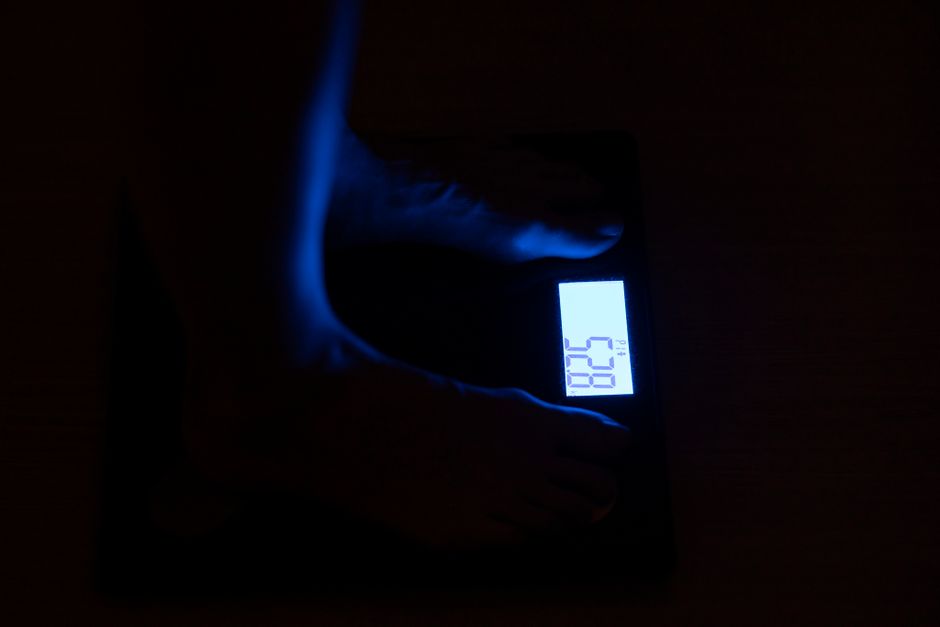
Losing twenty pounds comes down to one basic fact: you have to take in fewer calories than your body burns, and keep doing it long enough for the gap to add up. There is no food, supplement, or timing trick that replaces that math. What separates people who succeed from those who don’t is not willpower — it’s whether the plan is realistic enough to survive a bad week, a holiday, and a stressful month.
Twenty pounds is a meaningful but achievable goal for most adults. At a steady, sustainable pace, it usually takes somewhere in the range of three to six months. Faster loss is possible, but it tends to come back, and it often costs you muscle in the process.
How many calories do you need to cut to lose twenty pounds?
A pound of body fat stores roughly 3,500 calories. That number is a useful rough guide, not a precise law — real-world weight loss rarely matches the math exactly, because metabolism and energy expenditure shift as you lose weight.
Using that estimate, a deficit of about 500 calories per day works out to roughly one pound per week. At that pace, twenty pounds takes about twenty weeks, or close to five months. A deficit of 750 to 1,000 calories per day could get you there in ten to fourteen weeks, but larger deficits are harder to stick with and increase the risk of losing lean muscle.
Here’s the part most people don’t hear: your body pushes back. As you lose weight, you burn fewer calories at rest and during activity. A smaller body simply costs less to run. This is why weight loss often stalls after the first several weeks even when nothing about your behavior has changed. It’s not a sign you’ve failed. It’s expected physiology.
That also means the deficit you start with may not be the deficit you need three months in. Some adjustment along the way is normal and not a sign the plan is broken.
What should you actually eat?
There is no single diet that wins. When researchers compare weight-loss approaches head to head, the differences in average results are usually small. What matters more is whether you can stay on the plan.
That said, some eating patterns make the calorie deficit easier to live with. Protein and fiber both increase satiety — the feeling of being full — so a diet built around them tends to feel less like deprivation.
- Protein at most meals. Eggs, poultry, fish, beans, lentils, Greek yogurt, tofu. Protein helps preserve muscle during weight loss and blunts hunger.
- Vegetables in volume. They add bulk and fiber for very few calories.
- Whole grains and legumes. Oats, brown rice, beans, and lentils digest slowly and keep hunger steadier than refined starches.
- Fewer liquid calories. Sugary drinks and many coffee-shop beverages add calories without making you full.
- Less ultra-processed food. It tends to be calorie-dense and easy to overeat.
You don’t have to eliminate any food group. Restriction that feels punishing rarely lasts. A plan you can follow at 80 percent for six months beats a perfect plan you abandon in three weeks.
Do you need to exercise to lose twenty pounds?
You can lose weight through diet alone. Exercise is not required for the calorie deficit, and it’s a poor tool for creating one — burning 300 calories takes real effort but can be undone by one snack.
Where exercise earns its place is in what happens to your body composition and your long-term odds. Resistance training — lifting weights, using bands, or bodyweight work — helps preserve muscle while you lose fat. Losing weight without resistance training tends to mean losing a mix of fat and muscle, which can leave you smaller but not necessarily leaner or stronger.
Physical activity also appears to help with weight maintenance, which is the harder problem. Most people who lose a significant amount of weight and keep it off report regular activity as part of their routine.
Practical target: aim for the general public health recommendation of at least 150 minutes of moderate activity per week, plus two sessions of strength training. That’s a floor, not a ceiling.





Why does weight loss slow down or stop?
Plateaus are the rule, not the exception. Several things drive them.
As covered above, a lighter body burns fewer calories. You may also move less without noticing — smaller, less frequent movements that add up over a day. And adherence tends to drift. Portions creep up. The “small” bites and tastes stop being small.
Before assuming your metabolism is broken, look at the boring explanations first. Are you tracking accurately? Have you been estimating portions? Has your activity dropped? These account for most stalls.
If the scale hasn’t moved for several weeks and your habits are genuinely unchanged, a modest adjustment — a slightly smaller deficit or a bit more activity — is reasonable. But constant tinkering every few days just adds noise. Give any change a few weeks before judging it.
How To Lose Twenty Pounds without wrecking your health
The safest approach is the one that doesn’t require extremes. Very low calorie diets — under roughly 800 calories per day — can produce fast results but should only be done under medical supervision, because of risks including nutrient deficiencies, gallstones, and muscle loss.
Signs you’re pushing too hard include persistent fatigue, hair thinning, feeling cold all the time, disrupted sleep, and losing more than about two pounds per week after the first couple of weeks. Rapid early loss is often water, not fat, so don’t read too much into week one.
Some people should talk to a clinician before starting any weight-loss plan: anyone who is pregnant or breastfeeding, anyone with diabetes or on blood-sugar medication, people with a history of eating disorders, and anyone taking medications that affect weight or blood sugar. No clinical guidelines exist for weight loss during pregnancy — it is not recommended.
What actually predicts success?
People who lose twenty pounds and keep it off tend to share a few habits, and they aren’t glamorous.
- They weigh themselves regularly, so small gains get caught early.
- They eat a fairly consistent pattern rather than constant on-and-off dieting.
- They stay physically active, often daily.
- They plan for setbacks instead of treating one bad day as a failure.
The maintenance phase is where most weight loss is lost. Your body defends its higher weight, and hunger signals often stay elevated for a while after the weight comes off. Knowing this in advance makes it less discouraging when it happens.
Twenty pounds is not a mystery. It’s a modest deficit, held long enough, supported by enough protein, movement, and sleep to make it livable. The plan that works is the one you can still follow when life gets messy.
Frequently Asked Questions
How long does it take to lose twenty pounds?
At a sustainable pace of about one pound per week, it takes roughly twenty weeks, or close to five months. Faster loss is possible with a larger deficit but is harder to maintain and increases muscle loss.
Can I lose twenty pounds without exercise?
Yes — weight loss depends mainly on your calorie intake, not on exercise. However, resistance training helps preserve muscle and supports keeping the weight off long term.
Why am I not losing weight in a calorie deficit?
Common causes include underestimating how much you’re eating, reduced daily movement, and the natural drop in calories burned as you get lighter. Give any adjustment a few weeks before judging it.
Is it safe to lose twenty pounds in a month?
No — losing twenty pounds in a month would require an extreme deficit and is not considered safe for most people. Very low calorie diets should only be done under medical supervision.
