
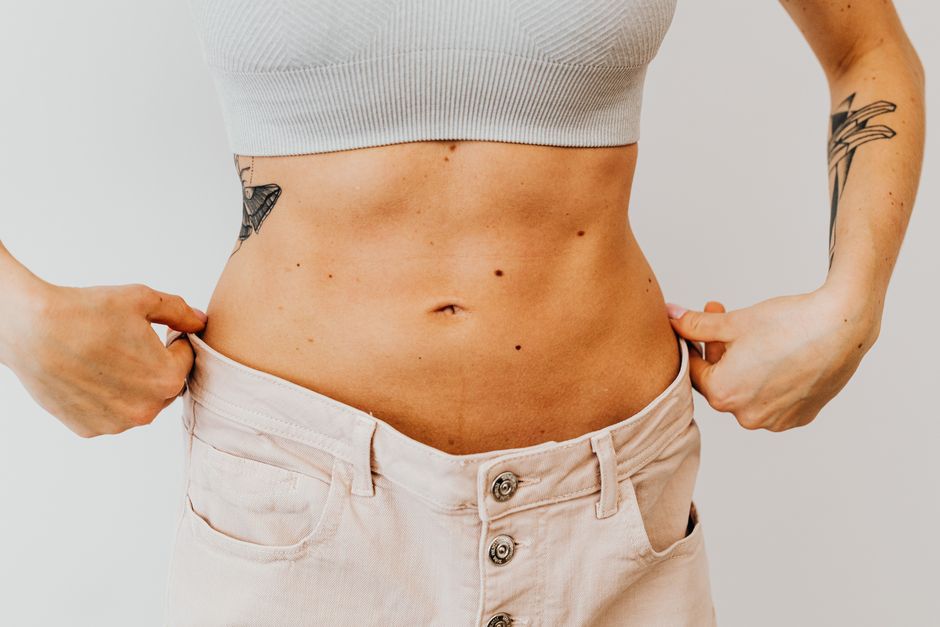
Loose skin happens when your body loses fat faster than your skin can tighten back up. The medical term is skin laxity, and it is a normal part of weight loss, aging, and pregnancy. Your skin has collagen and elastin fibers that act like rubber bands. Stretch them out for a long time and they do not snap back perfectly. The key factors are how much weight you lost, how fast you lost it, your age, and genetics. There is no magic cream that fixes it completely, but some strategies do help more than others.
What Causes Loose Skin During Weight Loss?
When you gain weight, your skin stretches to cover the larger volume. This is a slow process for most people, so the skin adapts over time. When you lose weight quickly, the fat underneath disappears faster than the skin can shrink. The skin is left with extra surface area and no fat to fill it out.
Research published in the journal Obesity found that people who lost more than 100 pounds often had significant loose skin. The faster the weight loss, the more likely the skin could not keep up. Gastric bypass patients, for example, often lose weight rapidly and report loose skin as a common side effect. The skin simply did not have enough time to contract.
Age matters a lot here. Your skin produces less collagen and elastin as you get older. A 25-year-old who loses 50 pounds will have much better skin retraction than a 55-year-old who loses the same amount. That is not fair, but it is biology. Smoking and sun damage also break down collagen over time, making loose skin worse.
Does Aging Alone Cause Loose Skin?
Aging causes loose skin even without weight loss. Starting around age 30, your body produces about 1 percent less collagen each year. By age 50, your skin has significantly less structural support. The elastin fibers that let skin snap back also degrade with time and sun exposure.
Gravity pulls everything down over decades. That is why you see sagging skin on the arms, neck, and jawline in older adults who never lost weight. The process is gradual and unavoidable, but some factors speed it up. Chronic dehydration, poor nutrition, and repeated sunburns all accelerate collagen breakdown. The American Academy of Dermatology states that UV exposure is the single biggest cause of premature skin aging.
One thing people do not realize: rapid weight loss in your 50s or 60s will produce more loose skin than the same weight loss in your 20s. Your skin simply cannot manufacture enough new collagen to fill the gap. If you are planning significant weight loss later in life, expect some loose skin and plan for it rather than being surprised.
How Do You Get Loose Skin Weight Loss Aging And More — What Actually Works?
Let us be direct about what helps and what does not. The strongest evidence supports building muscle and losing weight slowly. When you build muscle underneath loose skin, it fills out some of the extra space. That is why people who strength train during weight loss often look tighter than those who only do cardio. The muscle mass acts like a natural filler.
Slow weight loss gives your skin time to contract. The CDC recommends losing 1 to 2 pounds per week for sustainable weight loss. That pace also gives collagen fibers a chance to remodel gradually. Crash dieting guarantees more loose skin because the fat disappears too fast for the skin to shrink.
Hydration and nutrition matter more than most people think. Your skin needs protein, vitamin C, and zinc to make collagen. A study in the American Journal of Clinical Nutrition found that higher vitamin C intake was linked to better skin elasticity. Drinking enough water keeps skin plump and helps it maintain its structure. Dehydrated skin looks looser than it actually is.
Retinoid creams, specifically tretinoin, have some evidence for improving skin firmness. They work by stimulating collagen production in the top layers of skin. Results are modest, not dramatic. You will not get rid of significant loose skin with a cream alone, but it can help mild cases.
| Intervention | Evidence Level | Realistic Outcome |
|---|---|---|
| Strength training | Strong | Fills loose skin with muscle, improves appearance |
| Slow weight loss (1-2 lbs/week) | Strong | Reduces severity of loose skin |
| Retinoid creams | Moderate | Mild improvement in firmness |
| Collagen supplements | Weak | Minimal evidence for skin tightening |
| Surgery (body contouring) | Strong | Removes excess skin permanently |





What Does Not Work for Loose Skin?
There is a lot of bad information online about loose skin. Let me save you some money. Topical creams that claim to “tighten” loose skin are mostly marketing. No cream can penetrate deep enough to restructure collagen and elastin fibers in the dermis. The FDA has approved very few topical treatments for skin tightening, and those that exist show mild results at best.
Collagen supplements are popular, but the evidence is weak. Your body breaks down ingested collagen into amino acids and distributes them wherever needed — not specifically to your skin. Some small studies show modest improvements in skin hydration and elasticity, but the effect is small. You would get more benefit from eating enough protein overall.
Body wraps, saunas, and “fat melting” devices do not tighten loose skin. They might cause temporary water loss that makes skin look slightly firmer for a few hours. That is it. The loose skin comes right back once you rehydrate. Do not waste money on these.
Laser and radiofrequency treatments exist and have some evidence. They heat the deeper layers of skin to stimulate collagen production. Results are real but subtle. You typically need multiple sessions, and the cost adds up. For mild to moderate loose skin, they can help. For significant loose skin after major weight loss, they will not give you the results you want.
When Is Surgery the Only Option?
For significant loose skin, surgery is the only way to remove it completely. Procedures like abdominoplasty (tummy tuck), arm lift, and thigh lift cut away the excess skin and pull the remaining skin tight. The results are permanent as long as you do not gain and lose weight again.
This is major surgery with real risks. Scarring, infection, and blood clots are possible. Recovery takes weeks. The American Society of Plastic Surgeons reports that body contouring procedures after massive weight loss have high patient satisfaction rates, but they are not cosmetic fixes. They are reconstructive surgeries for people whose loose skin causes rashes, infections, or mobility problems.
Most insurance companies will only cover these surgeries if the loose skin causes documented medical issues. Rashes that do not heal, recurrent skin infections, or functional problems are usually required for coverage. Cosmetic reasons alone are rarely covered. If you are considering surgery, wait until your weight has been stable for at least six months. Losing more weight after surgery can cause new loose skin and undo the results.
Common Misconceptions About Loose Skin
One of the most persistent myths is that exercise alone can tighten loose skin. Exercise builds muscle and burns fat, but it cannot shrink skin that has already stretched. The skin is a separate organ. You can do 1,000 crunches a day and still have loose skin on your stomach if the underlying structure is stretched out. The muscle underneath will look better, but the skin itself will not shrink.
Another myth is that loose skin means you lost weight too fast. While rapid weight loss does make loose skin worse, even slow weight loss can leave loose skin if you lost a significant amount. People who lose 100 pounds over two years still often have loose skin. The skin was stretched for years and simply cannot fully retract. It is not a failure of your weight loss method. It is a physical limitation of human skin.
Some people believe that loose skin will eventually go away on its own if you wait long enough. For mild cases, it can improve over 6 to 12 months. Your skin continues to remodel collagen slowly. But for moderate to severe loose skin, waiting will not make it disappear. The skin has reached its new resting state. No amount of time will make it tighten back to where it was before.
- Exercise builds muscle but does not shrink skin directly
- Slow weight loss helps but does not guarantee no loose skin
- Time helps mild cases but not severe ones
- Creams cannot restructure deep skin layers
- Surgery is the only permanent fix for significant excess skin
Frequently Asked Questions
Can loose skin tighten on its own after weight loss?
Mild loose skin can tighten somewhat over 6 to 12 months as collagen remodels. Moderate to severe loose skin will not fully tighten without intervention.
Does building muscle help reduce loose skin?
Building muscle fills out the space under loose skin and improves appearance, but it does not shrink the skin itself. The visual improvement can be significant.
How much weight loss causes loose skin?
There is no exact number, but losing more than 50 pounds significantly increases the chance of noticeable loose skin. The more weight lost, the more likely loose skin becomes.
Is surgery the only way to get rid of loose skin?
For significant loose skin, surgery is the only method that removes the excess skin permanently. Non-surgical treatments offer modest improvements for mild cases only.
