
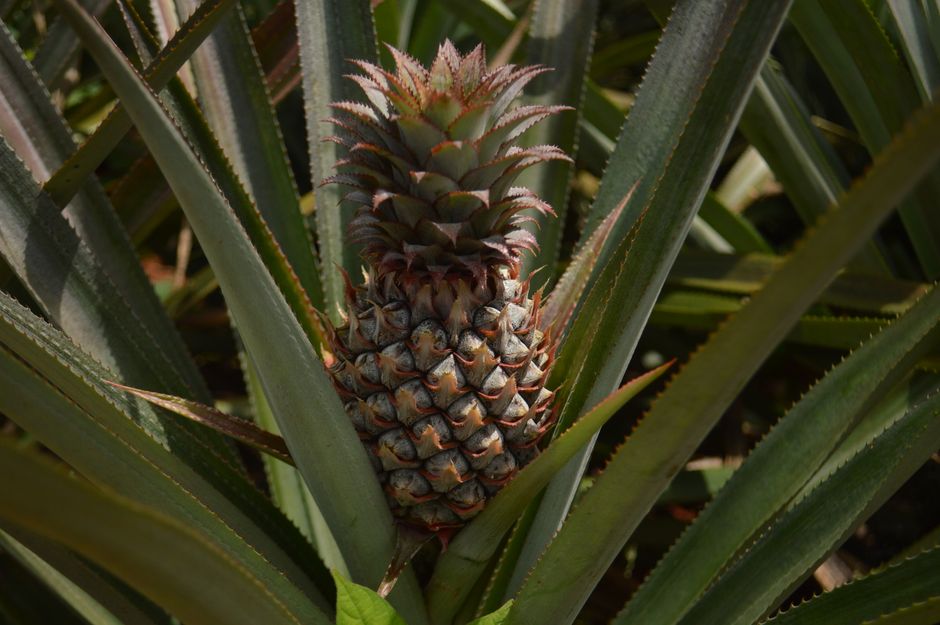
You bring a pineapple home from the store and it is hard as a rock. The leaves are green but the fruit gives nothing when you squeeze it. You want to eat it tonight but it is not ready. The good news is you can ripen a pineapple at home. The process is simple: keep it at room temperature and use ethylene gas from other fruits to speed things up. Pineapples do not get sweeter after they are picked but they do get softer and juicier. Here is what actually works and what does not.
Does a Pineapple Ripen After It Is Picked?
This is where most people get confused. A pineapple is a non-climacteric fruit. That is a fancy way of saying it stops ripening the moment it is harvested. Unlike bananas or avocados which keep producing ethylene and converting starches to sugar pineapples do not do that. Research shows that once a pineapple is cut from the plant its sugar content is locked in. It will not get sweeter no matter what you do.
What does change is texture and acidity. The fruit softens as enzymes break down cell walls. The tartness may mellow slightly. The flesh becomes juicier. So when people say they “ripened” a pineapple at home what they really did was soften it. That matters because a soft pineapple tastes better than a rock-hard one. The perception of sweetness improves when the fruit is not fighting your teeth.
As of 2026 current research suggests that the sugar content in pineapples is determined entirely by growing conditions and harvest timing. If you buy a pineapple that tastes sour it was picked too early. No amount of countertop waiting will fix that. Choose wisely at the store and your job at home becomes much easier.
How Do You Get A Pineapple To Ripen Faster?
The most reliable method uses ethylene gas. Ethylene is a natural plant hormone that triggers softening in many fruits. Pineapples respond to it even though they are non-climacteric. The trick is to place your pineapple in a paper bag with a fruit that produces high levels of ethylene.
Apples and bananas are your best tools here. A ripe banana or a red apple releases enough ethylene to soften a pineapple noticeably in 24 to 48 hours. Put the pineapple and the ethylene-producing fruit in a brown paper bag. Fold the top loosely. Do not seal it airtight. The gas needs to circulate. Leave the bag on your counter at room temperature. Check the pineapple daily by gently pressing the bottom.
Here is a quick comparison of common methods:
| Method | Time to Soften | Effectiveness |
|---|---|---|
| Paper bag with banana or apple | 24-48 hours | High |
| Room temperature alone | 2-3 days | Moderate |
| Placing upside down | 2-3 days | Low to moderate |
| Submerging in warm water | Not recommended | Low |
The paper bag method works because it concentrates ethylene gas around the fruit. Without the bag the gas disperses into the air. The fruit still softens but more slowly. Some people report success with placing the pineapple upside down on the counter. The idea is that sugars concentrate at the bottom. Evidence for this is weak but it does not hurt to try.
What Is the Best Way to Tell If a Pineapple Is Ripe?
You cannot rely on color alone. Many people think a yellow pineapple is ripe and a green one is not. That is not accurate. Some pineapple varieties stay green when fully ripe. Others turn golden. The color depends on the cultivar and growing conditions not just ripeness.
The most reliable test is smell. A ripe pineapple smells sweet at the base. Lift the fruit and sniff the bottom end. If you get a strong sweet fragrance it is ready. If there is no smell it needs more time. If it smells sour or fermented it is overripe and possibly rotting.
The leaf test is also useful. Grab one of the inner leaves near the top and tug gently. If it comes away with little resistance the pineapple is ripe. If the leaves hold tight the fruit needs more time. This is not foolproof but it is a solid indicator. Combine the smell test and the leaf test for the best read.
Texture matters too. A ripe pineapple gives slightly when you squeeze it. It should not be mushy. It should have a little give like a firm avocado. If it feels hard as a rock it is not ready. If it feels soft or has soft spots it may be past its prime.





Does Turning a Pineapple Upside Down Help It Ripen?
This is a popular trick on social media. The claim is that placing a pineapple upside down for a day or two allows sugars to redistribute from the base to the top. The idea sounds reasonable because pineapples are harvested with the sugar concentrated at the bottom. Gravity might pull some of that sugar upward.
There is no strong evidence that this works. Studies on post-harvest pineapple physiology do not mention gravity as a factor in sugar distribution. Sugars are dissolved in the fruit’s juice. They do not flow like water through a straw. The cells hold them in place. Flipping the fruit does not change where the sugar sits.
That said some people report that upside-down pineapples taste sweeter. This could be a placebo effect. It could also be that the fruit softens more evenly when pressure is distributed differently. If you want to try it there is no harm. Put the pineapple upside down on a plate in the fridge or on the counter. Leave it for one to two days. Check it with the smell test before cutting. Just know that the science does not back the claim strongly.
What Should You Avoid When Ripening a Pineapple?
Do not put a pineapple in the refrigerator before it is soft. Cold temperatures slow down the softening process dramatically. If you store a hard pineapple in the fridge it will stay hard for days or weeks. The cold stops enzyme activity. You want those enzymes working so keep the fruit at room temperature until it reaches the texture you want.
Do not submerge the pineapple in water. Some online advice suggests soaking a pineapple in warm water to ripen it faster. This does not work. Water does not trigger ethylene production. It can also introduce bacteria into the fruit’s pores and cause spoilage. The pineapple will soften from water damage not ripening. That is not what you want.
Do not cut the pineapple before it is soft. Once you cut the fruit it stops responding to ethylene entirely. The exposed flesh will begin to oxidize and spoil. You cannot ripen a cut pineapple. Wait until the whole fruit passes the smell and leaf tests before you slice into it.
Avoid using plastic bags for ripening. Plastic traps moisture and can cause mold growth. Paper bags allow the fruit to breathe while still concentrating ethylene. If you do not have a paper bag a clean kitchen towel loosely wrapped around the fruit can work in a pinch.
How Do You Store a Ripe Pineapple Once It Is Ready?
Once your pineapple is soft and fragrant you need to slow down the process. The fruit will continue to soften and eventually rot. Refrigeration is your friend here. Put the whole pineapple in the fridge. It will stay good for three to five days. The cold pauses enzyme activity without damaging the fruit.
If you cut the pineapple store the pieces in an airtight container in the fridge. Cut pineapple lasts about three to four days. You can also freeze pineapple chunks for up to six months. Frozen pineapple works well in smoothies or cooking. The texture changes after thawing but the flavor holds.
Do not wash the pineapple before storing it. Moisture on the skin can promote mold. Wash it right before you cut it. If you see any soft spots or oozing liquid the fruit is starting to spoil. Use it immediately or discard the affected areas.
Frequently Asked Questions
Can you ripen a pineapple in the microwave?
No. Microwaving a pineapple heats the flesh but does not trigger ripening. It will be warm and slightly softer but the texture and flavor will not improve.
How long does it take to ripen a pineapple at room temperature?
At room temperature alone a pineapple softens in two to three days. With a banana or apple in a paper bag it can soften in 24 to 48 hours.
Does a pineapple get sweeter after you pick it?
No. Pineapples do not produce more sugar after harvest. They only soften and become less acidic which makes them taste sweeter even though sugar content stays the same.
What is the fastest way to ripen a pineapple?
Place it in a paper bag with a ripe banana or apple at room temperature. Check it after 24 hours. This is the fastest reliable method.
