
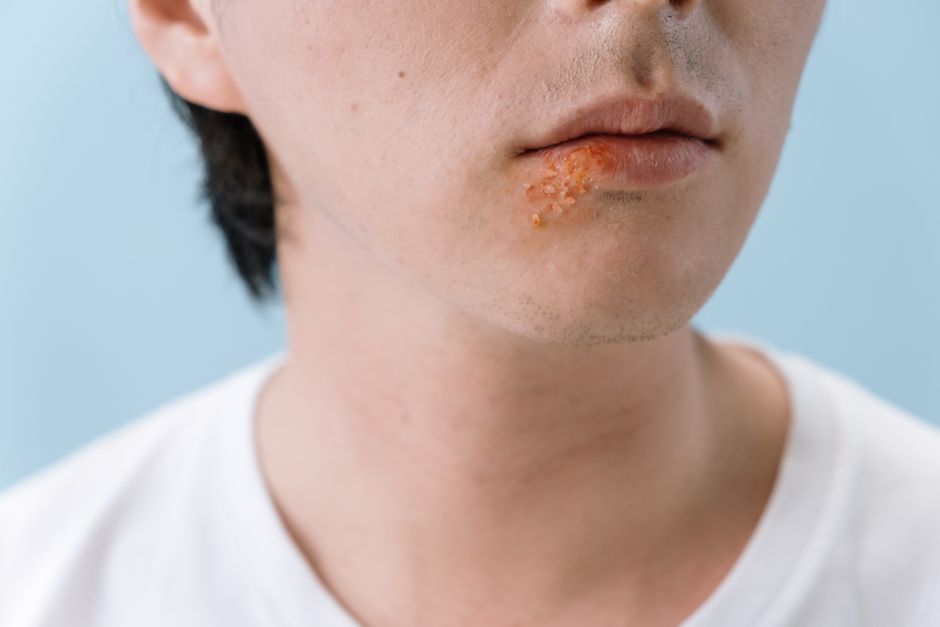
Cold sores are caused by the herpes simplex virus, most commonly type 1 (HSV-1). The virus spreads through direct skin-to-skin contact, often through a kiss or by sharing items like lip balm or utensils. Once you have the virus, it stays in your body for life and can reactivate, producing a new cold sore when certain triggers occur.
How Do You Get A Cold Sore Causes Triggers? Root Causes
The root cause of every cold sore is the herpes simplex virus. Most people get HSV-1 during childhood, often from an infected adult kissing them. The virus enters through small breaks in the skin or through the mucous membranes of the mouth and lips.
After the first infection, the virus travels to nerve cells near the face, where it remains dormant. Most people who carry the virus never get visible cold sores. Others experience outbreaks when the virus reactivates and travels back to the skin surface.
You cannot get a cold sore from a cold or the flu. The name is misleading. The virus is separate from respiratory infections, though stress or illness can trigger an outbreak in someone who already carries the virus.
What Are the Most Common Cold Sore Triggers?
Several triggers can wake the dormant virus. The most frequently reported ones include stress, fatigue, illness, and sun exposure. For many people, a fever, cold, or other infection is enough to cause an outbreak.
Sun exposure is a common trigger. Ultraviolet light damages the skin around the lips, which can reactivate the virus. Using lip balm with SPF may help reduce this risk, though this has not been confirmed by large clinical trials.
Hormonal changes can also play a role. Some women report more frequent outbreaks around their menstrual period. Research on this link is limited, but the pattern is widely reported in clinical practice.
Physical trauma to the lip area can trigger an outbreak. Dental work, facial cosmetic procedures, or even chapping from wind and cold weather can cause the virus to reactivate. This is why some people get cold sores after a dental appointment.
How Does the Cold Sore Virus Spread?
The virus spreads through direct contact with an active cold sore. This includes kissing, sharing drinks, sharing utensils, or touching the sore and then touching another person. The fluid inside a cold sore blister contains live virus.
Viral shedding can also occur without visible symptoms. This is called asymptomatic shedding. People can pass the virus to others even when they have no visible cold sore, though the risk is lower than during an active outbreak.
Oral sex can transmit HSV-1 to the genital area. This is now a common cause of genital herpes in some populations. Using barrier protection during oral sex reduces but does not eliminate the risk of transmission.
The virus does not survive long on surfaces. You are unlikely to catch HSV-1 from a doorknob, towel, or toilet seat. The virus needs direct skin contact and a warm, moist environment to survive.





What Does a Cold Sore Look Like and How Long Does It Last?
A cold sore goes through distinct stages. It starts with a tingling or burning sensation on the lip, often a day or two before anything visible appears. This is called the prodrome stage.
Next, small fluid-filled blisters form. These blisters cluster together, then burst and weep. A crust forms over the area, which eventually cracks and peels. The final stage is healing, where the scab falls off and new skin forms.
The entire process typically lasts 7 to 10 days from first tingling to complete healing. The first outbreak is often the most severe and can last longer. Recurrent outbreaks tend to be milder and shorter.
Cold sores usually appear on the lips or just outside the mouth. They can occasionally appear on the nose, chin, or cheeks. Cold sores inside the mouth are less common and are usually called herpetic stomatitis, which occurs more often in children during the first infection.
Can You Prevent Cold Sores?
Prevention focuses on two goals: avoiding the initial infection and preventing reactivation if you already carry the virus. Avoiding direct contact with active cold sores is the main way to prevent the initial infection.
If you already carry the virus, identifying your personal triggers is the most practical prevention strategy. If sun exposure triggers your outbreaks, using SPF lip balm makes sense. If stress is your trigger, stress management techniques may help reduce outbreak frequency.
Antiviral medications can be taken daily to prevent outbreaks in people who get frequent cold sores. This is called suppressive therapy. It is generally reserved for people who have more than six outbreaks per year or who have severe symptoms. A healthcare provider can prescribe these medications.
Some evidence suggests that certain supplements may help prevent outbreaks. Lysine, an amino acid, is commonly marketed for this purpose. Some studies suggest it may help, but the evidence is mixed and not strong enough for a firm recommendation.
What Treatments Are Available for Cold Sores?
Over-the-counter creams containing docosanol can shorten healing time if applied early. These work best when used at the first sign of tingling, before blisters appear. They are safe for most adults but are not a cure.
Prescription antiviral medications are more effective. Drugs like acyclovir, valacyclovir, and famciclovir can reduce outbreak duration and severity. They work best when started within 24 to 48 hours of the first symptoms.
These medications are generally well tolerated. Common side effects include nausea, headache, and diarrhea. Serious side effects are rare but can occur, especially in people with kidney problems. A doctor should determine whether prescription treatment is appropriate for you.
Home remedies like ice packs, aloe vera, and tea tree oil are popular. The evidence for these is limited. Ice may provide temporary pain relief. There is no strong evidence that herbal remedies shorten outbreak duration.
When Should You See a Doctor About a Cold Sore?
Most cold sores do not require medical attention and resolve on their own. However, some situations warrant a doctor visit. If the cold sore does not heal within two weeks, you should have it evaluated.
See a doctor if you have frequent outbreaks, severe pain, or if the cold sore spreads to other areas. People with weakened immune systems should seek medical advice early, as they are at higher risk for complications.
Cold sores near the eyes are a medical concern. The virus can spread to the eye and cause corneal damage, which can threaten vision. If you develop a cold sore on or near your eye, seek medical attention promptly.
People with eczema should be cautious. The virus can spread rapidly over eczematous skin, causing a serious condition called eczema herpeticum. This requires immediate medical treatment.
Can Cold Sores Be Cured?
No. There is currently no cure for HSV-1 infection. Once you carry the virus, you carry it for life. The virus hides in nerve cells where the immune system cannot fully eliminate it.
Treatment focuses on managing outbreaks and reducing transmission risk. Antiviral medications do not remove the virus from the body. They only suppress viral activity during an outbreak.
Research into a cure is ongoing. Some experimental approaches include gene editing and therapeutic vaccines. These are in early stages and not available to the public. No timeline exists for when or if a cure will become available.
Are Cold Sores the Same as Canker Sores?
No. Cold sores and canker sores are completely different conditions. Cold sores are caused by the herpes simplex virus and are contagious. They appear on the outside of the mouth, usually on the lips.
Canker sores are not caused by a virus and are not contagious. They appear inside the mouth, on the soft tissues like the inside of the cheeks or under the tongue. They are shallow, painful ulcers with a white or gray center and a red border.
The cause of canker sores is not fully understood. Stress, certain foods, and minor mouth injuries may contribute. They typically heal on their own within one to two weeks.
This distinction matters because treatment differs. Antiviral medications do not help canker sores. Similarly, treatments for canker sores do not affect the herpes virus.
Frequently Asked Questions
How do you get a cold sore for the first time?
You get it through direct skin contact with someone who carries the herpes simplex virus, usually through kissing or sharing items that touched an active sore. Most people are infected during childhood from an adult who had the virus.
Can you get a cold sore from stress?
Stress does not cause the virus, but it can trigger an outbreak in someone who already carries HSV-1. Stress affects the immune system, which may allow the dormant virus to reactivate.
Are cold sores contagious before they appear?
Yes, the virus can be shed from the skin before visible blisters form. The tingling sensation that precedes a cold sore signals that viral shedding may already be happening.
Can you get a cold sore from sharing a drink?
Yes, sharing a drink with someone who has an active cold sore can transmit the virus. The virus is present in saliva and in the fluid from the blisters.
