
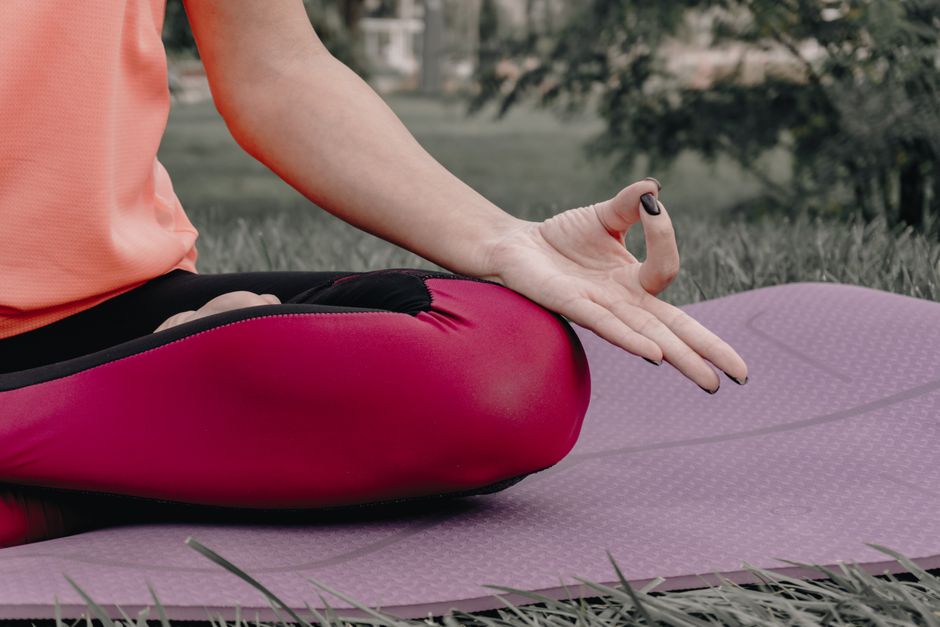
Yoga is a practice that connects your breath with movement and focus. You do not need to be flexible, strong, or calm to start. You only need a willingness to learn and a comfortable space to move.
How Do You Do Yoga?
You do yoga by moving through a series of poses while breathing steadily. A typical session starts with simple breathing exercises, moves into physical postures, and ends with a short rest. The goal is not to perfect a pose. The goal is to pay attention to how your body feels as you move.
Start with basic poses like Child’s Pose, Downward-Facing Dog, and Mountain Pose. Hold each pose for a few breaths. If something hurts, back off. Yoga should create a mild stretch, never sharp pain.
What Do You Need to Start Yoga?
You need very little to begin. A yoga mat is helpful because it gives you traction and cushions your joints. If you do not have a mat, a towel on a carpeted floor works for many poses.
Wear clothes that allow you to move freely. You do not need special yoga clothes. Loose or stretchy pants and a fitted shirt work well. Avoid clothes that are so loose they get in your way when you bend forward or invert.
You might want a yoga block or a stack of books. These props help you reach the floor in poses where your flexibility is limited. A strap or a belt can help with poses that require you to hold your feet or legs. None of these are required. They are tools, not requirements.
How Long Should a Yoga Session Be?
A short session is better than no session. Ten minutes of gentle movement and breathing is a real yoga practice. Fifteen to twenty minutes is enough to feel a difference in your body. Longer sessions are fine if you have the time and energy.
Consistency matters more than duration. A daily ten-minute practice builds more skill and comfort than a single two-hour session once a month. Try to practice at the same time each day so it becomes a habit.
Morning practices can energize you. Evening practices can help you unwind. The best time is the time you will actually stick with.




What Are the Basic Yoga Poses for Beginners?
Start with these five foundational poses. They appear in almost every yoga class and build a solid base for harder moves.
- Mountain Pose: Stand tall with feet together or hip-width apart. Press all four corners of your feet into the floor. Relax your shoulders away from your ears. Breathe here for five breaths.
- Downward-Facing Dog: Start on your hands and knees. Tuck your toes and lift your hips up and back. Your body forms an inverted V shape. Pedal your feet gently if your hamstrings feel tight.
- Child’s Pose: Kneel on the floor, sit back on your heels, and fold forward. Extend your arms in front of you or rest them alongside your body. This is a resting pose. Use it whenever you need a break.
- Cat-Cow: Start on your hands and knees. Inhale as you drop your belly and lift your chest and tailbone. Exhale as you round your spine toward the ceiling. Move slowly with your breath.
- Cobra Pose: Lie on your belly with your hands under your shoulders. Press your chest forward and up while keeping your hips on the floor. Keep your elbows slightly bent. Stop if you feel pressure in your lower back.
Hold each pose for three to five slow breaths. Move between them slowly. Rushing through poses increases your risk of injury and reduces the mental benefits of the practice.
How Do You Breathe During Yoga?
Breathing is the core of yoga. In most styles, you inhale through your nose and exhale through your nose. Your breath should be smooth and even, never forced or strained.
Use your breath as a guide. If your breath becomes ragged or you feel out of breath, you are pushing too hard. Back off the pose until your breathing returns to normal. This is the most important skill in yoga.
A simple breathing exercise called diaphragmatic breathing helps calm your nervous system. Place one hand on your belly. Inhale so your belly rises. Exhale so your belly falls. Your chest should stay relatively still. Practice this for two minutes before your poses.
How Do You Know If You Are Doing a Pose Correctly?
Correct form is about alignment and sensation, not appearance. A pose looks different on every body. What matters is how it feels.
You should feel a stretch in the target muscle group. In a hamstring stretch, you feel it behind your thigh. In a hip opener, you feel it in your buttock or outer hip. You should never feel sharp pain, numbness, or tingling.
If you cannot feel the intended stretch, you are likely not in the right position. Adjust your stance or use a prop. If you feel pain in a joint, especially a knee or wrist, stop and reposition. Joint pain is a warning sign, not a challenge to push through.
Using a mirror can help you check your alignment. Better yet, take a beginner class with a qualified instructor. A teacher can see your body from angles you cannot and give you specific corrections. Many studios offer beginner series that teach the fundamentals systematically.
What Are the Common Mistakes Beginners Make?
Pushing too hard is the most common mistake. Beginners often think yoga is about how far you can stretch. It is not. Forcing a stretch past your comfortable range can strain muscles and injure joints. Honor your edge without pushing past it.
Holding your breath is another common error. When a pose feels challenging, people naturally tense up and stop breathing. This defeats the purpose of yoga. If you notice you are holding your breath, soften the pose until you can breathe freely.
Comparing yourself to others is a mental mistake. The person next to you may have practiced for years. Their body is different from yours. Yoga is not a competition. Your practice is yours alone.
Skipping the final rest is also common. The last pose, usually Savasana or Corpse Pose, allows your body to integrate the work you just did. Lying still for three to five minutes at the end of practice is not wasted time. It is part of the practice.
How Do You Choose a Yoga Style?
Different styles of yoga suit different goals and personalities. Here is a brief overview of the most common styles you will encounter.
| Style | Pace | Best For |
|---|---|---|
| Hatha | Slow | Beginners, learning fundamentals |
| Vinyasa | Moderate to fast | People who like movement and flow |
| Yin | Very slow | Deep stretching, relaxation |
| Restorative | Very slow | Stress relief, recovery |
| Power Yoga | Fast, athletic | People seeking a physical challenge |
| Iyengar | Slow, precise | Detailed alignment, use of props |
If you are new, Hatha or Iyengar classes give you the most instruction. Vinyasa is popular but moves quickly. Yin and Restorative are gentle but may not give you the physical challenge you want. Try a few styles to see which one fits your body and your goals.
Is Yoga Safe for Everyone?
Yoga is generally safe for healthy adults, but it is not risk-free. Some poses are not appropriate for certain conditions. If you have high blood pressure, avoid inversions where your head goes below your heart. If you have glaucoma, the same advice applies. If you have recent joint replacements or herniated discs, many poses are off-limits.
Pregnant women should avoid poses that involve lying flat on the back after the first trimester, deep twists, and hot yoga. No clinical guidelines exist for every yoga pose during pregnancy. Check with your obstetric provider before starting or continuing a practice.
If you have a chronic condition, talk to your doctor before starting yoga. Ask specifically about poses to avoid. A qualified instructor should also be informed about your condition so they can offer modifications or alternatives.
How Long Until You See Results from Yoga?
Some benefits appear quickly. Most people feel more relaxed after a single session. Sleep often improves within a few weeks of regular practice. Flexibility improves gradually over several weeks to months, depending on how often you practice and your starting point.
Muscle strength gains from yoga are real but develop more slowly than with weight training. Studies show that regular yoga practice can improve balance, flexibility, and strength over time. The exact timeline varies by individual and by how consistently you practice.
Do not expect immediate physical transformation. Expect gradual, steady change. The mental benefits, like reduced stress and better focus, often arrive before the physical changes become visible.
Frequently Asked Questions
How often should I do yoga as a beginner?
Two to three times per week is a good starting point. This gives your body time to adapt while still building a consistent habit.
Can I learn yoga from online videos?
Yes, online videos can teach you the basics, but they cannot correct your form. Consider a few in-person classes to learn proper alignment before relying on videos.
What if I am not flexible enough for yoga?
Flexibility is not a requirement for yoga. Yoga builds flexibility over time. Starting stiff is normal and expected.
Do I need to be able to touch my toes?
No. Many beginners cannot touch their toes. Using a strap or bending your knees is completely acceptable in every beginner class.
