
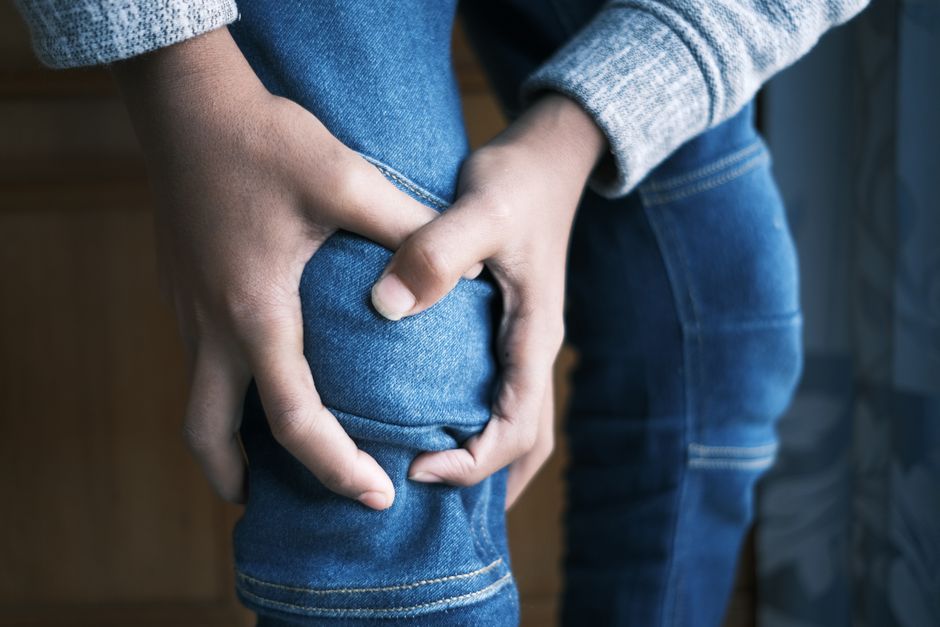
Sore knees are one of the most common reasons adults visit a doctor, and most cases improve without surgery. At-home care — rest, ice or heat, over-the-counter pain relief, and gentle strengthening — handles many everyday flare-ups. When pain persists, physical therapy, injections, or other medical options can help. Knowing which step fits your situation matters more than any single remedy.
Knee pain is not one condition. It can come from cartilage wear, injured ligaments or tendons, inflammation, or simple overload from too much activity too fast. That is why the same home treatment does not work for everyone. The goal of this guide is to explain what the evidence supports at each stage, from your living room to the clinic.
What usually causes sore knees?
Most knee pain in adults falls into a few broad categories. Osteoarthritis is the most common — the cartilage that cushions the joint gradually wears down, and the joint can become stiff and achy, especially after rest or with weather changes. It tends to build slowly over years.
Injuries are different. A torn meniscus, a sprained ligament, or a strained tendon usually causes sharper pain that starts at a specific moment. You often remember the twist, the fall, or the awkward landing.
Then there is pain from overuse. Tendons around the knee, such as the patellar tendon below the kneecap, can become irritated when you suddenly increase running, jumping, or squatting. This type often appears gradually and is worse with activity and better with rest.
Other causes exist too — inflammatory joint conditions, gout, infections, and referred pain from the hip or back. These are less common but matter because they need different treatment. A knee that is hot, swollen, red, and painful, or one you cannot bear weight on, is not a home-remedy situation.
How To Treat Sore Knees Relief At Home And Beyond
Start with the basics that have the most consistent support: relative rest, ice for fresh swelling, heat for stiffness, and over-the-counter pain relievers. These reduce symptoms but do not fix the underlying problem, so pair them with the steps below.
Relative rest means backing off the activity that hurts without becoming completely inactive. Complete bed rest weakens the muscles that support the knee and can make things worse over time. Keep moving in ways that do not provoke pain.
Ice is generally used for acute swelling and after activity, typically for short periods several times a day. Heat tends to help stiffness and chronic aches, especially before activity. Some people respond better to one than the other, and the evidence comparing them head-to-head is limited. Use what genuinely helps you.
Over-the-counter medications. Topical NSAIDs (nonsteroidal anti-inflammatory drugs) applied to the skin are widely used for knee osteoarthritis and are generally considered to carry lower stomach and systemic risk than pills. Oral NSAIDs like ibuprofen or naproxen can reduce pain and inflammation but carry real risks with long-term use, including stomach bleeding, kidney strain, and cardiovascular concerns. Acetaminophen helps pain but not inflammation. Anyone with heart, kidney, stomach, or liver conditions — or who takes blood thinners — should check with a clinician before regular use.
Weight and load. Body weight directly affects the force through the knee with every step. For people who carry extra weight and have knee osteoarthritis, losing weight is one of the few interventions with solid evidence for reducing pain and improving function. This is not about appearance. It is about mechanical load.
Strengthening. This is where home care earns its keep. Strong quadriceps and hip muscles take stress off the knee joint. Simple exercises — straight-leg raises, seated leg extensions, wall sits, and glute bridges — can be done at home. Start gently and build slowly. Pain that worsens sharply during exercise is a signal to stop and reassess.
Which exercises actually help knee pain?
Strengthening the muscles around the knee and hip is the most reliable non-drug approach for long-term relief in osteoarthritis and many overuse problems. The evidence for this is strong and consistent across many studies.
A reasonable starting set:
- Quad sets: sit with the leg straight, tighten the thigh muscle, hold a few seconds, relax.
- Straight-leg raises: lie down, keep the knee straight, lift the leg a short distance, lower slowly.
- Wall sits: slide down a wall to a comfortable bend, hold briefly, stand.
- Glute bridges: lie on your back, knees bent, lift the hips, squeeze the buttocks.
- Step-ups: use a low, stable step and step up and down slowly.
Low-impact aerobic activity also helps. Walking, swimming, cycling, and water exercise keep the joint moving without pounding it. The key is consistency. A few minutes most days beats one long session a week.
If you have significant pain, instability, or a recent injury, a physical therapist can tailor a program and correct your movement patterns. Home exercise is powerful, but it works best when it targets your specific problem.





When should you see a doctor for knee pain?
See a clinician promptly if you cannot bear weight on the knee, if the joint is hot, red, and swollen, if you have a fever, or if the knee locks, gives way, or looks deformed. These can signal infection, a significant tear, or a fracture, and they need evaluation rather than home care.
Also seek care if pain has lasted more than a few weeks despite rest and home measures, if it wakes you at night, or if it is steadily getting worse. Persistent pain is information, not something to push through indefinitely.
For most people with gradual, activity-related knee pain and no red flags, starting with home care and watching the trend over a couple of weeks is reasonable. If it is not improving, that is the cue to get it looked at.
What medical treatments exist beyond home care?
When home measures are not enough, several options exist. Each has different evidence behind it, and it helps to know which is which.
Physical therapy is well supported, especially for osteoarthritis and many overuse conditions. A therapist guides strengthening, flexibility, and movement retraining.
Injections. Corticosteroid injections into the knee can reduce pain and inflammation in the short term, though the benefit tends to fade over weeks to months and repeated use has downsides. Hyaluronic acid injections are also used for osteoarthritis; the evidence for them is mixed, and results vary. Platelet-rich plasma (PRP) is used in some settings, but the evidence for knee osteoarthritis and many injuries remains uncertain, and it is not a proven fix.
Braces and supports. A knee brace or sleeve can improve comfort and confidence for some people. The evidence for changing the underlying course of arthritis is weak, so think of these as comfort tools rather than cures.
Surgery. Arthroscopic procedures for degenerative knee problems have limited evidence of benefit for most people with osteoarthritis. Knee replacement is a well-established option for advanced arthritis that significantly limits daily life and has not responded to other care. This is a decision to make carefully with a surgeon.
Can you prevent sore knees from coming back?
You cannot prevent every cause, but you can lower the odds of flare-ups from overuse and slow the impact of osteoarthritis. The same habits that treat sore knees also help prevent them.
Build activity gradually rather than jumping into a new routine. Warm up before hard exercise. Keep the muscles around the knee and hip strong year-round, not just when something hurts. Manage body weight if it is a factor. Wear supportive shoes. And respect pain — sharp pain during activity is a signal, not a challenge.
For osteoarthritis specifically, staying active is protective, not harmful. The old idea that exercise wears the joint out faster is not supported by the evidence. Movement keeps the joint lubricated and the muscles strong.
Frequently Asked Questions
Should I use ice or heat for sore knees?
Ice is generally used for fresh swelling and after activity, while heat tends to help stiffness and chronic aches. The evidence comparing them directly is limited, so use whichever gives you real relief.
Can sore knees heal on their own?
Many cases of overuse knee pain improve with rest and gradual strengthening over a few weeks. Pain that persists, worsens, or comes with swelling, locking, or inability to bear weight needs medical evaluation.
Is walking good or bad for sore knees?
Walking is generally good for knee osteoarthritis and most overuse pain because it keeps the joint moving without heavy impact. If walking sharply increases pain, shorten the distance and build up gradually.
Do knee braces and supplements really work?
Braces can improve comfort for some people, though evidence that they change the course of arthritis is weak. Evidence for popular supplements like glucosamine and chondroitin is mixed and generally does not show clear benefit for most people.
