
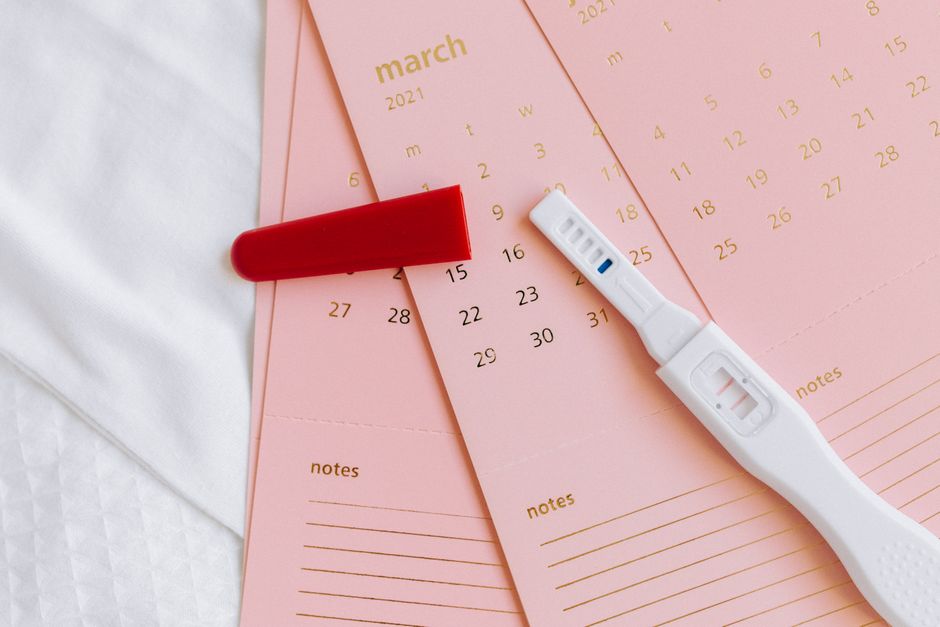
Pregnancy is dated from the first day of your last menstrual period, not from the day you conceived. This means on the day you miss your period, you are already considered about 4 weeks pregnant. This standard method, called gestational age, has been used for decades because the exact date of conception is rarely known, but the first day of a period is usually easy to remember.
Why Does Pregnancy Start Before Conception?
Gestational age counts from the first day of your last menstrual period, which is roughly two weeks before ovulation and fertilization. So in the first two weeks of pregnancy, you are not actually pregnant yet. Your body is preparing to release an egg.
This system exists because it gives doctors and midwives a consistent starting point. Sperm can survive for several days, and an egg can be fertilized up to 24 hours after release. The exact moment of conception is nearly impossible to pinpoint. Using the last menstrual period creates a uniform timeline that works for most pregnancies.
Fertilization typically happens around week 2 of gestational age. By the time you are 4 weeks pregnant, implantation has usually occurred and a pregnancy test will show positive. This is why a missed period at “4 weeks” makes sense—it has been 4 weeks since your last period started.
How Do They Calculate Pregnancy Weeks With Irregular Periods?
Irregular cycles make the last menstrual period method less reliable. If your cycles are longer than 35 days or shorter than 21 days, the standard calculation may be off. The same applies if you do not remember your last period date or if you were on hormonal birth control recently.
In these situations, an ultrasound is the most accurate way to date a pregnancy. A first-trimester ultrasound measures the crown-rump length of the embryo. This measurement is most accurate between 8 and 13 weeks. The ultrasound machine uses this length to estimate gestational age within a few days.
If the ultrasound date differs from your last menstrual period date by more than a week in the first trimester, most clinicians will use the ultrasound date to set your due date. This is standard practice because early ultrasound dating is more precise than menstrual dating.
What Is a Due Date and How Is It Set?
The due date is simply a calculated estimate of when your pregnancy will reach 40 weeks. It is not a prediction of the exact day your baby will arrive. Only about 5 percent of babies are born on their exact due date. Most births occur between 37 and 42 weeks.
To calculate the due date from your last menstrual period, clinicians add 280 days, or 40 weeks. A common formula is adding 7 days to the first day of your last period and then counting back 3 months. For example, if your last period started on January 1, you add 7 days to get January 8, then subtract 3 months to get October 8.
This formula is called Naegele’s rule, named after the German obstetrician who popularized it in the 19th century. It assumes a regular 28-day cycle with ovulation on day 14. For many women this is close enough, but it is not exact for everyone.





What Does Each Pregnancy Trimester Cover?
Pregnancy is divided into three trimesters, each lasting about 13 weeks. The first trimester covers weeks 1 through 13. This is when all major organs and body systems form. The embryo becomes a fetus by the end of week 8.
The second trimester spans weeks 14 through 27. This is when the fetus grows rapidly, and many women feel the first movements, called quickening, between 18 and 22 weeks. The third trimester runs from week 28 until birth. The fetus gains most of its weight during this time, and the lungs mature.
These trimester boundaries are standard in obstetrics. They help organize prenatal care, screening tests, and discussions about fetal development. They also help you understand which stage of development your baby is in at any given week.
How Accurate Are Pregnancy Week Calculations?
Early ultrasound dating is accurate to within about 5 to 7 days in the first trimester. This is the most reliable method available. Later in pregnancy, ultrasound measurements become less accurate for dating because fetal growth rates vary significantly from baby to baby.
Last menstrual period dating is accurate only if you have regular cycles and ovulate around day 14. Studies have shown that ovulation timing varies widely even among women with regular periods. Some women ovulate as early as day 10 or as late as day 20 of a 28-day cycle.
This is why a first-trimester ultrasound is recommended for all pregnancies. It confirms the gestational age and can adjust the due date if needed. The American College of Obstetricians and Gynecologists recommends using the first ultrasound to establish or confirm dating, especially when the last menstrual period date is uncertain.
How Do Pregnancy Tests and HCG Levels Relate to Weeks?
Home pregnancy tests detect human chorionic gonadotropin, or hCG, in your urine. This hormone is produced by the developing placenta shortly after implantation. HCG becomes detectable in urine around the time of your missed period, which is about 4 weeks gestational age.
Blood tests can detect hCG earlier, sometimes as soon as 8 to 10 days after ovulation. But hCG levels alone do not reliably determine how many weeks pregnant you are. There is a wide normal range for hCG at any given week, and levels vary significantly between women.
A single hCG level tells you that you are pregnant, but it does not pinpoint your gestational age. Serial hCG measurements taken 48 hours apart can show whether a pregnancy is progressing normally in early weeks. Ultrasound remains the gold standard for dating.
What If Your Ultrasound Date Differs From Your Last Period Date?
It is common for the two dates to differ by a few days. In the first trimester, most practitioners will adjust your due date if the difference is more than 7 days. In the second trimester, the threshold for adjustment is usually 10 to 14 days.
This adjustment is not a sign that something is wrong. It simply means the ultrasound measurement gives a more precise estimate of fetal age than your menstrual dates. Your pregnancy week count will change to match the ultrasound estimate.
Once your due date is set based on the first-trimester ultrasound, it typically does not change. Later ultrasounds are used to check fetal growth, not to redate the pregnancy. This prevents confusion and ensures consistent care throughout the pregnancy.
Frequently Asked Questions
How many weeks is a full-term pregnancy?
A full-term pregnancy is 40 weeks, counted from the first day of your last menstrual period. Babies born between 37 and 42 weeks are generally considered full-term.
Why am I 4 weeks pregnant when I just missed my period?
Pregnancy is counted from your last period, which was about 4 weeks ago. Conception actually happened about 2 weeks after that, so you are 2 weeks past conception but 4 weeks pregnant by gestational age.
Can an ultrasound tell me how many weeks pregnant I am?
Yes, a first-trimester ultrasound is the most accurate way to date a pregnancy. It measures the embryo and estimates gestational age within about 5 to 7 days.
What if I do not know my last menstrual period date?
Your doctor will use an ultrasound to determine gestational age. Early ultrasound dating is accurate and will be used to set your due date.
