
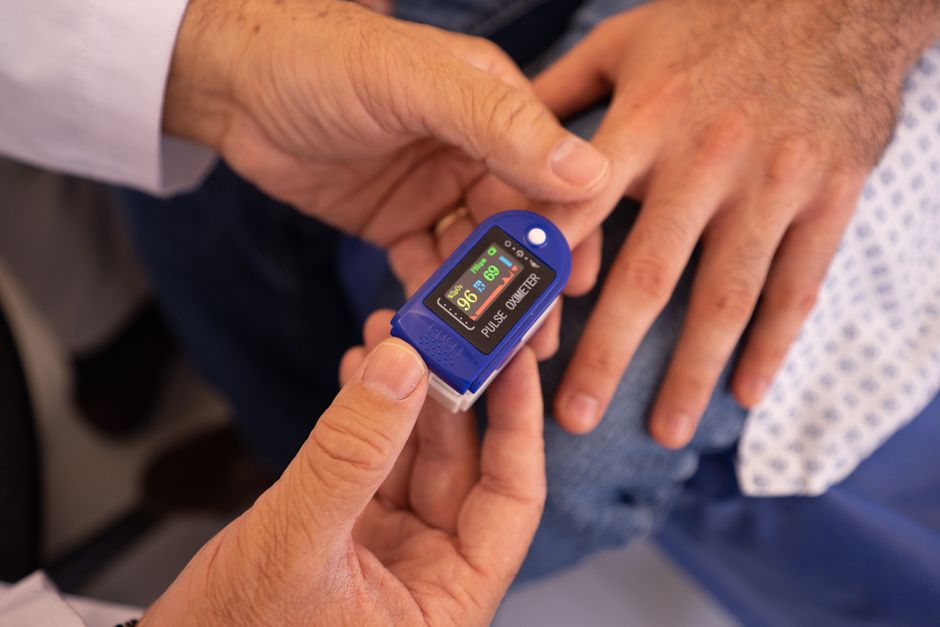
A pulse oximeter is the small clip that goes on your finger and shows your blood oxygen level. It works by shining light through your skin and measuring how much is absorbed. The reading tells you what percentage of your hemoglobin is carrying oxygen. For most healthy people, that number should be between 95% and 100%.
The device is fast, painless, and widely used in hospitals and at home. But the number on the screen is not always perfectly accurate. Skin tone, nail polish, poor circulation, and even how still you hold your finger can change the result. Understanding how the device works and what can throw it off will help you trust the reading when it matters.
How Do Pulse Oximeters Work Readings Accuracy?
A pulse oximeter uses two light sources — usually red and infrared light — and a sensor on the opposite side of the clip. Oxygen-rich blood absorbs infrared light differently than oxygen-poor blood. The device measures the ratio of light absorbed and converts that into a percentage.
The “pulse” part of the name matters. The device detects the change in blood volume with each heartbeat. This allows it to isolate arterial blood from the background tissue and veins. That is why it works best on a finger that is warm, still, and at heart level.
Accuracy is generally strong. Clinical studies have shown that most pulse oximeters are within 2% to 3% of the true arterial oxygen level when compared to a blood draw. That means if your device says 96%, your actual oxygen could be anywhere from 94% to 98%. That range is acceptable for most monitoring purposes.
The bigger concern is when readings are misleadingly high or low. A false high reading can delay care. A false low reading can cause unnecessary panic. Knowing the limits of the device helps you interpret the number correctly.
What Can Make a Pulse Oximeter Reading Inaccurate?
Several common factors can skew the reading. The most well-documented is skin pigmentation. Research has found that pulse oximeters may overestimate oxygen levels in people with darker skin. This was highlighted during the COVID-19 pandemic when studies showed that Black patients were more likely to have hidden low oxygen levels that the device missed.
Other factors that affect accuracy include:
- Nail polish or artificial nails — dark colors like red, black, or blue can block the light and lower the reading.
- Cold hands — poor circulation reduces the pulse signal and makes the device struggle to get a reliable reading.
- Movement — shaking or moving your finger can create artifacts that confuse the sensor.
- Bright ambient light — strong sunlight or fluorescent light can interfere with the sensor.
- Low blood pressure — if your blood pressure drops, the pulse signal weakens and the reading may be less reliable.
People with conditions that affect circulation, like Raynaud’s syndrome or peripheral artery disease, may also get less reliable readings. In these cases, a clinician may use a different monitoring method, such as an arterial blood gas test.
How to Get the Most Accurate Reading at Home
Getting a good reading is mostly about technique. Sit still for a few minutes before you measure. Keep your hand relaxed and at chest level. Remove any nail polish from the finger you are using. Make sure your hand is warm — rub your hands together or run them under warm water if they feel cold.
Wait for the number to stabilize. The device may show a fluctuating number for several seconds. Some devices display a pulse waveform or a signal bar. Wait until that signal is steady before you record the number.
If you are checking your oxygen because you feel short of breath, do not rely on a single reading. Take two or three measurements a few minutes apart. If the number is consistently below 92% at rest, that is a reason to contact a healthcare provider. If it drops below 90%, seek medical attention promptly.
It is also worth noting that oxygen levels are not the only measure of how well you are breathing. A person can have a normal oxygen reading but still be struggling to breathe due to carbon dioxide buildup. Pulse oximeters do not measure carbon dioxide, and they cannot tell you how hard you are working to breathe.




When Should You Use a Pulse Oximeter?
Home pulse oximeters became popular during the COVID-19 pandemic, and they remain useful for certain situations. People with chronic lung conditions like COPD or asthma may use one to track their oxygen levels during flare-ups. People recovering from pneumonia or other respiratory infections might monitor at home under a doctor’s guidance.
But not everyone needs one. For a healthy person without symptoms, checking oxygen levels daily provides little useful information. The device can create anxiety if readings fluctuate slightly, and it can give false reassurance if the reading is normal while other symptoms like shortness of breath or chest pain are present.
If you have a condition that affects your breathing, talk to your doctor about whether home monitoring is appropriate. They can tell you what target range to aim for and when to call for help. Do not use the device to make treatment decisions on your own.
Are Pulse Oximeters Accurate for Everyone?
The short answer is no. The devices are calibrated based on data from healthy volunteers, mostly with light skin tones. This calibration bias is a known limitation. Regulatory agencies have acknowledged the issue, and some manufacturers have updated their devices, but the problem is not fully solved.
If you have darker skin, you should know that your pulse oximeter may show a higher number than your actual oxygen level. This does not mean the device is useless — it means you should pay extra attention to symptoms. If you feel short of breath, have chest pain, or are breathing faster than usual, do not let a normal-looking oxygen number convince you that everything is fine.
Fetal pulse oximeters, which are used during labor, have a different set of limitations and are not the same as home finger devices. If you are pregnant and considering home oxygen monitoring, discuss it with your obstetric provider first.
What Do the Numbers Actually Mean?
Oxygen saturation is expressed as a percentage, often written as SpO2. A reading of 95% to 100% is normal for most people. A reading of 91% to 94% may be acceptable for someone with chronic lung disease, but it is low for a healthy person. A reading of 90% or below is considered low and warrants medical evaluation.
These thresholds are general guidelines, not absolute rules. Your baseline may be different if you have a chronic condition. Also, people who live at high altitude naturally have lower oxygen levels. A person living in Denver may have a normal reading of 92% to 94%, while the same number in a person at sea level would be concerning.
Do not diagnose yourself based on a single number. The oxygen reading is one piece of information. Combine it with how you feel. If you are breathless, dizzy, confused, or your lips or fingernails look bluish, seek medical help even if the device says your oxygen is normal.
Can a Pulse Oximeter Detect COVID-19 or Pneumonia?
A pulse oximeter cannot detect any specific illness. It only measures oxygen saturation. However, some viral infections, including COVID-19, can cause a dangerous condition called “silent hypoxia.” This is when oxygen levels drop significantly before the person feels short of breath. In these cases, a pulse oximeter can provide an early warning sign that a person needs medical attention.
This is why some clinicians recommended home pulse oximeters for people diagnosed with COVID-19 who were at high risk of severe illness. The device does not diagnose the infection, and a normal reading does not mean you are not infected. It is a monitoring tool, not a test.
For pneumonia, the same logic applies. Oxygen levels can drop as the lungs fill with fluid or inflammation. A pulse oximeter can help track that decline, but imaging and clinical examination are needed for diagnosis.
Frequently Asked Questions
What is a normal pulse oximeter reading?
A normal reading for most healthy adults is between 95% and 100%. A reading at or below 90% is considered low and requires medical attention.
Can nail polish affect a pulse oximeter reading?
Yes, dark nail polish can block the light and lower the reading. Remove polish from the finger you plan to use before measuring.
Why does my pulse oximeter give different readings on different fingers?
Differences in blood flow, skin thickness, and temperature between fingers can cause small variations. Use the same finger consistently and keep your hand warm for the most reliable results.
Is a pulse oximeter accurate for people with dark skin?
Research shows pulse oximeters may overestimate oxygen levels in people with darker skin. Pay attention to symptoms like shortness of breath even if the reading looks normal.
