
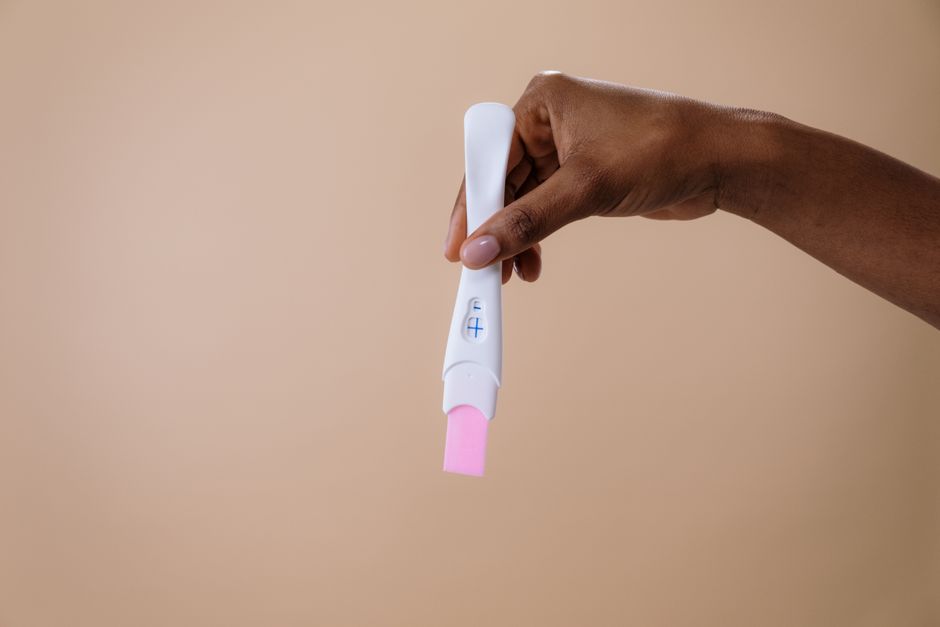
Most home pregnancy tests can detect a pregnancy as early as the first day of a missed period, and some highly sensitive tests can work up to 6 days before that. However, the most reliable result comes from testing after your period is actually late. The accuracy depends on the test’s sensitivity and the level of the pregnancy hormone hCG in your urine, which varies from person to person.
How Do Home Pregnancy Tests Detect hCG?
Home pregnancy tests work by detecting a hormone called human chorionic gonadotropin, or hCG. Your body starts producing hCG only after a fertilized egg implants in the lining of the uterus. Implantation typically happens about 6 to 10 days after ovulation.
Once implantation occurs, hCG levels rise quickly. They roughly double every 48 to 72 hours in early pregnancy. The test strip contains antibodies that bind to hCG molecules in your urine. When enough hCG is present, a colored line appears.
This is why timing matters. If you test too early, there may not be enough hCG in your urine yet to trigger a positive result. The test is working correctly — your body just has not produced enough of the hormone yet.
How Early Can Pregnancy Tests Work Timing Accuracy
The earliest a pregnancy test can work is about 8 to 10 days after ovulation. This is the earliest point at which implantation can occur and hCG production begins. But testing this early carries a high risk of a false negative result.
Most tests sold in stores claim to detect pregnancy 5 to 6 days before your missed period. These claims are based on the sensitivity of the test — how low a level of hCG it can detect. A test labeled “early detection” typically detects hCG at levels of 10 to 25 mIU/mL, while standard tests usually detect 25 to 50 mIU/mL.
Even with a highly sensitive test, you may not have enough hCG in your urine that early. Only about half of women will get a positive result 5 days before their missed period, even when pregnant. By the day of the missed period, that number climbs to roughly 90 percent or higher.
The safest choice for a definitive answer is to wait until the first day of your missed period or later. If you get a negative result but your period does not arrive, wait 3 to 5 days and test again.
What Time of Day Is Best to Test?
First-morning urine is the most concentrated and contains the highest level of hCG. This gives you the best chance of detecting a pregnancy early.
If you test later in the day, your urine is more diluted from fluids you have consumed. This can lower the hCG concentration below the test’s detection threshold, especially in early pregnancy when levels are still low.
If you must test later in the day, try to hold your urine for at least 4 hours and avoid drinking large amounts of fluid beforehand. This helps concentrate the hCG in your sample.




How Accurate Are Early Result Tests?
When used on the first day of a missed period, most home pregnancy tests are about 99 percent accurate. This means that if you are pregnant, the test will correctly show a positive result 99 percent of the time.
Testing before your missed period changes that picture. The accuracy drops because hCG levels vary widely between women. Some women have high enough levels 6 days before their period is due. Many do not.
Some research suggests that early detection tests work as advertised for roughly half of women when used 5 days before a missed period. The other half of pregnant women will test negative at that point simply because their hCG levels are not high enough yet.
A negative result on an early test does not mean you are not pregnant. It only means the test did not detect hCG at that moment. Testing again in a few days is the only way to know for sure.
What Causes a False Negative Result?
False negatives are far more common than false positives. The most frequent cause is testing too early. Your hCG level is simply below the test’s detection limit.
Other causes include:
- Diluted urine from drinking too much fluid before testing
- Testing later in the day when urine concentration is lower
- Not following the test instructions exactly, such as reading results too early
- Using an expired or damaged test
Some medications can also affect results. Fertility treatments that contain hCG, such as some ovulation induction injections, can cause a false positive. Most other medications, including birth control pills and antibiotics, do not affect pregnancy test results.
Can a Faint Line Mean Pregnant?
A faint positive line usually means you are pregnant. The test detects hCG, and even a faint line indicates the hormone is present.
Faint lines are common in early pregnancy when hCG levels are still low. As your pregnancy progresses and hCG rises, the line typically becomes darker.
One caution: read the test within the time window stated in the instructions, usually 3 to 5 minutes. An evaporation line can appear after the test dries, which looks like a faint positive but is not a real result. If you are unsure, test again in 48 hours with a fresh test.
When Should You See a Doctor?
If you get a positive home pregnancy test, contact your healthcare provider to confirm the pregnancy and discuss next steps. A blood test at a clinic can measure hCG levels precisely and confirm the pregnancy earlier than a urine test.
You should also contact a doctor if you get a positive test followed by heavy bleeding, severe cramping on one side, or dizziness. These symptoms can be signs of an ectopic pregnancy, which requires medical attention.
If you have irregular periods, determining when to test can be difficult. In this case, it is reasonable to test about 2 weeks after you suspect you ovulated, or about 3 weeks after unprotected sex. If you continue to get negative results but miss a period, a doctor can help determine the cause.
How Do Blood Tests Compare to Urine Tests?
Blood tests for pregnancy are done in a clinic or lab and can detect hCG earlier than urine tests. A qualitative blood test simply gives a yes or no answer. A quantitative blood test measures the exact amount of hCG in your blood.
Blood tests can detect pregnancy about 6 to 8 days after ovulation, a few days earlier than most urine tests. They are also more sensitive and less likely to produce a false negative.
For most women, a home urine test is sufficient. Blood tests are typically used when there is a medical reason to know early, such as a history of ectopic pregnancy, or when a doctor needs to track hCG levels over time to monitor a pregnancy’s progress.
Frequently Asked Questions
How many days before a missed period can a pregnancy test be positive?
Some sensitive tests can detect pregnancy up to 6 days before your missed period, but only about half of pregnant women will get a positive result that early. Testing on the day of your missed period gives a much more reliable result.
Can a pregnancy test be positive at 1 week?
Testing one week after conception is very early and most tests will show a negative result even if you are pregnant. hCG levels are usually too low to detect until closer to the time of your missed period.
Why did my pregnancy test turn positive then negative?
A test that turns positive then negative on a later test may indicate a very early pregnancy loss, or it may be the result of using diluted urine. If this happens, wait a few days and test again with first-morning urine.
How long should I wait to take a pregnancy test after unprotected sex?
Wait at least 2 weeks after unprotected sex for the most accurate result. Testing earlier than that increases the chance of a false negative because your body may not have produced enough hCG yet.
