
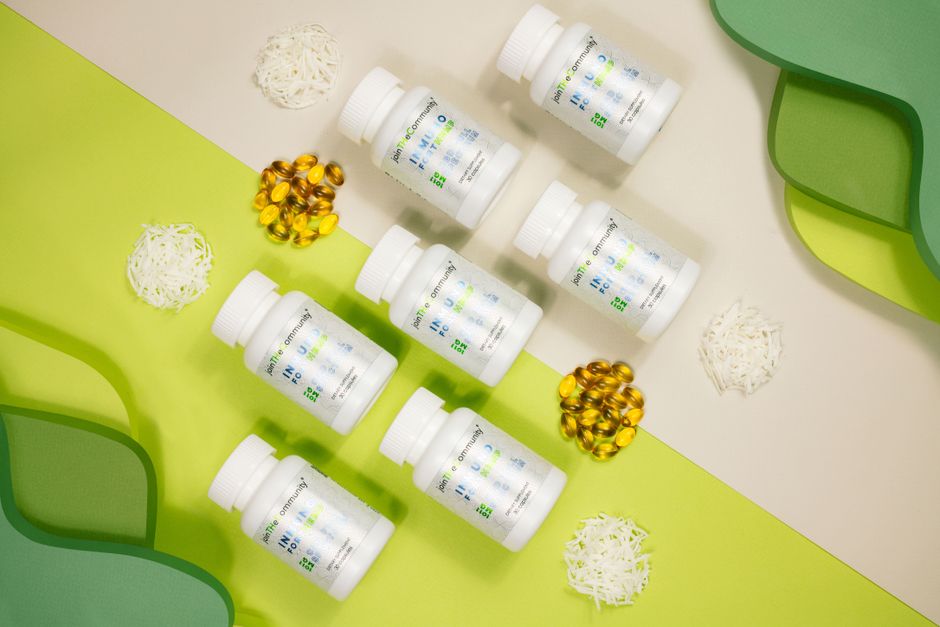
Nano supplements use tiny particles to change how your body absorbs nutrients. Most supplements break down poorly in the digestive tract, meaning a large portion never enters your bloodstream. Nano supplements shrink nutrient particles to a microscopic scale, which can increase absorption and change how quickly the nutrient takes effect.
What Are Nano Supplements?
Nano supplements are dietary supplements processed into particles measured in nanometers. One nanometer is one billionth of a meter. For comparison, a human hair is roughly 80,000 nanometers wide.
These supplements come in several forms. Some use nano-emulsions, which are liquid droplets suspended in another liquid. Others use nanoparticles, which are solid particles. Some use liposomes, which are tiny fat bubbles that carry nutrients. The goal is the same: make the nutrient smaller so the body can absorb more of it.
The supplement industry calls this “nanotechnology.” That term is accurate in the sense that the particles are nanometer-sized. But it does not mean these products contain tiny machines or computers. It simply means the particle size has been reduced.
How Do Nano Supplements Work?
Nano supplements work by increasing the surface area of the nutrient. When a particle is smaller, it has more surface area relative to its volume. This allows digestive enzymes and intestinal cells to interact with the nutrient more easily.
Most standard supplements are poorly absorbed. For example, curcumin from turmeric has very low bioavailability when taken orally. The liver rapidly metabolizes it and removes it from the body. Nano formulations of curcumin have been developed to address this problem.
The digestive tract is designed to absorb small molecules. Nutrients like vitamins, minerals, and plant compounds must pass through the intestinal wall to enter the bloodstream. Larger particles often pass through without being absorbed. Nano particles are small enough to interact more completely with the intestinal lining.
Some nano supplements use lipid-based delivery systems. These coat the nutrient in a fat layer that protects it from stomach acid. This protection allows more of the nutrient to reach the intestines intact, where absorption happens.
What Does the Research Say About Absorption?
Research consistently shows that reducing particle size can increase absorption for certain nutrients. Studies on nano-curcumin, nano-magnesium, and liposomal vitamin C have demonstrated higher blood levels compared to standard forms.
Some research suggests that nano formulations can improve absorption several-fold. However, the exact increase varies widely depending on the nutrient, the delivery system, and the individual. No single number applies across all nano supplements.
It is important to understand that higher absorption does not automatically mean better health outcomes. A supplement can be absorbed well but still not produce a measurable clinical benefit. Absorption is one step in a longer process.
Some studies indicate that nano supplements may cause fewer digestive side effects. Standard magnesium, for instance, can cause loose stools at higher doses. Nano-magnesium may allow lower doses to achieve the same blood levels, potentially reducing this side effect. But clinical evidence for this specific benefit is limited.





Are Nano Supplements More Effective?
Effectiveness depends on what you are measuring. If you measure blood levels of a nutrient, nano supplements often outperform standard forms. If you measure clinical outcomes like pain relief or improved energy, the evidence is less consistent.
Take curcumin as an example. Standard curcumin has extremely poor absorption. Nano-curcumin formulations consistently show higher blood levels in human trials. Some trials also show better anti-inflammatory effects. But not every trial shows a clinical advantage.
For vitamins and minerals, the picture is different. Water-soluble vitamins like vitamin C and B vitamins are already absorbed reasonably well. Nano versions may increase absorption further, but the clinical benefit of that increase is unclear for most people.
Fat-soluble vitamins like A, D, E, and K require dietary fat for absorption. Nano formulations that include lipids may improve absorption, especially in people with fat malabsorption conditions. But for healthy adults eating a normal diet, the advantage may be small.
What Are the Risks and Unknowns?
The safety of nano supplements is not fully established. The Food and Drug Administration regulates dietary supplements as foods, not as drugs. This means nano supplements do not undergo the same safety testing as medications.
Nanoparticles behave differently in the body than larger particles. They can cross biological barriers that larger particles cannot. This is the intended effect for absorption, but it also raises questions about where these particles end up.
Some research in animals suggests that certain nanoparticles can accumulate in organs like the liver and spleen. Whether this happens with oral nano supplements in humans is not well studied. No large human trials have confirmed that nano supplements are unsafe, but the absence of evidence is not evidence of safety.
There is also the question of dosing. When a supplement is absorbed better, the effective dose changes. A nano supplement that delivers more nutrient to the bloodstream may have stronger effects than the label suggests. This could increase the risk of side effects, especially for fat-soluble vitamins that the body stores.
How Do Nano Supplements Compare to Standard Supplements?
Standard supplements are well understood. Their absorption profiles are documented. Their safety has been studied for decades. Nano supplements offer potential advantages but come with more unknowns.
| Factor | Standard Supplements | Nano Supplements |
|---|---|---|
| Particle size | Large, often poorly absorbed | Microscopic, designed for absorption |
| Absorption research | Extensive human data | Growing but limited |
| Safety track record | Long history of use | Short history, limited long-term data |
| Cost | Generally lower | Often higher |
| Clinical benefit evidence | Well documented for many nutrients | Mixed, nutrient-dependent |
For most healthy adults, a standard supplement at an appropriate dose provides adequate nutrition. Nano supplements may be useful for people with absorption problems or for nutrients that are naturally poorly absorbed. But they are not necessary for everyone.
Which Nutrients Have the Strongest Nano Evidence?
Curcumin has the most published research among nano supplements. Multiple human trials have shown that nano-curcumin produces higher blood levels than standard curcumin. Some trials also report improved clinical outcomes for conditions like arthritis and metabolic syndrome.
Coenzyme Q10 is another nutrient with strong nano research. CoQ10 is poorly absorbed because it is fat-soluble and has a large molecular size. Nano formulations have consistently shown better absorption in human studies.
Vitamin D is often formulated in nano-emulsions. Research shows these forms can raise blood levels of vitamin D effectively. However, standard vitamin D supplements already work well for most people, so the advantage is less clear.
Magnesium, iron, and zinc have some nano formulations available. Evidence for these is more limited. Some studies suggest better absorption, but results vary. No clinical guidelines currently recommend nano forms of these minerals over standard forms.
Are Nano Supplements Worth the Cost?
Nano supplements typically cost more than standard supplements. Whether they are worth the extra money depends on your situation.
If you have a diagnosed absorption problem, a nano formulation may be worth trying. Conditions like Crohn’s disease, celiac disease, or short bowel syndrome can impair nutrient absorption. However, you should discuss this with your doctor first.
If you are a healthy adult with no absorption issues, the benefit is less clear. A standard supplement that provides the recommended daily amount is likely sufficient. The extra absorption from a nano form may not produce any noticeable health difference.
Be cautious of marketing claims. Some companies suggest that nano supplements are “more natural” or “more effective” without evidence. No study has confirmed that nano supplements are universally superior. Each nutrient and each formulation must be evaluated on its own evidence.
Frequently Asked Questions
Are nano supplements safe to take daily?
No long-term human safety studies have confirmed that daily nano supplement use is safe. Short-term studies show no serious side effects, but the long-term effects of regular nanoparticle exposure are unknown.
Can nano supplements replace prescription medications?
No. Nano supplements are dietary supplements, not drugs. They have not been proven to treat, cure, or prevent any disease, and they should never replace prescribed medications.
Do nano supplements work better than regular supplements?
Nano supplements generally produce higher blood levels of the nutrient compared to standard forms. But higher blood levels do not always translate to better health outcomes, and the clinical evidence varies by nutrient.
Are nano supplements approved by the FDA?
The FDA does not approve dietary supplements before they are sold. Nano supplements are regulated like other supplements, meaning the manufacturer is responsible for safety and labeling, but no pre-market approval is required.
