
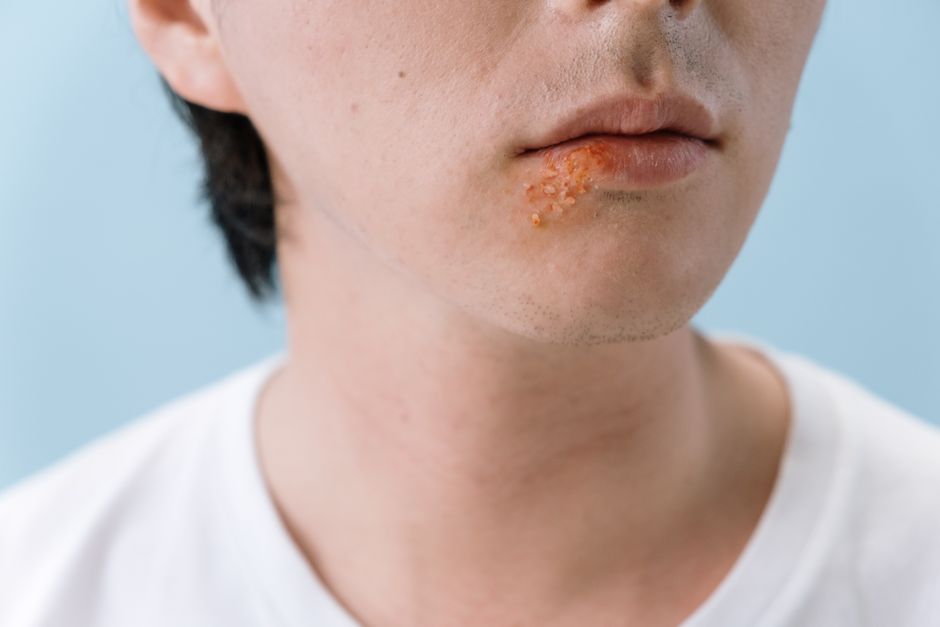
Cold sores are small, fluid-filled blisters that form on or around the lips and mouth. They are caused by the herpes simplex virus type 1 (HSV-1), which stays in your body for life after the first infection. The virus travels through nerve pathways, becomes dormant, and reactivates under certain conditions to cause a new outbreak. A cold sore typically goes through five distinct stages: tingling, blistering, weeping, crusting, and healing, with the entire process lasting about 8 to 12 days from first symptom to full recovery.
What Exactly Causes a Cold Sore to Form?
The direct cause of every cold sore is the herpes simplex virus type 1. Most people contract HSV-1 during childhood through everyday contact like sharing utensils, kissing, or touching a contaminated surface. The virus enters through small breaks in the skin or mucous membranes and travels to the trigeminal nerve ganglion, a cluster of nerve cells near the base of the skull.
Once there, the virus goes dormant. It does not cause problems until something triggers it to wake up and travel back down the nerve to the skin surface. When it reaches the skin, it infects epithelial cells, causing them to swell and burst, which creates the visible blister. This cycle is why cold sores keep returning to the same spot on your lip or face.
What Are the Five Stages of a Cold Sore?
Cold sores follow a predictable pattern. Knowing which stage you are in helps you act quickly and manage symptoms better.
Stage 1: The Tingling Phase (Days 0-1)
Most people feel a tingling, itching, or burning sensation at the site 24 to 48 hours before any blister appears. This is the prodrome phase, and it is the earliest warning sign. Antiviral medications work best when started during this window because they can sometimes stop the blister from forming entirely.
Stage 2: The Blister Phase (Days 1-2)
Small, red, fluid-filled blisters appear. They often cluster together in a patch. The area may feel painful, swollen, and tender to the touch. The blisters contain live virus, meaning you are highly contagious during this stage.
Stage 3: The Weeping Phase (Days 2-4)
The blisters rupture and release clear or slightly yellow fluid. This is the most contagious period. The open sore is raw and can sting or hurt, especially when eating, drinking, or talking. You should avoid touching this area and wash your hands immediately if you do.
Stage 4: The Crusting Phase (Days 4-7)
A yellowish or brown crust forms over the open sore as it begins to dry out. The crust may crack or bleed, especially when you smile or stretch your lips. It can feel tight and itchy. The virus is still present, so contagiousness continues, though it decreases as the scab hardens.
Stage 5: The Healing Phase (Days 7-12)
The scab falls off naturally, revealing new skin underneath. The area may look slightly red or pink for a few days. Once the scab is gone and skin has closed, the contagious period is over. Complete healing usually leaves no permanent scar, though some people notice temporary discoloration.
What Triggers a Cold Sore Outbreak?
Different people have different triggers, but several are well documented. The most common trigger is physical stress on the body. Illnesses like colds, flu, or fever are classic triggers, which is why cold sores are sometimes called fever blisters. Sun exposure is another major trigger. Ultraviolet light damages the skin around the lips and can directly activate the dormant virus.
Emotional stress also plays a significant role. Research consistently shows that psychological stress weakens immune function, making it easier for the virus to reactivate. Hormonal changes, particularly during menstruation, can trigger outbreaks in some women. Physical trauma to the lip area, such as dental work, lip biting, or facial cosmetic procedures, can also wake the virus.
Fatigue and lack of sleep lower immune defenses. Some people notice outbreaks after periods of intense work or poor sleep. A weakened immune system from any cause — whether from illness, medication, or chronic conditions — increases outbreak frequency. Identifying your personal triggers is one of the most effective ways to reduce how often you get cold sores.





How Do Cold Sores Spread From Person to Person?
Cold sores spread through direct contact with the virus. The most common routes are kissing, sharing drinks or utensils, and touching an active sore. The virus can also spread through oral sex, which can transmit HSV-1 to the genital area. This is increasingly common and is now a leading cause of genital herpes in some populations.
You are contagious from the first tingling sensation until the scab completely falls off. Even people who have no visible symptoms can shed the virus and transmit it, though this is less common than transmission during active outbreaks. Asymptomatic shedding means you can pass the virus without ever knowing you are contagious.
Once you have HSV-1, you cannot get rid of it. The virus remains in your nerve cells permanently. You can, however, manage outbreaks and reduce transmission risk with medication and careful behavior during active sores.
What Treatments Actually Work for Cold Sores?
Antiviral medications are the only treatments proven to shorten outbreak duration. Over-the-counter creams containing docosanol (brand name Abreva) can reduce healing time by about half a day to a day when applied early. Prescription antiviral creams like acyclovir and penciclovir work similarly. Oral antiviral pills, including acyclovir, valacyclovir, and famciclovir, are more effective than creams and can shorten an outbreak by one to two days when started during the tingling phase.
For people with frequent outbreaks, doctors sometimes prescribe daily suppressive therapy. Taking oral antivirals every day can reduce outbreak frequency by 70 to 80 percent and significantly lowers the risk of transmitting the virus to partners. This approach is well established in clinical guidelines and is considered safe for long-term use in otherwise healthy adults.
Home remedies like ice packs, aloe vera, and lysine supplements have limited evidence. Ice can numb pain but does not shorten healing. Lysine supplements show mixed results in studies, and no large clinical trial has confirmed they prevent outbreaks. Keeping the area clean and moisturized with a plain lip balm can prevent cracking and reduce discomfort.
When Should You See a Doctor About a Cold Sore?
Most cold sores resolve on their own without medical treatment. You should see a doctor if the outbreak lasts longer than two weeks, if you have frequent recurrences, or if the sore spreads to other parts of your body. People with weakened immune systems, including those on chemotherapy or with HIV, should seek medical advice early because outbreaks can be more severe.
Eye involvement is an emergency. If you feel pain, redness, or irritation in your eye, or if you develop blurred vision, seek care immediately. Herpes infection of the eye can cause corneal scarring and permanent vision loss if untreated. Also see a doctor if you develop a fever, if the sore becomes severely painful, or if you notice signs of bacterial infection like yellow pus or increasing redness.
Pregnant women who get a first-time herpes infection near delivery should inform their obstetrician. In rare cases, the virus can be transmitted to a newborn during childbirth, which is a serious condition. Established protocols exist to manage this risk, and your doctor will guide you based on your specific situation.
Frequently Asked Questions
How long is a cold sore contagious?
You are contagious from the first tingling sensation until the scab completely falls off, which is typically 8 to 12 days. The weeping stage, when blisters rupture, is the most contagious period.
Can you get a cold sore from stress alone?
Stress alone does not cause the virus, but it is one of the most common triggers for reactivating HSV-1 in people who already carry it. Emotional stress weakens immune function, which allows the dormant virus to become active.
Is a cold sore the same as a canker sore?
No. Cold sores are caused by the herpes simplex virus, are contagious, and appear on the lips or outside the mouth. Canker sores are not contagious, have no viral cause, and appear inside the mouth on soft tissue.
Can cold sores be prevented entirely?
No method completely prevents cold sores because the virus stays in your body for life. Daily antiviral medication, identifying personal triggers, and avoiding known triggers like intense sun exposure can significantly reduce outbreak frequency.
