
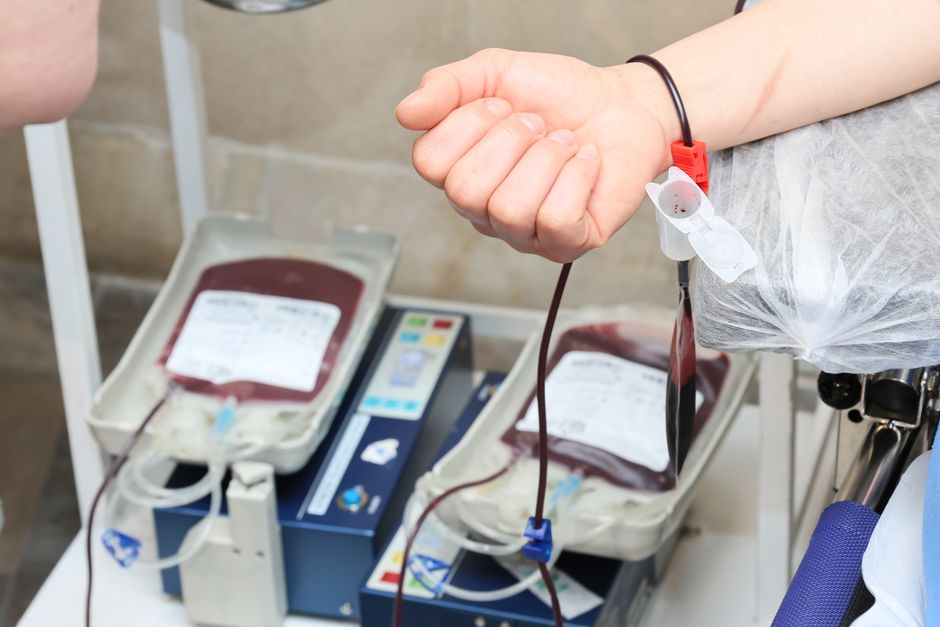
You can find out your blood type in two ways: a quick test at a doctor’s office, blood bank, or clinic, or a home blood-typing kit you use yourself. Both methods look for the same thing — the markers on your red blood cells that define your type. If you have ever donated blood, there is a good chance your type is already on file, and you can often request it.
Knowing your blood type matters most in an emergency, during pregnancy, and before any transfusion. It is not something you can reliably figure out from your personality, your diet, or how you feel. The only dependable answer comes from a test.
What Are the Main Blood Type Systems?
Blood type is not a single label. It is a description of which proteins and sugars sit on the surface of your red blood cells, and those markers come from several different systems.
The two that matter most in everyday medicine are the ABO system and the Rh system. Together they produce the labels you already know: A positive, O negative, AB positive, and so on.
In the ABO system, your red cells may carry the A marker, the B marker, both, or neither. That gives four groups:
- A — the A marker is present
- B — the B marker is present
- AB — both markers are present
- O — neither marker is present
The Rh system adds a separate marker, called the D antigen. If you have it, you are Rh positive. If you do not, you are Rh negative. That is why you see a plus or minus after the letter.
There are more than 40 recognized blood group systems in total, and hundreds of individual antigens. Most of them rarely cause problems. But a few, including certain antigens in the Kell and Duffy systems, can matter for transfusions and in pregnancy. This is one reason a full crossmatch is done before any transfusion rather than relying on ABO and Rh alone.
How Can You Tell What Blood Type You Are?
The reliable way to learn your blood type is a blood test. There is no home method based on appearance, taste, or how you respond to foods that has any scientific support.
Two settings do this testing routinely. One is a clinical lab, ordered by your doctor. The other is a blood donation center, where your type is determined as part of processing your donation.
If you have donated blood before, you can usually contact the donation center and ask for your type. Many centers provide it, though policies vary. This is often the fastest route for people who have given blood in the past.
Home blood-typing kits are also sold. They typically involve a finger prick and a card or solution that reacts with your blood. These kits can work, but their accuracy depends heavily on following the instructions exactly. A mistake in timing or handling can produce a wrong reading. For anything that truly matters — surgery, pregnancy, transfusion — a lab result is what counts.
What Happens During a Blood Typing Test?
A blood typing test is simple and takes very little blood. A small sample is drawn, usually from a vein in your arm, and sent to a lab.
In the lab, technicians mix your red blood cells with known antibodies. One set of tests uses antibodies against A and B. Another uses antibodies against the Rh D antigen.
The reaction tells the story. If your cells clump together when mixed with anti-A, you have the A marker. If they clump with anti-B, you have the B marker. If both cause clumping, you are AB. If neither does, you are O. The same idea applies to the Rh test — clumping means you are Rh positive.
There is a second step called back typing, or reverse typing. Here the lab tests your plasma, the liquid part of blood, against known A and B cells. Your plasma contains antibodies that naturally form against the ABO markers you lack. Checking both the cells and the plasma gives a more reliable result than either test alone.
Results are usually ready within a day or so, depending on the lab.





How Accurate Are Home Blood Typing Kits?
Home kits can give a correct result, but they are more prone to user error than a lab test. The evidence on their real-world accuracy is limited, and most of what exists comes from the manufacturers themselves.
The main problem is technique. These kits rely on you to prick your finger, apply the right amount of blood, and read the reaction within a specific window. Adding too much or too little blood, waiting too long, or misreading a faint clump can all lead to a wrong answer.
There is also a safety issue. A used finger-prick device and any blood-contaminated materials need to be disposed of carefully. They should never be shared.
If you use a home kit out of curiosity, that is one thing. If you need your type for a medical reason, a lab test is the appropriate choice. A home result should not be treated as confirmed.
Can You Inherit or Guess Your Blood Type From Your Parents?
You can narrow down the possibilities from your parents’ types, but you cannot determine your own type from theirs with certainty. Blood type is inherited, but the genetics allow for more than one outcome.
Here is the general pattern. The ABO gene comes in three common versions: A, B, and O. You inherit one version from each parent. A and B are dominant over O, which means:
- Two O parents can only have O children
- An AB parent cannot have an O child
- An A parent and a B parent can have a child of any ABO type
The Rh factor follows its own inheritance pattern, and Rh negative is recessive. Two Rh negative parents typically have Rh negative children.
This kind of reasoning is useful for understanding family patterns. It is not a substitute for a test. If you want your actual type, you need the lab result.
Why Does Knowing Your Blood Type Matter?
Your blood type matters most when blood from one person enters another. That happens in transfusions, in surgery, and during pregnancy.
If you receive blood with markers your immune system sees as foreign, your antibodies can attack those cells. This can cause a serious reaction. That is why donated blood is matched to your ABO and Rh type before it is given.
Pregnancy is the other major setting. If a mother is Rh negative and the baby is Rh positive, the mother’s immune system can develop antibodies against the baby’s red cells. This is called Rh incompatibility. It is managed with a medication given during pregnancy and after birth, and it is a well-established part of prenatal care. This is why blood type is checked early in pregnancy.
Beyond these situations, blood type is mostly a fixed piece of information about you. It does not change over your lifetime. It is not something you can shift through diet.
Can Blood Type Change Over Time?
Your blood type is set by your genes and stays the same for life. There are rare exceptions, but they are unusual.
Certain conditions can make test results look different from your true type. Some cancers, leukemias, and certain infections can alter the markers on red blood cells or affect the antibodies in plasma. In these cases, the underlying type has not changed — the test is picking up an abnormal signal. A bone marrow transplant from a donor with a different type can also lead to a change in the blood cells your body produces.
For almost everyone, though, the type you are born with is the type you keep. A single accurate test is enough.
What About Blood Type Diets and Personality Claims?
Claims that your blood type should guide what you eat, or that it shapes your personality, are not supported by clinical evidence. They are popular, but popularity is not the same as proof.
The blood type diet, which ties specific foods to each ABO type, has been studied. The research does not show that eating by blood type produces health benefits. Where people improve on such diets, it is generally because they are eating better overall, not because the plan matched their blood type.
Personality-by-blood-type ideas are common in some cultures, especially in parts of East Asia. There is no reliable evidence that blood type predicts personality traits. These ideas are cultural, not medical.
The one place blood type genuinely matters is in matching blood for medical purposes. That is where the science is solid, and that is where a test is worth getting.
Frequently Asked Questions
How can I find out my blood type for free?
Donating blood is often the easiest no-cost route, since the donation center types your blood and you can usually request the result. Some community health events and clinics also offer free testing.
Can I find my blood type without a blood test?
No. There is no reliable way to determine blood type without testing a blood sample. Methods based on appearance, diet, or personality have no scientific support.
How long does it take to get blood typing results?
Lab results are often available within a day, though timing depends on the lab and how the test was ordered. Results from a blood donation may take longer to request.
Is O negative really the universal donor?
O negative red blood cells are the type most often used when a patient’s type is unknown, because they lack A, B, and Rh D markers. It is called the universal donor type for red cells, though other blood components work differently.
