
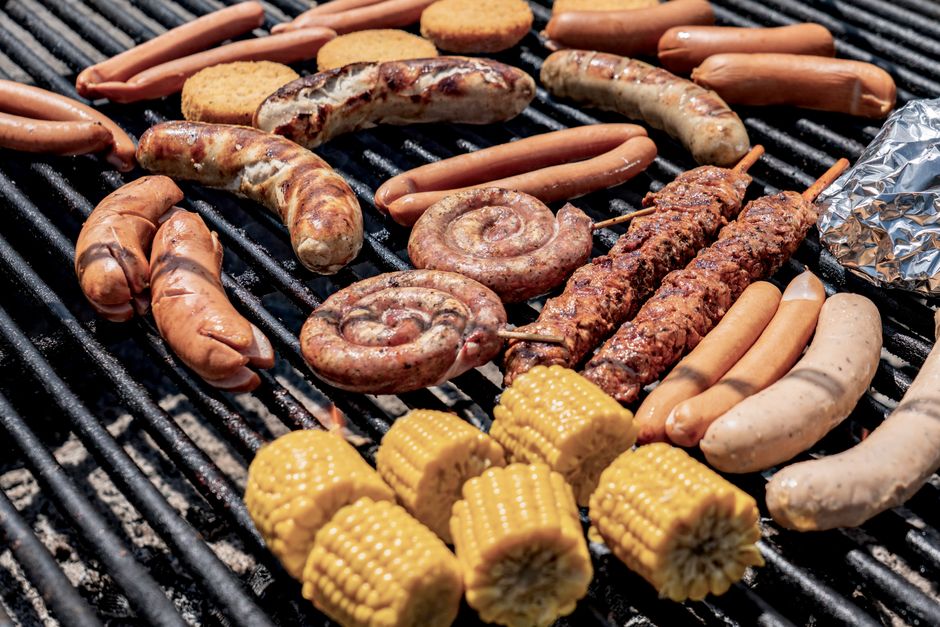
Undercooked sausage is a real health risk. It can carry bacteria that cause food poisoning. The good news is you don’t need to guess. A simple instant-read thermometer is the most reliable tool. Cook sausage until the internal temperature reaches 160°F for pork and beef, and 165°F for poultry. That temperature kills harmful bacteria. If you don’t have a thermometer, you can check the visual signs, but a thermometer is always safer.
Why Temperature Matters More Than Looks
Color is not a reliable test. A sausage can look brown on the outside and still be raw inside. It can also look pink inside and be fully cooked. This happens because of how the meat is processed and what ingredients are used.
Smoked sausages, for example, often stay pink even when fully cooked. The smoking process sets the color. Some sausages also contain curing salts that keep the meat pink. Using color alone can lead you to overcook or undercook your food.
Bacteria like Salmonella and E. coli live inside the meat, not just on the surface. Ground meat, which sausage is, has bacteria mixed throughout. You cannot see, smell, or taste these bacteria. The only way to know they are gone is to reach the correct internal temperature.
What Is the Safe Internal Temperature for Sausage?
The safe temperature depends on the type of meat. Use these numbers as your guide:
- Pork and beef sausage: 160°F
- Chicken and turkey sausage: 165°F
These temperatures come from food safety guidelines. They are the minimum temperature needed to kill harmful pathogens. When the sausage hits this temperature, it is safe to eat.
Let the sausage rest for a few minutes after cooking. The temperature will rise slightly during this time. This is called carryover cooking. It adds a small safety buffer and helps the juices settle.
How to Use a Meat Thermometer Correctly
Using a thermometer is simple, but placement matters. Insert the probe into the thickest part of the sausage. Make sure the tip is in the center, not touching the pan or the casing. The casing can be hotter than the meat inside, which gives a false reading.
For thin sausages like breakfast links, insert the probe from the end. Push it lengthwise into the sausage so the tip sits in the center. This works better than trying to pierce the side of a thin link.
Digital instant-read thermometers are the most accurate. They give a reading in seconds. If you cook sausage often, this tool is worth having. It removes all guesswork.




Visual Signs That Sausage Is Cooked
If you don’t have a thermometer, you can use visual checks. These are less reliable but still helpful.
Cut the sausage open at its thickest point. The meat should be uniform in color throughout. There should be no translucent, shiny, or raw-looking areas. For pork and beef sausage, the inside should be brown or tan, not pink or red.
The juices should run clear. If the juices are pink or bloody, the sausage needs more time. The texture should be firm but not hard. A raw sausage feels soft and squishy. A cooked one feels solid and springs back when pressed.
Remember that these signs are not foolproof. Some fully cooked sausages stay pink. Some undercooked sausages look brown. When in doubt, cook it longer or use a thermometer.
Different Cooking Methods and How They Affect Doneness
Each cooking method has its own challenges. Pan-frying is common. The outside can brown quickly while the inside stays raw. Keep the heat at medium rather than high. This lets the heat reach the center before the outside burns.
Grilling has the same issue. High heat creates char on the outside. The inside may still be undercooked. Use indirect heat or move the sausage to a cooler part of the grill if the outside browns too fast.
Boiling or simmering in liquid cooks sausage more evenly. The liquid surrounds the sausage completely. This method rarely produces an undercooked center. However, the sausage can become waterlogged and lose flavor.
Baking in the oven is reliable. The steady heat cooks the sausage evenly. Place links on a baking sheet and turn them once halfway through. This method takes longer but produces consistent results.
No matter which method you use, the thermometer is the final judge. The cooking method only affects how quickly the sausage reaches the safe temperature.
How Can You Tell If Sausage Is Cooked Without Cutting It?
Some people prefer not to cut the sausage. Cutting releases juices and can dry out the meat. There are ways to check without cutting.
Use the thermometer from the end of the sausage. Insert it lengthwise as described earlier. This checks the center without creating a visible cut.
Press the sausage with tongs or your finger. A cooked sausage feels firm. An undercooked one feels soft and gives easily under pressure. This test takes practice. It is not as accurate as a thermometer.
Watch the steam. A fully cooked sausage releases steam when you pierce it. If the steam is visible and the juices are clear, the sausage is likely done. If the juices look pink, it needs more time.
These methods are less precise than cutting or using a thermometer. They work in a pinch, but they are not the gold standard.
Why You Should Never Eat Undercooked Sausage
Undercooked sausage can make you seriously ill. Ground meat carries bacteria from the animal’s gut. During grinding, these bacteria spread throughout the meat. If the sausage does not reach the safe internal temperature, those bacteria survive.
Symptoms of food poisoning include nausea, vomiting, stomach cramps, and diarrhea. These can start within hours or days after eating. Most healthy adults recover in a few days. But for pregnant women, young children, older adults, and people with weakened immune systems, food poisoning can be dangerous.
Some strains of E. coli can cause kidney failure. Salmonella can spread from the intestines to the bloodstream. These complications are rare but serious. Reaching the correct internal temperature prevents all of this.
What About Pre-Cooked or Smoked Sausage?
Not all sausage is raw. Some sausages are already cooked before you buy them. These include hot dogs, smoked sausages, and some bratwurst. They only need reheating, not full cooking.
Check the package label. If it says “fully cooked” or “ready to eat,” the sausage is safe to eat cold. You can still heat it for flavor and texture. The target temperature for reheating is 165°F, but this is for quality, not safety.
If the package says “fresh” or “raw,” it needs full cooking. Raw sausage is usually found in the refrigerated meat case, not vacuum-sealed on a shelf. When in doubt, treat it as raw and cook it to the safe temperature.
Frequently Asked Questions
Can sausage be slightly pink in the middle and still be cooked?
Yes, especially if it is smoked or contains curing salts. The only reliable way to know is to check the internal temperature with a thermometer.
How long does it take to cook sausage?
Cooking time varies by method, thickness, and starting temperature. Pan-frying typically takes 10-15 minutes, but the temperature reading matters more than the time.
Is it safe to eat sausage that looks brown on the outside?
Not necessarily. The outside can brown before the inside is fully cooked. Always check the center, ideally with a thermometer.
What happens if I eat undercooked sausage?
You may develop food poisoning symptoms like nausea, vomiting, and diarrhea. Most healthy people recover without treatment, but some groups face higher risks of serious complications.
