
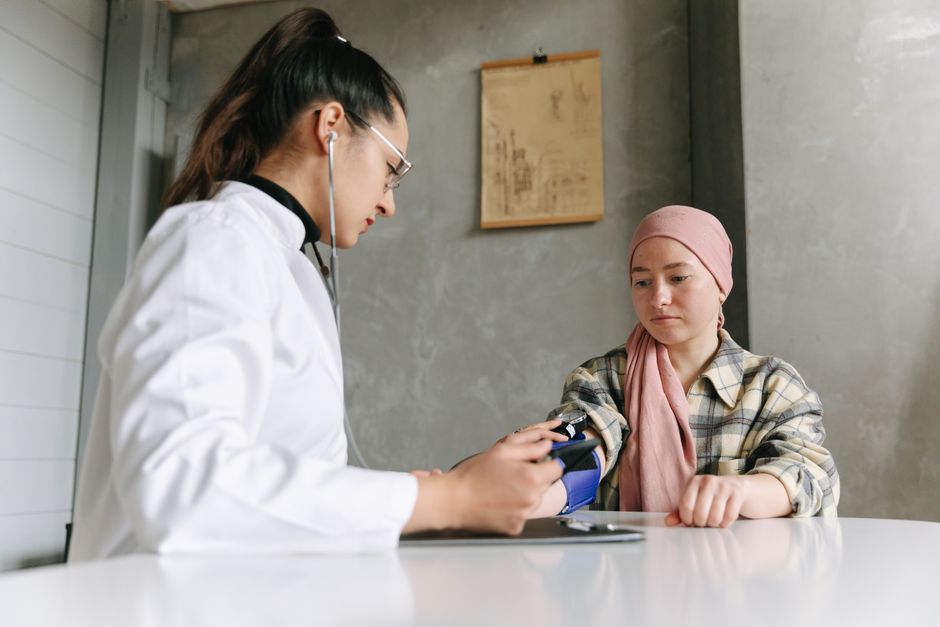
Artificial intelligence is already changing how doctors diagnose disease, plan treatments, and manage patient care. It is not science fiction or a distant future technology. AI systems today can spot cancers on medical scans that human eyes miss, predict which patients are at risk of complications, and help doctors choose the most effective medications. The real question is not whether AI can improve healthcare, but how much it can help when used correctly and where its limits still lie.
How Does AI Actually Analyze Medical Images and Diagnose Disease?
Medical imaging is where AI has made the most visible progress. Radiologists look at hundreds of scans each day. Fatigue is real. AI does not get tired. Studies have found that AI algorithms can detect breast cancer in mammograms with accuracy comparable to experienced radiologists. Some systems even reduce false positives, meaning fewer women are called back for unnecessary biopsies.
The way it works is straightforward. The AI is trained on thousands of labeled images. It learns patterns that correspond to disease. When a new scan comes in, the system compares it to everything it has learned. It flags suspicious areas for the radiologist to review. The AI does not replace the doctor. It acts as a second set of eyes that never blinks.
Current research suggests AI is especially strong at detecting lung nodules, skin cancers, and retinal damage from diabetes. Some hospitals in the United States already use AI-powered imaging tools as standard practice. The technology is not perfect. It can struggle with unusual cases or poor quality images. But the evidence is clear that AI improves detection rates in real clinical settings.
Can AI Help Predict Patient Outcomes Before Treatment Starts?
Yes, and this is one of the most promising areas. AI models can analyze electronic health records, lab results, and vital signs to predict which patients are at risk of getting worse. Hospitals use these predictions to intervene earlier. For example, an AI system might flag a patient whose vital signs suggest they will develop sepsis within the next six hours. Nurses can start treatment before the patient crashes.
Research shows these predictive tools work for many conditions. Heart failure readmission rates drop when AI identifies high-risk patients before discharge. Stroke outcomes improve when AI helps determine which patients will benefit from clot removal. The key insight is that AI sees patterns across thousands of patients that no single doctor could hold in memory.
There is a catch. These models are only as good as the data they are trained on. If the training data comes mostly from one hospital or one population, the predictions may not work well for different groups. Some studies suggest that AI models can perform worse for racial minorities when the training data is not diverse. This is a real problem that researchers are actively working to fix.
How Can AI Improve Healthcare And Patient Outcomes Through Personalized Treatment?
One size does not fit all in medicine. Two people with the same cancer diagnosis can respond very differently to the same drug. AI helps doctors match treatments to individual patients by analyzing genetic data, tumor characteristics, and past treatment responses. This is called precision medicine, and AI makes it practical at scale.
Drug discovery is another area where AI accelerates progress. Traditional drug development takes over a decade and costs billions. AI can screen millions of potential drug compounds in weeks. It predicts which molecules are most likely to work and which will have toxic side effects. Some pharmaceutical companies now use AI to design clinical trials that are smaller, faster, and more likely to succeed.
For patients, this means getting the right drug the first time instead of cycling through treatments that do not work. It also means fewer side effects because the AI can predict which patients will tolerate a drug poorly. The technology is still maturing, but early results from cancer treatment centers show that AI-guided therapy selection improves response rates and extends survival in certain cancers.





What Does the Research Actually Say About AI in Healthcare?
The evidence base is growing fast but uneven. A 2023 review in The Lancet Digital Health analyzed over 300 studies on AI in clinical settings. The researchers found that AI performed as well or better than clinicians in about two-thirds of diagnostic tasks. But they also noted that most studies were done in controlled environments, not real hospitals. Real-world performance often lags behind lab performance.
Some of the strongest evidence comes from dermatology. AI systems can classify skin lesions as benign or malignant with accuracy above 90 percent in some studies. In ophthalmology, AI screening for diabetic retinopathy is now approved by the FDA and used in clinics. For emergency medicine, AI tools that interpret electrocardiograms can detect heart attacks faster than standard protocols.
The weak spots are also clear. AI struggles with rare diseases because there is not enough training data. It can be fooled by artifacts in images or unusual patient anatomy. And many studies lack long-term follow-up data. We do not yet know if AI-assisted diagnosis actually saves lives over years of use. The short-term benefits are real, but the long-term outcomes need more study.
| Area of AI Application | Strength of Evidence | Real-World Use |
|---|---|---|
| Medical imaging (cancer, retina) | Strong | FDA approved, in clinical use |
| Predictive analytics (sepsis, readmission) | Moderate | Growing adoption in hospitals |
| Personalized treatment selection | Moderate | Limited to specialized centers |
| Drug discovery | Promising but early | Research phase mostly |
| Rare disease diagnosis | Weak | Not yet reliable |
What Are the Risks and Limitations of AI in Healthcare?
AI is not magic. It makes mistakes, and those mistakes can harm patients. A system trained on data from one hospital may fail when used at another. If the training data contains biases, the AI will amplify those biases. There are documented cases where AI algorithms underdiagnosed Black patients compared to white patients because the training data was not representative.
Privacy is another serious concern. Medical data is sensitive. AI systems need large datasets to learn, and those datasets contain personal health information. Data breaches, misuse, and unclear consent rules are real problems. As of 2026, regulations are still catching up with the technology. Patients should ask their providers how AI tools are used and whether their data is protected.
There is also the issue of overreliance. Doctors may trust an AI recommendation too much and override their own clinical judgment. This is called automation bias. It is a well-documented phenomenon in aviation and is now appearing in medicine. The best approach is to use AI as a tool that informs decisions, not one that makes them. Human oversight remains essential.
What Should Patients Know About AI in Their Own Care?
Patients should ask questions. If your doctor uses an AI tool to read your scan or predict your risk, you have a right to know. Ask what the AI found and whether a human confirmed it. Ask if the AI was trained on data that includes people like you. These are reasonable questions, and good doctors will answer them.
Do not assume AI is always right. If something feels off about your diagnosis or treatment plan, speak up. AI can miss things that a human would catch, especially in unusual cases. Your own knowledge of your body and your symptoms still matters. Technology is a supplement, not a substitute, for good medical care.
- Ask your doctor if AI was used in your diagnosis or treatment planning
- Understand the limits — AI works best for common conditions with clear patterns
- Know your data — ask how your health information is stored and shared
- Trust your instincts — if a recommendation seems wrong, get a second opinion
- Stay informed — AI in healthcare is changing fast, and what is true today may shift
The bottom line is that AI can improve healthcare and patient outcomes, but it is not a cure-all. It works best for specific, well-defined tasks like reading scans and predicting complications. It still struggles with complex decision-making, rare conditions, and situations that require empathy and human judgment. Used wisely, AI saves time, catches mistakes, and helps doctors focus on what they do best — caring for patients.
Frequently Asked Questions
Can AI replace doctors in the future?
No. AI is a tool that assists doctors, not a replacement. Human judgment, empathy, and experience are still essential for safe and effective patient care.
Is AI in healthcare safe?
AI tools that are FDA approved or cleared have passed safety reviews, but no system is perfect. Patients should ask questions and stay involved in their own care decisions.
How does AI keep patient data private?
AI systems use anonymized or de-identified data for training. However, data breaches can still happen, and regulations like HIPAA provide protections but are not foolproof.
What diseases can AI diagnose best?
AI is strongest at diagnosing cancers from medical images, diabetic eye disease, and heart conditions from electrocardiograms. Performance varies by condition and data quality.
