
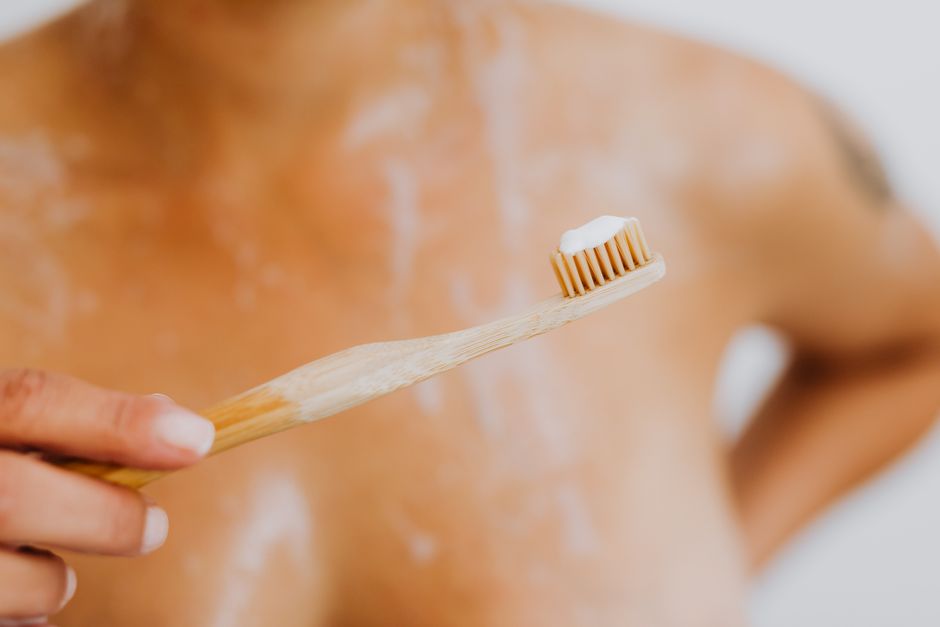
No, toothpaste is not a good treatment for pimples. It contains ingredients meant for cleaning teeth, not skin, and it can irritate, dry out, or damage the skin around a breakout. Some people try it because it dries out a pimple quickly, but that short-term drying effect comes with real risks and better options exist.
The idea that toothpaste clears acne has spread for decades. It sounds practical: you have a pimple, you have toothpaste, so you put one on the other. But dermatologists do not recommend it, and the reasons are worth understanding before you reach for the tube.
Why Do People Put Toothpaste on Pimples?
Toothpaste has a few ingredients that can dry out skin. That drying action is why some people feel it “works.” A pimple looks smaller the next morning, and the connection seems obvious.
What actually happens is that the toothpaste strips moisture and irritates the top layer of skin. The pimple may look flatter because the skin around it is now red, dry, and inflamed. That is not the same as clearing the pimple.
Some of the ingredients people point to include baking soda, hydrogen peroxide, alcohol, and menthol. Each one can dry or irritate skin. None of them are acne treatments, and none have been tested as safe or effective for putting on a pimple. The evidence that toothpaste helps acne is essentially absent. What evidence exists points the other way.
Does Toothpaste Actually Clear Acne?
No. There is no clinical evidence that toothpaste treats acne. It is not an approved acne treatment, and no major dermatology guideline lists it as one.
Acne forms when hair follicles get blocked by oil and dead skin cells, and bacteria called Cutibacterium acnes can contribute to inflammation. Real acne treatments target one or more of those steps. Toothpaste does not. It does not unclog pores, it does not reduce oil production in a controlled way, and it does not kill acne bacteria in a way that has been studied for skin.
When a pimple fades after toothpaste, timing is usually the reason. Most pimples improve on their own within a few days to a week. A pimple you treat tonight would likely have shrunk by morning anyway.
What Can Toothpaste Do to Your Skin?
Toothpaste can cause irritation, redness, peeling, and burning. For some people, it triggers a rash called contact dermatitis. That is an allergic-type reaction to one or more ingredients.
The ingredients most likely to cause trouble include:
- Baking soda, which is alkaline and can disrupt the skin’s natural acid balance
- Hydrogen peroxide, which can irritate and bleach skin
- Alcohol and menthol, which dry and sting
- Flavorings and foaming agents, which can trigger reactions in sensitive people
The skin on your face is thinner and more delicate than the skin on your hands or feet. It also sits right next to your eyes and mouth. Irritation there is not just uncomfortable. It can leave dark marks, especially on darker skin tones, and those marks can outlast the pimple itself.
There is also a practical risk people rarely think about. If you put toothpaste near your mouth or eyes, it can get into those areas and cause burning. If you have sensitive skin or a skin condition like eczema or rosacea, toothpaste is even more likely to make things worse.


What Should You Use Instead?
Over-the-counter acne treatments have actual evidence behind them. The main ingredients to look for are benzoyl peroxide and salicylic acid. Both are widely available and have been studied for acne.
Benzoyl peroxide kills acne bacteria and helps reduce inflammation. Salicylic acid helps unclog pores. Both can dry or irritate skin, especially at first, so it helps to start with a lower strength and use it as directed on the label.
For a single pimple, a spot treatment containing benzoyl peroxide or salicylic acid is a reasonable choice. So is a hydrocolloid pimple patch, which covers the spot and absorbs fluid. Neither is a cure, but both are designed for skin and have a much better safety profile than toothpaste.
If your acne is widespread, painful, or leaving scars, that is a reason to see a dermatologist. Prescription treatments exist, and some acne can leave lasting marks if it is not managed. A doctor can also tell you whether something that looks like acne is actually another skin condition.
Does Toothpaste Work on Pimples Better Than Nothing?
No. Doing nothing is usually safer than putting toothpaste on a pimple. Doing nothing lets the pimple follow its natural course without added irritation.
The comparison is not toothpaste versus a real treatment. It is toothpaste versus leaving the pimple alone or using a product made for skin. In that comparison, toothpaste loses on both safety and effectiveness.
Here is a simple way to think about the options:
| Option | Made for skin? | Evidence for acne? | Main risk |
|---|---|---|---|
| Toothpaste | No | None | Irritation, burns, dark marks |
| Benzoyl peroxide | Yes | Yes | Dryness, irritation |
| Salicylic acid | Yes | Yes | Dryness, irritation |
| Hydrocolloid patch | Yes | Some | Minimal |
| Leave it alone | Yes | Not applicable | None |
That table is not a treatment plan. It is a way to see that toothpaste sits outside the group of options designed for skin.
Why Does This Myth Keep Spreading?
The toothpaste myth survives because it fits a pattern people already believe. It is cheap, it is in every bathroom, and it seems to dry out a pimple. That combination makes a story that spreads easily.
There is also a timing trick at work. Most pimples improve within days no matter what you do. If you put toothpaste on a pimple and it fades, your brain links the two events. That is a common thinking error, not proof that toothpaste helped.
Social media makes this worse. A short video of someone dabbing toothpaste on a pimple can reach millions of people, and the comment section fills with people who say it worked for them. What you rarely see are the people whose skin got irritated and who quietly stopped. That missing half of the story is why myths like this feel more solid than they are.
The Bottom Line on Toothpaste and Pimples
Toothpaste is not a pimple treatment. It can dry out skin, cause irritation, and leave marks that last longer than the pimple would have. The short-term drying effect people notice is not the same as clearing acne.
If you want to treat a pimple, use a product made for skin. Benzoyl peroxide and salicylic acid have real evidence behind them. A hydrocolloid patch is a gentle option for a single spot. And if your acne is more than an occasional pimple, a dermatologist can help you find something that actually works.
One more thing worth knowing: the habit of putting toothpaste on a pimple is not harmless just because it is common. Common and safe are not the same thing. The fact that a tip is everywhere does not mean it has been tested. For toothpaste and pimples, it has not.
Frequently Asked Questions
Does toothpaste work on pimples overnight?
No, toothpaste does not clear a pimple overnight. Any change you see is usually the pimple improving on its own, not the toothpaste working.
Is it safe to put toothpaste on a pimple?
It is not recommended. Toothpaste can irritate skin, cause redness, and leave dark marks, especially on sensitive or darker skin.
What is the fastest way to get rid of a pimple?
There is no instant fix, but a spot treatment with benzoyl peroxide or salicylic acid is a skin-safe option. A hydrocolloid patch can also help cover and absorb a single pimple.
Can toothpaste make acne worse?
Yes. Toothpaste can irritate the skin around a pimple and trigger redness, peeling, or dark marks that outlast the pimple itself.
