
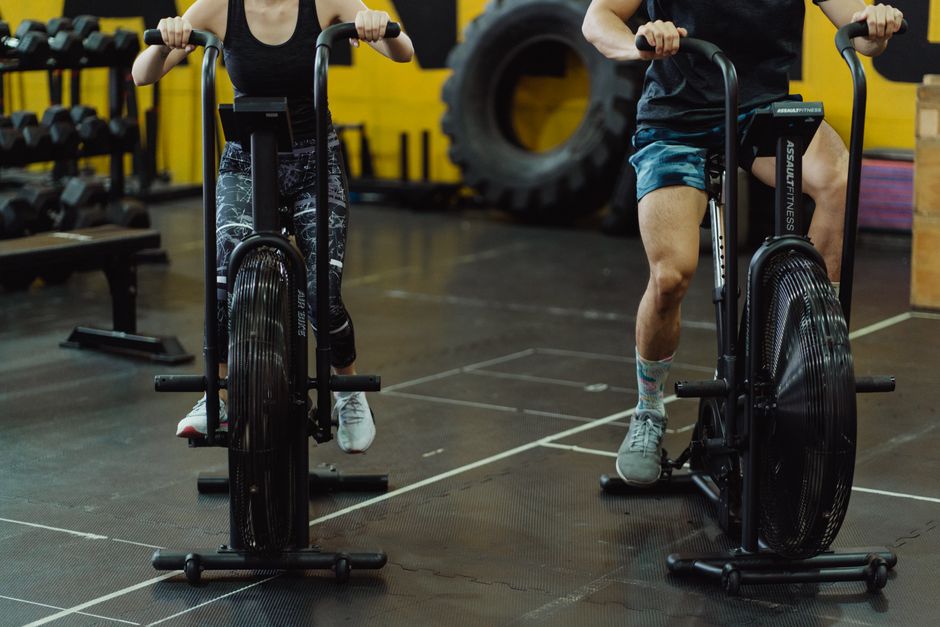
Spot reduction is a myth. You cannot choose where your body burns fat by choosing which muscle you move. So when someone asks whether the exercise bike burns belly fat, the accurate answer is this: it can help reduce overall body fat, including fat stored around the abdomen, but it does not target belly fat specifically. The bike is a tool for burning calories. Where those calories come from is decided by your body, not by the pedals.
Does the Exercise Bike Burn Belly Fat?
The exercise bike burns calories, and burning more calories than you consume over time reduces total body fat. That includes visceral fat, the metabolically active fat stored deep in the abdomen, and subcutaneous fat just under the skin.
What the bike cannot do is direct that fat loss to your midsection. This is one of the most studied questions in exercise science, and the findings have been consistent for decades. A classic example: tennis players who spend years building strength in one arm still lose fat from both arms at similar rates during weight loss. The working muscle does not get to keep its fat.
Belly fat is often the last place people notice change, and that is not a failure of the bike. It reflects how your body distributes and mobilizes fat, which is shaped heavily by genetics, sex, age, and hormones. Men tend to store more fat in the abdomen. Women tend to store more in the hips and thighs before menopause, then shift somewhat toward the abdomen afterward. None of that changes based on which cardio machine you choose.
So the practical answer is yes, indirectly. Consistent riding that creates a calorie deficit can reduce belly fat as part of overall fat loss. It just will not happen on its own schedule or in the order you might prefer.
Why Belly Fat Is More Than a Cosmetic Concern
Not all fat behaves the same way. Visceral fat, which wraps around the liver, pancreas, and intestines, is metabolically active tissue. It releases inflammatory signals and free fatty acids, and it is more strongly linked to health problems than fat stored under the skin.
This is why waist circumference matters clinically. For men, a waist over 40 inches and for women a waist over 35 inches are the thresholds generally used to flag elevated health risk. These are established cutoffs used in clinical practice, not arbitrary numbers.
Visceral fat also responds well to exercise. Research consistently shows that regular aerobic activity reduces visceral fat even when body weight changes modestly. That is a meaningful point. You may not see your belly flatten quickly, but the fat you cannot see may be shrinking first. Some studies suggest visceral fat responds to exercise somewhat independently of total weight loss, though the exact contribution of exercise versus diet remains an area of active research.
This is the non-obvious part: the scale and the mirror are both imperfect measures of what is actually improving inside your body.
How Much Do You Need to Ride to See Changes?
General public health guidelines recommend at least 150 minutes of moderate-intensity aerobic activity per week for adults, or 75 minutes of vigorous activity. This is the baseline for cardiovascular health, not a fat-loss prescription.
For meaningful fat loss, most people need more than the minimum. Many clinicians and exercise physiologists suggest 200 to 300 minutes per week of moderate activity when fat loss is the goal, alongside dietary changes. That is roughly 30 to 45 minutes of riding most days.
Intensity matters too. Moderate intensity means you can talk but not sing. Vigorous means you can only say a few words before needing a breath. Both work. Higher intensity burns more calories per minute, but it is harder to sustain and harder to recover from.
Here is where honesty is required: exercise alone, without dietary change, tends to produce modest weight loss. The body adapts to higher energy expenditure in ways that are still being studied, and appetite often increases. People who lose significant fat and keep it off typically combine regular activity with sustained changes to what and how much they eat. The bike is a strong supporting player, not a standalone solution.





Does It Matter Which Type of Bike You Use?
Upright, recumbent, and indoor cycling bikes all produce similar cardiovascular and calorie-burning effects when the effort level is comparable. The differences are mostly about comfort and joint stress, not fat-burning superiority.
Recumbent bikes place less strain on the lower back and hips, which helps people with back issues or limited mobility ride longer. Upright bikes more closely mimic outdoor cycling and engage the core slightly more for balance, though this does not translate into spot reduction.
Indoor cycling classes, sometimes called spin, typically involve higher intensity intervals. Some research suggests high-intensity interval training can improve cardiovascular fitness and may reduce visceral fat efficiently per unit of time, but the evidence comparing it directly to steady-state riding for belly fat specifically is mixed. Both approaches work. The one you will actually do consistently is the better choice.
What Actually Moves the Needle on Belly Fat
If reducing belly fat is the goal, several factors matter more than the specific machine you choose.
- Calorie deficit: Fat loss requires burning more than you take in. No exercise overcomes a large, sustained calorie surplus.
- Protein intake: Higher protein intake helps preserve muscle during weight loss and tends to increase satiety. This is well supported across multiple studies.
- Sleep: Short sleep is associated with higher levels of cortisol and appetite-regulating hormones that promote overeating. Chronic sleep deprivation is linked to greater abdominal fat storage.
- Stress management: Chronic stress elevates cortisol, which is associated with increased visceral fat storage. This relationship is well documented, though individual responses vary.
- Strength training: Building muscle raises resting energy expenditure modestly and helps preserve lean mass during weight loss. It does not burn belly fat directly, but it improves body composition.
- Alcohol: Heavy drinking is associated with increased abdominal fat. Reducing intake often helps.
None of these are shortcuts. They are the actual levers. The bike fits into this picture as one reliable way to create an energy deficit and improve cardiovascular health, but it does not override the others.
Can You Target Belly Fat With Core Work on the Bike?
No. Crunches, planks, and core work on or off the bike strengthen abdominal muscles but do not burn fat from the abdomen. Muscle and fat are different tissues. Strengthening a muscle does not cause the fat above it to disappear.
What core work does provide is better posture and trunk stability, which can change how your midsection looks even without fat loss. That is a real effect, but it is not fat reduction.
Some people believe sweating more around the waist means more fat is being burned there. It does not. Sweat is water and electrolytes, not fat. Fat leaves the body primarily through exhaled carbon dioxide and water, not through perspiration.
What Results Should You Realistically Expect?
Fat loss from any form of exercise is gradual. A reasonable and commonly cited rate of loss during a sustained calorie deficit is about 1 to 2 pounds per week, though this varies widely based on starting weight, diet, activity level, and individual factors.
Visible changes in the belly often lag behind other areas. Early weight loss frequently shows up in the face, arms, and chest before the abdomen. This is normal and not a sign that the bike is not working.
Plateaus happen. The body adapts to a given routine over time. Increasing duration, intensity, or frequency, or adjusting diet, is often needed to keep progress going.
If you have been riding consistently for several weeks with no change in waist measurement or weight, the most likely explanations are that calorie intake has crept up, the intensity or duration is lower than you think, or you are retaining water or building muscle. A food log and a more structured routine usually clarify which.
Frequently Asked Questions
Can you lose belly fat just by riding an exercise bike?
You can reduce belly fat through overall fat loss, which the bike can contribute to by burning calories. But exercise alone, without dietary changes, usually produces modest results.
How long do you need to ride to burn belly fat?
General guidelines recommend at least 150 minutes of moderate aerobic activity per week for health, with 200 to 300 minutes often suggested when fat loss is the goal. Results depend heavily on diet and consistency.
Does the exercise bike burn more belly fat than walking?
Neither burns belly fat specifically. The bike typically burns more calories per minute at higher intensities, which can support overall fat loss more efficiently, but total calories burned and diet matter more than the activity type.
Why is my belly not shrinking even though I ride every day?
Belly fat is often the last to visibly change, and daily riding without a calorie deficit will not produce fat loss. Sleep, stress, alcohol, and food intake all influence abdominal fat independently of exercise.
