
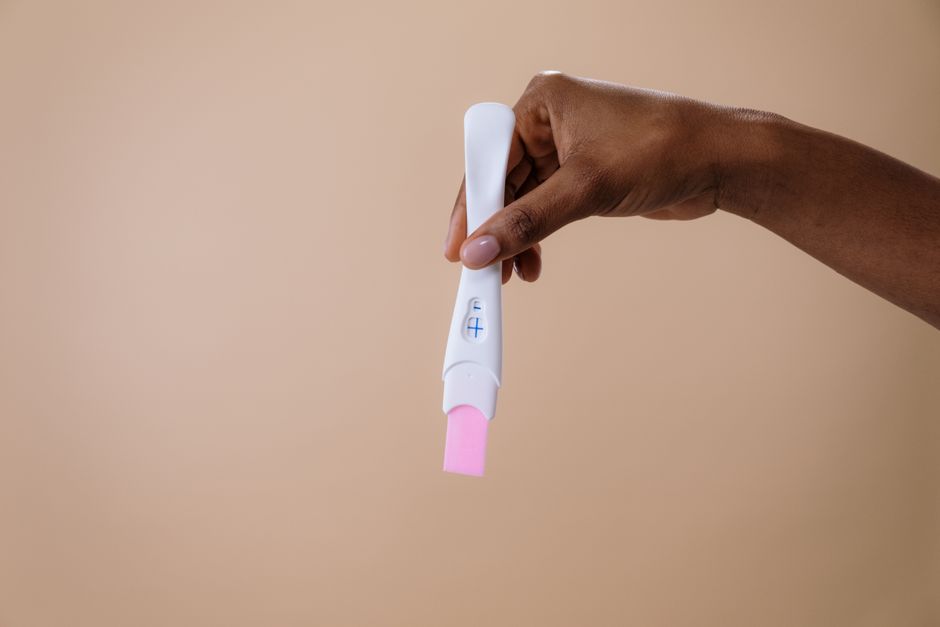
Yes, a pregnancy test can be wrong. Home pregnancy tests are highly accurate when used correctly, but they are not perfect. False negatives happen more often than false positives, and both are usually tied to how and when the test was used rather than a faulty test. Understanding why these errors happen helps you trust the result you see.
How Do Home Pregnancy Tests Work?
Home pregnancy tests detect a hormone called human chorionic gonadotropin (hCG). Your body only produces this hormone after a fertilized egg attaches to the lining of the uterus. That attachment usually happens about 6 to 10 days after ovulation.
Once implantation occurs, hCG levels rise quickly. They typically double every 48 to 72 hours in early pregnancy. The test strip contains antibodies that bind to hCG. When enough hormone is present, a colored line or digital symbol appears.
This mechanism matters because it explains most test errors. If hCG is not yet at a detectable level, the test cannot show a positive result. This is not a test failure. It is a timing issue.
Can a Pregnancy Test Give a False Positive?
A false positive means the test says pregnant when you are not. This is rare. Most false positives come from specific and identifiable causes.
One cause is a chemical pregnancy. This happens when a fertilized egg implants but stops developing very early. The body produces hCG, so the test turns positive. Then the pregnancy ends, often before a missed period. The test was technically correct at the time, but the pregnancy did not continue.
Certain medications can also cause false positives. Fertility treatments that contain hCG, such as some ovulation induction injections, can leave the hormone in your system for days or weeks. Testing too soon after these injections can produce a positive result that does not reflect a pregnancy.
Other causes are less common. Some medical conditions, including rare tumors, can produce hCG. An ectopic pregnancy also produces hCG and will show a positive test. In this case, the test is detecting a real pregnancy, but one that is located outside the uterus and cannot survive.
Expired tests or tests stored in extreme heat or humidity can malfunction. But most false positives are not caused by the test itself. They come from hCG being present for a reason other than a viable pregnancy.
Can a Pregnancy Test Give a False Negative?
False negatives are more common than false positives. A false negative means the test says not pregnant when you actually are. Timing is the main culprit.
Testing too early is the most frequent mistake. hCG may simply be below the test’s detection threshold. Most tests claim to detect pregnancy on the first day of a missed period. But hCG levels vary widely between women. Some women have high levels by then. Others have levels that are still too low to trigger a positive line.
Urine concentration also matters. hCG is more concentrated in the morning after you have not urinated for several hours. Testing later in the day, especially after drinking fluids, dilutes your urine. This can drop hCG below the detection limit even when you are pregnant.
Some tests are more sensitive than others. A test that detects 25 mIU/mL of hCG needs more hormone than one that detects 10 mIU/mL. If you test very early, a less sensitive test may show negative while a more sensitive one shows positive.


How Early Can You Take a Pregnancy Test?
Most home tests are designed to be used on the first day of a missed period. That is roughly 14 days after ovulation for a typical 28-day cycle. Some sensitive tests claim to work earlier, but earlier testing means a higher chance of a false negative.
If you test 4 or 5 days before your missed period, hCG may not be detectable yet. You might get a negative result and actually be pregnant. Testing again a few days later often gives a different answer.
A good rule is to wait until the day your period is due. If you get a negative result but your period does not arrive, wait 3 to 5 days and test again. This gives hCG time to rise to detectable levels if you are pregnant.
What Can Cause an Evaporation Line or Faint Line?
Evaporation lines are a common source of confusion. These are faint lines that appear after the test has dried. They happen when urine evaporates and leaves behind a residue that the test strip picks up.
The key difference is timing. A real positive line appears within the time window stated in the test instructions, usually 3 to 5 minutes. An evaporation line appears later, after the test has dried. Reading a test after the recommended window can lead you to mistake an evaporation line for a positive result.
Faint positive lines are different. A faint line that appears within the reading window is a real positive. It simply means hCG levels are low. This is common in early pregnancy. If you see any line within the time window, even a faint one, it is a positive result.
To avoid confusion, set a timer and read the test exactly when the instructions say. Do not check the test hours later.
What Should You Do After a Positive or Negative Result?
A positive home test is very reliable. If you get a positive result, contact a healthcare provider to confirm the pregnancy and discuss next steps. Blood tests can measure hCG more precisely and confirm the pregnancy earlier than urine tests.
A negative result requires more thought. If your period does not start within a week, test again. If you continue to get negative results but still have no period, see a healthcare provider. Irregular cycles, stress, or medical conditions can delay a period for reasons unrelated to pregnancy.
If you get a positive result followed by bleeding or severe abdominal pain, seek medical attention. These symptoms can indicate an ectopic pregnancy or a miscarriage. Both require prompt medical evaluation.
Frequently Asked Questions
Can a pregnancy test be wrong if it shows positive?
Yes, but false positives are rare. They usually come from a chemical pregnancy, fertility medications containing hCG, or an ectopic pregnancy rather than a defective test.
Can a pregnancy test be wrong if it shows negative?
Yes, false negatives are more common than false positives. Testing too early or using diluted urine are the most frequent causes.
How long should you wait before retesting?
Wait 3 to 5 days after a negative result if your period has not started. This gives hCG time to rise to detectable levels if you are pregnant.
Can medications affect pregnancy test results?
Most medications do not affect pregnancy tests. Fertility treatments containing hCG are the main exception and can cause false positives for days after the injection.
