
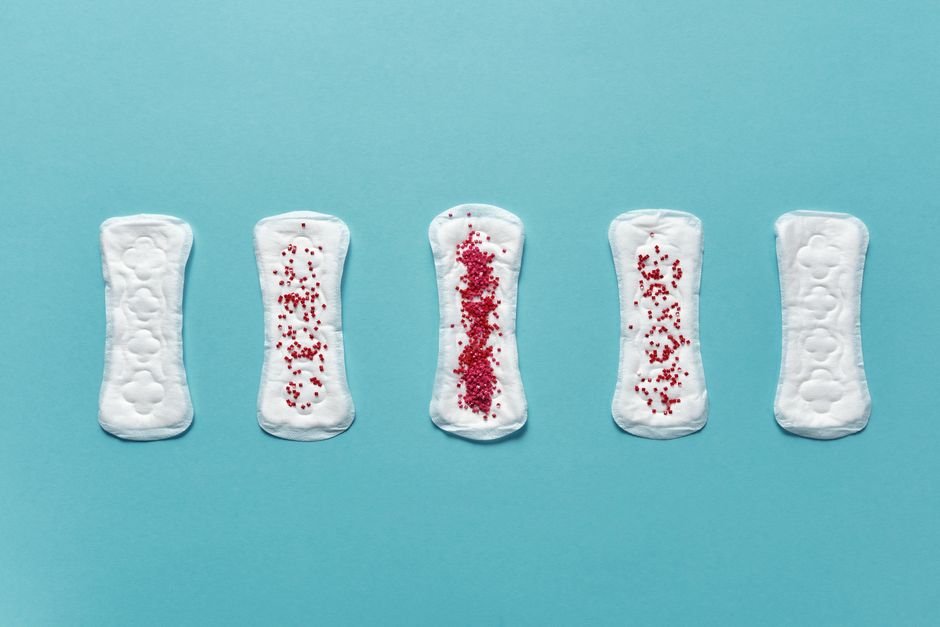
Your body just spent nine months building a baby, and now it’s rebuilding your menstrual cycle from scratch. The first period after pregnancy often surprises people with how heavy it is — sometimes heavier than any period you had before. That’s not a sign something is wrong. It’s usually the predictable result of a uterine lining that built up for months without shedding, combined with a hormone system that is still finding its footing after delivery. Most people notice the heaviest flow in that first cycle or two, and it tends to settle over time.
Why Is The First Period After Pregnancy So Heavy?
The main reason comes down to simple accumulation. During pregnancy, the uterine lining (the endometrium) thickens and stays in place to support the pregnancy. When pregnancy ends and hormone levels shift, that lining eventually sheds. After nine months of buildup, there is more tissue to release than in a typical monthly cycle.
Hormones add a second layer to this. The hormonal rhythm that normally triggers ovulation and controls how the lining builds and sheds is disrupted during pregnancy and the postpartum period. It takes time to re-establish. Early cycles after birth are frequently anovulatory — meaning no egg is released. Without ovulation, the hormonal signals that normally keep lining growth in check are out of balance. The result is often a thicker lining and a heavier bleed when it finally comes.
There is also a mechanical factor. The uterus is still returning to its pre-pregnancy size and tone. That process, called involution, takes several weeks after delivery. A uterus that has not fully returned to baseline can bleed differently than one that has.
How Is This Different From Normal Postpartum Bleeding?
Postpartum bleeding and your first period are two separate events, and confusing them is common. Lochia — the bleeding that follows delivery — is not a period. It is the uterus shedding the lining and healing tissue from pregnancy and birth. Lochia typically lasts for several weeks and gradually changes from bright red to pink to brown to a light yellowish discharge.
Your first true period comes after that. For people who are not breastfeeding, it often arrives roughly six to twelve weeks after delivery, though the range varies widely. For those who breastfeed exclusively, it can be delayed for months. Breastfeeding raises prolactin, a hormone that suppresses the signals driving ovulation. That delay is normal and does not mean anything is wrong.
One practical point: you can ovulate before your first postpartum period arrives. That means it is possible to become pregnant again before you have had a single period after birth. This is worth knowing if you are making decisions about contraception.
What Causes an Especially Heavy First Period?
Beyond the basic buildup of lining, several factors can make that first period heavier than usual.
- Retained placental tissue. If small pieces of placenta remain in the uterus after delivery, they can cause heavier bleeding and a longer flow. This is a medical issue that needs evaluation, not something to wait out.
- Uterine fibroids. These non-cancerous growths in the uterus are a well-established cause of heavy menstrual bleeding in general.
- Thyroid changes. The postpartum period can bring shifts in thyroid function, and thyroid problems are a recognized contributor to abnormal uterine bleeding.
- Endometriosis or adenomyosis. If you had heavy periods before pregnancy, these conditions may still be affecting you.
- Infection. An infection in the uterus after delivery can cause heavier bleeding along with other symptoms.
Most of the time, none of these are the cause. But when bleeding is extreme or comes with other warning signs, these possibilities are why a doctor’s assessment matters.




When Should You Be Concerned?
Heavy is one thing. Dangerous is another. The line between them matters, and it is worth knowing where it sits.
Seek medical care if you are soaking through a pad or tampon every hour for several hours in a row, passing blood clots larger than a golf ball, or bleeding so heavily that you feel dizzy, weak, or short of breath. These can be signs of significant blood loss and need prompt attention.
Other reasons to call a doctor:
- Bleeding that lasts longer than about a week, or that gets heavier instead of lighter over time
- Fever, chills, or a foul-smelling discharge, which can point to infection
- Severe pain in the pelvis or abdomen that is not relieved by typical period discomfort
- Bleeding that restarts or increases after it had been tapering off
These signs do not automatically mean something serious is happening. They mean the situation deserves a professional look rather than guesswork.
How Long Does It Take for Periods to Return to Normal?
There is no single timeline, and anyone who tells you there is one is oversimplifying. For many people, cycles become more regular within a few months. For others, especially those who breastfeed, it can take considerably longer.
Breastfeeding is the biggest variable. Exclusive breastfeeding, particularly around the clock, tends to delay the return of both ovulation and periods. Once breastfeeding slows or stops, cycles usually resume within a few weeks to a few months. That range is wide because it depends on how much and how often you feed, along with individual hormonal differences.
Even after periods return, they may be irregular for a while. Cycle length can vary, flow can change from month to month, and ovulation may not happen every cycle. This is normal during the transition. What matters more than hitting a specific schedule is the overall trend — periods should gradually become more predictable, not more chaotic.
Does Breastfeeding Affect How Heavy Your First Period Is?
Breastfeeding changes the timing more than the heaviness, but it can influence both. Because breastfeeding suppresses ovulation through elevated prolactin, the first period may be delayed. When it does arrive, it can still be heavy, because the same buildup of lining has been happening in the background.
Some people find that their first few periods while breastfeeding are lighter, and others find them heavier. The evidence does not point to one consistent pattern. What is more predictable is the irregularity. Cycles during breastfeeding are often unpredictable in both timing and flow.
If you are breastfeeding and your periods are unusually heavy or painful, that is still worth mentioning to your doctor. Breastfeeding explains irregularity, but it does not explain bleeding that is extreme or accompanied by other symptoms.
What Helps Manage a Heavy First Period?
Managing a heavy flow is mostly about practical steps and knowing when to get help. For comfort and control, higher-absorbency pads or period underwear can help you track how much you are actually bleeding. That tracking matters, because “heavy” is subjective and your doctor will want specifics.
Some clinicians recommend nonsteroidal anti-inflammatory drugs (NSAIDs) like ibuprofen for heavy menstrual bleeding, since they can reduce flow as well as pain. This is common clinical practice, though it is worth checking with your doctor before using them, particularly if you are breastfeeding or have other health conditions. Iron-rich foods can help if you are concerned about iron loss from heavy bleeding, though whether you need iron supplementation is something to confirm with a blood test rather than assume.
If heavy bleeding continues beyond the first cycle or two, or interferes with daily life, that is a reason to seek evaluation rather than wait it out. There are effective treatments for heavy menstrual bleeding, but they depend on the underlying cause, which is why an assessment comes first.
Is a Heavy First Period a Sign of a Problem?
Usually, no. A heavier-than-usual first period after pregnancy is expected for the reasons described above — accumulated lining, hormonal reset, and a uterus still recovering. The body is not malfunctioning. It is catching up.
That said, “usually normal” is not the same as “always normal.” The distinction comes down to degree and duration. A period that is heavier than before but manageable and tapering off is one situation. Bleeding that is extreme, prolonged, or paired with other symptoms is another. The first is common and expected. The second warrants a call to your doctor.
Trust your sense of what is normal for your body, but do not let uncertainty keep you from asking. Postpartum care exists precisely for questions like this, and no one should feel they are overreacting for wanting an answer.
Frequently Asked Questions
How long does the first period after pregnancy usually last?
Most first postpartum periods last about the same as typical periods — roughly three to seven days — though some are longer. If bleeding lasts beyond about a week or keeps getting heavier, contact your doctor.
Can you have a heavy period while breastfeeding?
Yes. Breastfeeding often delays the first period but does not prevent heavy flow when it arrives. Cycles during breastfeeding tend to be irregular in both timing and heaviness.
Is it normal to pass large clots with your first postpartum period?
Some clotting is common, especially with a heavy flow. Clots larger than a golf ball, or bleeding that soaks a pad every hour, are reasons to seek medical care promptly.
When should I call my doctor about postpartum bleeding?
Call if you soak through a pad every hour for several hours, pass very large clots, feel dizzy or weak, have a fever, or notice foul-smelling discharge. These signs need prompt evaluation.
