
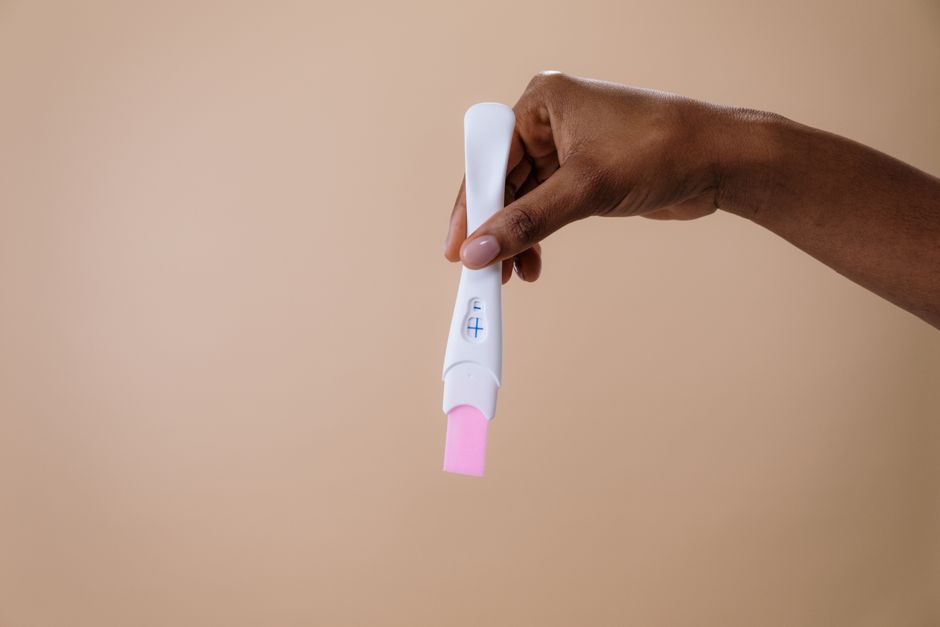
Yes, you can take a pregnancy test in the evening. The time of day does not change whether a test can detect the hormone it looks for. What it can change is how concentrated that hormone is in your urine — and that is the part worth understanding.
Home pregnancy tests detect human chorionic gonadotropin, or hCG, a hormone the body produces after a fertilized egg implants in the uterus. hCG shows up in urine and builds quickly in early pregnancy. A test taken at night works the same way a morning test does. The difference is dilution. If you have been drinking fluids all day, your urine is more watered down, and a lower concentration of hCG is harder for the test to pick up.
So the short answer is yes, evening testing is valid. The longer answer is about timing, sensitivity, and why morning urine is usually recommended in the first place.
Why Is Morning Urine Usually Recommended for Pregnancy Tests?
Morning urine is more concentrated because you have not had anything to drink for several hours while you slept. That concentration matters most in very early pregnancy, when hCG levels are still low.
The hormone roughly doubles every two to three days in the first weeks after implantation. In the earliest days, the amount in your urine may sit close to the limit a test can detect. Anything that dilutes the sample — a large glass of water, several cups of coffee, a long afternoon of sipping — lowers that concentration further.
This is why many test instructions suggest using the first urine of the day. It is not because evening urine is somehow invalid. It is because morning urine gives the test its best chance of catching a low level of hCG. If you are testing early, that margin can decide between a faint line and no line at all.
If you are testing after a missed period, the situation changes. By then hCG has usually climbed well above the detection threshold, and dilution is far less likely to matter. An evening test at that point is generally just as reliable as a morning one.
Can You Take a Pregnancy Test in the Evening and Still Get an Accurate Result?
Yes. An evening test can be accurate, especially if you have held your urine for a few hours beforehand. The test itself does not care what time it is. It reacts to hCG, not to the clock.
The variable you can control is how diluted your urine is. If you want to test in the evening and get the clearest possible result, a few practical steps help:
- Wait at least three to four hours after your last urination before collecting a sample, if you can.
- Limit how much you drink in that window. A normal amount of fluid is fine; a large volume is not.
- Avoid testing right after a big meal with a lot of liquid, like soup or several glasses of water.
- Use the first urine after your longest sleep if you can wait until morning instead.
None of these steps makes an evening test more valid than it already is. They simply reduce the chance that dilution hides a positive result that would have shown up on a more concentrated sample.
Does the Time of Day Affect How Early You Can Test?
Time of day matters less than how many days past ovulation you are. The single biggest factor in early detection is the timing of the test relative to implantation, not whether you test at 7 a.m. or 7 p.m.
Implantation — when the fertilized egg attaches to the uterine lining — typically happens about six to twelve days after ovulation. hCG production begins after that. A test cannot detect a pregnancy before implantation has occurred, no matter how sensitive it is or what time you use it.
Most home tests are designed to be used on the first day of a missed period. Some are marketed as able to detect pregnancy a few days earlier, and their sensitivity claims vary by brand. The general principle holds: the earlier you test, the more likely you are to get a false negative, and the more that morning concentration helps.
If you test early in the evening and get a negative result, that result is not final. Testing again in a few days — ideally with morning urine — gives hCG more time to rise.



What Causes a False Negative on an Evening Test?
A false negative means the test says you are not pregnant when you actually are. The most common causes are testing too early and testing with diluted urine. Both are more likely with an evening sample taken early in pregnancy.
Other factors that can produce a false negative include:
- Testing before implantation has happened, when no hCG is present yet.
- Using a test past its expiration date or one that was stored improperly.
- Reading the result outside the time window the instructions specify.
- Rarely, a test that is less sensitive than the amount of hCG present requires.
If you get a negative result but still suspect you are pregnant, wait a few days and test again. hCG rises quickly in a healthy early pregnancy, so a repeat test a few days later — especially with morning urine — is far more likely to give a clear answer.
When Should You See a Healthcare Provider About Pregnancy Testing?
Home tests are reliable, but there are situations where a clinician’s test or evaluation is the better path. A blood test can detect hCG earlier and measure the exact level, which urine tests cannot do.
Consider contacting a healthcare provider if:
- You have a positive home test and want to confirm the pregnancy and establish early prenatal care.
- You have repeated negative tests but your period is still late or your symptoms suggest pregnancy.
- You have a positive test along with pain, heavy bleeding, or dizziness, which need prompt medical attention.
- You are taking fertility medications containing hCG, which can interfere with test results.
Blood tests for hCG are more sensitive than urine tests and can detect pregnancy earlier. A provider can also track whether hCG levels are rising as expected, which urine tests cannot show.
Do All Pregnancy Tests Work the Same Way?
Most home pregnancy tests use the same basic method: a strip or stick that reacts to hCG in urine and shows a line, a plus sign, or a digital “pregnant” or “not pregnant.” Sensitivity varies by brand, and that sensitivity is usually stated on the packaging.
A more sensitive test can detect a lower concentration of hCG, which can matter for early testing, including evening testing. Digital tests generally use the same underlying chemistry but display the result electronically, which some people find easier to read than faint lines.
No test, however sensitive, can detect hCG that is not there yet. Sensitivity affects how early a test can work, not whether it works at all. If you are unsure which test to use, checking the sensitivity rating on the box is more useful than worrying about the time of day.
Frequently Asked Questions
Can you take a pregnancy test in the evening?
Yes, an evening pregnancy test is valid and can detect pregnancy. It may be slightly less sensitive in very early pregnancy because urine is more diluted later in the day.
Is an evening pregnancy test less accurate than a morning one?
It can be less likely to detect a very early pregnancy, but it is not inaccurate. Once hCG levels are higher, evening and morning tests perform about the same.
How long should I hold my urine before an evening pregnancy test?
Waiting about three to four hours after your last urination gives a more concentrated sample. Limiting fluids in that window also helps.
Can I get a false negative from testing in the evening?
Yes, if you test very early in pregnancy and your urine is diluted. Waiting a few days and retesting, ideally with morning urine, usually gives a clearer result.
