
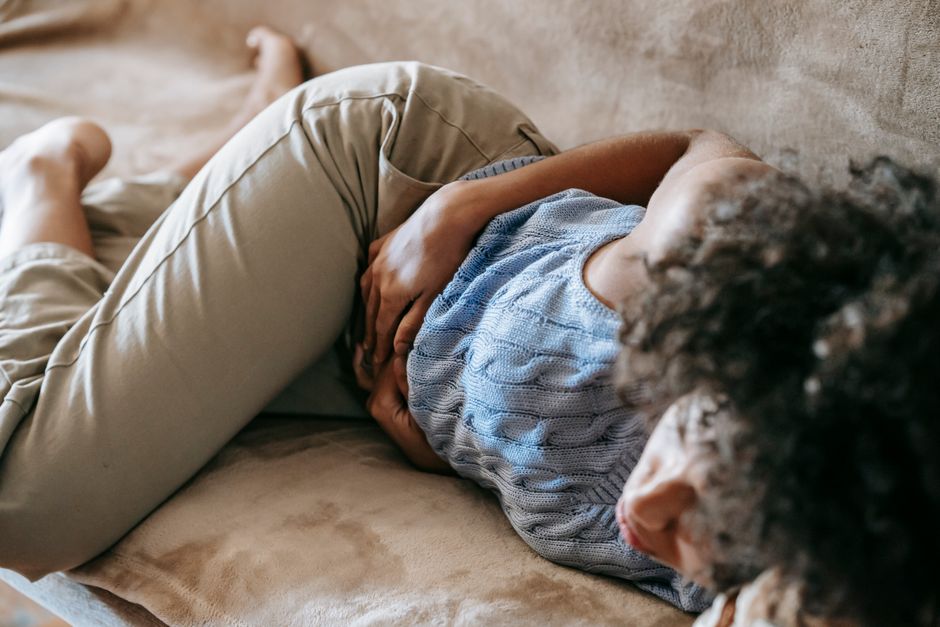
Ovulation can cause cramps. The pain is called mittelschmerz — German for “middle pain” — and it happens in the middle of the menstrual cycle, roughly around the time an ovary releases an egg. It is real, it is common, and for most people it is mild and brief. But ovulation cramps are not the same as period cramps, and knowing the difference matters for understanding your own body and knowing when pain deserves a doctor’s attention.
Does Ovulation Cause Cramps?
Yes. A share of people who menstruate feel pain around ovulation, usually on one side of the lower belly. It can be a dull ache, a sharp pinch, or a cramping sensation that lasts minutes to a couple of days.
Not everyone feels it. Some people ovulate every month without any sensation at all. Others notice it clearly and can even tell which side they are ovulating from based on where it hurts. Neither response is abnormal.
The key distinction is timing. Ovulation pain shows up mid-cycle, typically about two weeks before the next period is due. Menstrual cramps come with bleeding and the days just before it. If you track your cycle, the pattern becomes easier to recognize.
What Causes Ovulation Pain?
The leading explanation involves the ovary swelling as a follicle matures, then releasing the egg. That release stretches the surface of the ovary and can irritate the tissue around it.
When the egg breaks through, a small amount of fluid and blood can escape into the pelvic cavity. That fluid can touch the lining of the abdomen and cause irritation. Some researchers point to this as the source of the sharper, brief pain some people feel at the moment of ovulation.
There is also a smooth muscle component. The fallopian tubes and the ovary itself contain muscle tissue that contracts. Some evidence suggests these contractions help move the egg toward the uterus, and those same contractions may produce a cramping feeling. This is a reasonable explanation supported by anatomy, though the exact mechanism behind every case of ovulation pain is not fully settled in the research.
One detail worth knowing: the pain is usually felt on the side of the ovary that is releasing the egg. That said, the location is not a reliable way to confirm ovulation. The ovaries sit close together, and pain can radiate. Some people feel it on the opposite side or in the center.
How Does Ovulation Pain Differ From Period Cramps?
They come from different processes and feel different for most people. Period cramps are driven mainly by prostaglandins — hormone-like compounds that make the uterus contract to shed its lining. Those contractions are stronger and more sustained than anything happening at ovulation.
Ovulation pain is more often a localized twinge or ache on one side. Period cramps tend to be lower and more central, and they usually build and ease over the first day or two of bleeding.
- Timing: Ovulation pain occurs mid-cycle, about two weeks before a period. Period cramps occur during bleeding.
- Location: Ovulation pain is often one-sided. Period cramps are usually centered low in the pelvis.
- Duration: Ovulation pain often lasts minutes to a day or two. Period cramps can last several days.
- Quality: Ovulation pain is often sharp or pinching. Period cramps are usually a dull, wave-like ache.
Some people have both and find them easy to tell apart. Others have irregular cycles or similar-feeling pain at both points, which makes timing the more useful clue.




How Long Does Ovulation Pain Last and When Should You Expect It?
Most ovulation pain is short. It may last a few minutes, a few hours, or up to a day or two. It rarely persists beyond that without another explanation.
Timing depends on cycle length. In a typical 28-day cycle, ovulation happens around day 14. In a 35-day cycle, it lands closer to day 21. The reliable anchor is the second half of the cycle: ovulation generally occurs about two weeks before the next period begins, not a fixed number of days after the last one started.
That last point trips people up. Many assume ovulation is always “day 14,” but that only fits a 28-day cycle. If your cycles run long or short, the mid-cycle point shifts with them.
Ovulation does not always happen on schedule. Stress, illness, travel, and changes in sleep can delay it. Some cycles skip ovulation entirely. So pain that appears a few days off from your expected window is not automatically a sign something is wrong.
When Is Mid-Cycle Pain a Reason to See a Doctor?
Mild ovulation pain that follows a predictable pattern and resolves on its own is generally not a concern. But mid-cycle pain is not always ovulation, and some causes need medical attention.
Seek care if the pain is severe, keeps getting worse, or lasts more than a couple of days. Also pay attention to pain that comes with fever, nausea, vomiting, heavy bleeding, or pain during sex or urination.
Sudden, severe one-sided pelvic pain deserves urgent evaluation. A ruptured ovarian cyst or an ectopic pregnancy can produce that kind of pain, and both are medical emergencies. Ectopic pregnancy — where a fertilized egg implants outside the uterus — is uncommon but serious, and it can cause sharp pain, often with bleeding.
Other conditions can mimic ovulation pain. Endometriosis, pelvic inflammatory disease, ovarian cysts, and appendicitis can all cause pelvic pain that lands mid-cycle by coincidence. The pain itself does not tell you which one it is. That is why persistent or worsening pain warrants an exam rather than a guess.
One clarification that helps: ovulation pain is a diagnosis of timing and pattern, not something you can confirm by feel alone. Clinicians sometimes use it as a clue, but confirmation of ovulation typically relies on other methods, such as tracking basal body temperature, ovulation predictor kits, or ultrasound.
Can You Treat Ovulation Pain?
For mild cases, many people find that heat, rest, and gentle movement ease the discomfort. Over-the-counter pain relievers are commonly used, and nonsteroidal anti-inflammatory drugs like ibuprofen are the type most often chosen for pelvic pain.
Here I have to be honest about the evidence. There is very little research specifically on treating ovulation pain. Most of what clinicians recommend is based on how these drugs work for other types of pelvic and menstrual pain, not on studies of ovulation pain itself. That does not make it wrong, but it means the support is indirect.
Hormonal birth control is sometimes prescribed to prevent ovulation altogether, which stops the pain by stopping the event. That is a decision to make with a clinician, not a self-treatment.
If ovulation pain is frequent or disruptive, it is worth discussing with a doctor — not because it is usually dangerous, but because recurring pelvic pain has several possible causes and the pattern can help sort them out.
Does Feeling Ovulation Pain Mean You Are Fertile?
No. Feeling ovulation pain does not confirm that you ovulated, and not feeling it does not mean you did not. The presence or absence of pain is not a reliable fertility sign.
This is a common misconception. People sometimes use mid-cycle pain to time conception, assuming the pain marks the fertile window. The timing can offer a rough clue, but it is imprecise. Ovulation predictor kits detect the hormone surge that precedes ovulation, and basal body temperature shifts confirm ovulation after the fact. Those methods are more dependable than pain alone.
If you are trying to conceive or avoid pregnancy, rely on methods with actual evidence behind them rather than on how your pelvis feels. Ovulation pain can be a useful piece of self-knowledge. It is not a birth control method or a fertility test.
Frequently Asked Questions
Does ovulation cause cramps every month?
No. Many people ovulate without any pain at all, and others feel it only in some cycles. Whether you notice it can vary from month to month.
How can I tell if my cramps are from ovulation or my period?
Timing is the clearest clue. Ovulation pain happens mid-cycle, about two weeks before your period, while period cramps happen during bleeding.
Is ovulation pain on the left or right side?
It is usually felt on the side of the ovary releasing the egg, but it can be central or radiate. The side alone does not confirm which ovary ovulated.
When should I worry about ovulation pain?
Worry if the pain is severe, sudden, worsening, or comes with fever, vomiting, or heavy bleeding. Those signs warrant prompt medical evaluation.
