
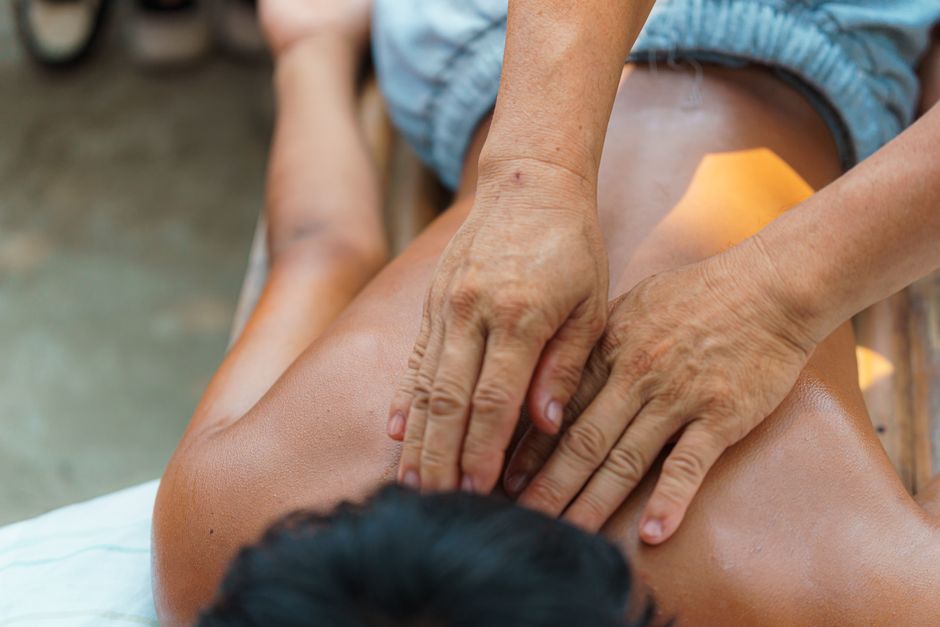
Massage does help sore muscles, but not in the way most people assume. It does not flush out lactic acid, and it does not speed up healing in any proven way. What it reliably does is reduce the perception of soreness and help you feel better faster. That is a real benefit, even if the biology behind it is less dramatic than the marketing suggests.
What Actually Happens When Muscles Get Sore?
Most soreness people want to massage away is delayed onset muscle soreness, usually called DOMS. It shows up roughly 12 to 24 hours after unfamiliar or intense exercise and peaks somewhere between 24 and 72 hours. The discomfort fades on its own within a few days.
For decades, the standard explanation was lactic acid buildup. That explanation is wrong. Lactate clears from muscle within about an hour of exercise ending. By the time soreness peaks the next day, there is essentially no lactate left to blame.
The current understanding points to microscopic damage to muscle fibers from mechanical load, followed by an inflammatory response. Immune cells move into the tissue, fluid shifts, and nerve endings become more sensitive. The soreness you feel is largely a nervous system signal, not a chemical sitting in the muscle.
This matters because it explains why massage can reduce how sore you feel without necessarily changing what is happening inside the tissue. Those are two different things, and the research separates them.
Does Massaging Sore Muscles Help With the Pain?
Yes. For short-term relief of soreness, the evidence is reasonably consistent. Studies on massage after exercise generally find that people report less soreness, and the effect is strongest in the first day or two after a workout.
The relief appears to come from several places at once. Pressure on the tissue stimulates large nerve fibers that compete with pain signals traveling to the brain. This is the same principle behind rubbing your shin after banging it on a table. Massage also appears to nudge the nervous system toward a more relaxed state, which can lower how intensely you experience discomfort.
Some research suggests massage may modestly reduce swelling and markers of inflammation in the hours after exercise. The size of these effects varies between studies, and not every trial finds them. The pain relief is the more dependable finding.
One clarification worth making: feeling less sore is not the same as being recovered. You can feel noticeably better and still have muscle fibers that need time to repair. Do not use reduced soreness as a green light to repeat the same hard session.
Does Massage Speed Up Muscle Recovery?
The evidence here is weaker than most people expect. Massage does not appear to meaningfully accelerate the repair of damaged muscle fibers or restore strength faster in any consistent way.
When researchers measure objective markers like peak force output or muscle function after exercise, massage usually does not move the needle much compared with rest. Where it does help is with how you feel and how well you move through the soreness. Those are worth something, but they are not the same as faster tissue repair.
Some studies suggest massage may slightly reduce creatine kinase, a blood marker of muscle damage, after intense exercise. Other studies find no difference. The evidence is mixed, and even when a change is detected, it is not clear that it translates into anything you would notice.
So the honest position is this: massage can make the sore period more comfortable, but it is not a recovery shortcut in the physiological sense.





Which Type of Massage Works Best for Sore Muscles?
There is no single best method, and the research does not clearly favor one technique over another for soreness. What matters more is pressure, duration, and timing.
- Swedish or relaxation massage: lighter pressure, good for general soreness and stress relief
- Deep tissue or sports massage: firmer pressure aimed at specific muscle groups, often used after training
- Self-massage tools: foam rollers and massage guns, convenient and inexpensive, with evidence that is promising but not as strong as hands-on massage
- Manual pressure with hands: the most studied approach, though results across studies vary
Foam rolling has become popular and does appear to reduce soreness and improve short-term flexibility in some studies. The effect sizes tend to be modest. Massage guns are widely used but have less research behind them than foam rolling or hands-on massage.
A general rule that holds up: very light pressure does little for soreness, and very aggressive pressure can leave you more tender than when you started. Moderate pressure that feels like a good stretch rather than pain is the sensible target.
When Should You Not Massage a Sore Muscle?
Soreness from exercise is generally safe to massage. Pain from an injury is a different situation, and massage is not always the right move.
Avoid massaging an area that is swollen, hot, visibly bruised, or painful in a sharp, localized way. Those signs can point to a strain, tear, or other injury where pressure could make things worse. If you cannot put weight on a limb or move a joint through its normal range, that is a reason to get it checked rather than rubbed.
There are also medical situations where massage is not appropriate without a clinician’s input. These include active infections, blood clots, uncontrolled bleeding disorders, and areas with known fractures. Some medications that thin the blood raise the risk of bruising from firm pressure.
If you are unsure whether soreness is ordinary DOMS or something more, the pattern helps. DOMS is diffuse, comes on gradually, and improves over a few days. Injury pain is often sharper, more localized, and shows up suddenly during or right after a movement.
How Does Massage Compare to Other Soreness Remedies?
Massage is one option among several, and it is not clearly better than the cheaper alternatives. Light movement, sleep, and adequate protein intake all support recovery in ways that massage does not.
| Approach | Typical effect on soreness | Evidence strength |
|---|---|---|
| Massage | Reduces soreness, especially in first 24-48 hours | Moderate |
| Foam rolling | Modest reduction in soreness | Moderate |
| Light activity | Can ease stiffness and improve blood flow | Moderate |
| Cold water immersion | May reduce soreness, may blunt training gains | Mixed |
| Anti-inflammatory medication | Reduces soreness, may interfere with adaptation | Mixed |
Cold water immersion and anti-inflammatory drugs both reduce soreness in some studies, but both may interfere with the muscle adaptations you are training for. That trade-off is worth knowing about. Massage does not appear to carry the same concern, though the research is not definitive.
Sleep is the least glamorous and probably the most important. Muscle repair happens largely during sleep, and shortchanging it undermines recovery in ways no massage can offset.
How Soon After a Workout Should You Get a Massage?
Timing matters less than most people think. Studies have used massage anywhere from immediately after exercise to a day or two later, and benefits show up across those windows.
If the goal is reducing next-day soreness, getting a massage within a few hours of the workout is a reasonable choice. If the goal is managing soreness that has already arrived, massage on the sore day works too.
There is no evidence that a specific window produces dramatically better results. What matters more is that the pressure is appropriate and that you are not using massage as a substitute for rest, food, and sleep.
Frequently Asked Questions
Does massaging sore muscles actually help?
Yes, massage reliably reduces how sore you feel, especially in the first day or two after exercise. It does not appear to speed up tissue repair or restore strength faster.
Does massage get rid of lactic acid?
No. Lactate clears from muscle within about an hour after exercise, long before soreness peaks. The soreness comes from microscopic muscle damage and inflammation, not leftover lactic acid.
Is it better to massage sore muscles or rest them?
Both have a place, and the choice depends on how you feel. Light movement and massage can ease stiffness, while rest supports repair, so many people use a mix of both.
Can you massage a sore muscle too much?
Yes. Very firm or prolonged pressure can increase tenderness and leave the area more painful than before, so moderate pressure is the safer approach.
