
Muscle healing is not something you do to your body. It is something your body already knows how to do. When muscle fibers are damaged — by exercise, a strain, or an injury — your immune system sends repair cells to the site, clears away damaged tissue, and rebuilds the fibers over days to weeks. Your job is mostly to support that process and avoid disrupting it.
That process has a predictable sequence. It starts with inflammation, moves into repair, and ends with remodeling, where the new tissue gets stronger. Understanding those stages explains why rest, nutrition, and patience matter more than any supplement or gadget marketed for recovery.
What Happens Inside a Muscle After It Is Damaged?
The damage triggers a repair sequence that unfolds in three overlapping phases. Each one has a distinct job, and each takes time.
The first phase is inflammation. It begins within minutes and can last for several days. Blood vessels at the injury site widen and become more permeable, letting fluid, immune cells, and signaling molecules reach the damaged fibers. Specialized immune cells called macrophages arrive to clear out debris from torn tissue. This phase often gets a bad reputation, but it is not the enemy. Inflammation is the signal that starts repair. Suppressing it aggressively in the early stage can interfere with healing.
The second phase is repair, sometimes called proliferation. It generally runs from a few days to a few weeks after injury. Satellite cells — a type of stem cell that sits quietly alongside muscle fibers — activate, multiply, and fuse with damaged fibers or with each other to form new muscle tissue. At the same time, cells called fibroblasts lay down connective tissue to patch the area. This is why early repaired muscle is not as strong as the original.
The third phase is remodeling. It can continue for weeks to months depending on the severity of the damage. The new tissue reorganizes. Fibers align along the lines of force, blood supply improves, and the patch gradually matures. The muscle may regain most or all of its original strength, but the timeline depends heavily on how much tissue was damaged and how well the earlier phases went.
How Long Does It Take for Muscles to Heal?
Timelines vary widely, and anyone who gives you a single number for all muscle injuries is oversimplifying. Healing time depends on the size of the tear, which muscle is involved, your age, your overall health, and whether you keep re-injuring the area.
Minor damage from ordinary exercise — the kind that causes soreness — typically resolves within a few days. A mild muscle strain often improves noticeably within one to two weeks. More significant strains, where fibers are partially torn, commonly take several weeks to a few months to fully heal. Complete tears, which are less common, may require surgical repair and a longer recovery.
One detail people miss: soreness and injury are not the same thing. Delayed onset muscle soreness, the achiness that peaks a day or two after unfamiliar exercise, is not primarily caused by torn fibers. Research has pointed more toward connective tissue disruption and inflammation from the exercise itself. This matters because soreness does not mean you damaged your muscle in a way that needs repair, and pushing through soreness is usually fine. Pushing through a strain is not.
What Slows Down Muscle Repair?
Several factors reliably interfere with healing. Some you control. Some you do not.
- Continued use of the injured muscle. Re-injury during the repair phase disrupts new tissue before it matures and can lead to a weaker patch of scar tissue.
- Poor sleep. Growth hormone release and much of the cellular repair activity in muscle happen during sleep. Short sleep is linked to slower recovery and higher injury rates in athletes.
- Inadequate protein and calories. Your body needs amino acids to build new fibers. Eating far less than you need makes that harder.
- Smoking. Nicotine narrows blood vessels and reduces oxygen delivery to healing tissue.
- Age. Older muscle has fewer satellite cells and responds more slowly to injury. It still heals, just not as fast.
- Certain medications. Some drugs, including certain anti-inflammatory medications and corticosteroids, can interfere with muscle repair. This is a conversation to have with your doctor, not a decision to make on your own.
Underlying conditions matter too. Poorly controlled diabetes and conditions that affect circulation or immune function can slow healing in ways that are not obvious at first.



Does Rest or Movement Help Muscles Heal Faster?
Complete rest is not the answer for most muscle injuries, and neither is pushing through pain. The middle ground is what clinicians generally recommend.
In the first day or two after a strain, protecting the area makes sense. Avoid the movement that caused the injury. But prolonged immobilization works against you. Muscles that are not used lose strength and mass quickly, and the connective tissue around them stiffens. Gentle, pain-free movement started early helps maintain blood flow and guides new tissue to align properly. Some clinicians describe this as letting pain be your guide — if a movement hurts, scale it back.
For ordinary exercise-related muscle soreness, there is no strong evidence that rest speeds recovery. Light activity often feels better than lying still. The soreness resolves on its own timeline regardless.
Stretching deserves a note here. It is widely believed to prevent injury and speed healing, but the evidence for stretching as an injury-prevention tool is weaker than most people assume. It can improve flexibility. It has not been convincingly shown to prevent muscle strains.
What Role Do Nutrition and Sleep Play in Muscle Repair?
Nutrition and sleep are the two levers with the clearest evidence behind them. Neither is dramatic. Both are consistent.
Protein provides the amino acids used to rebuild muscle. General guidance for adults suggests aiming for a moderate amount of protein spread across meals rather than piled into one. For most healthy adults, common recommendations fall in the range of roughly 0.8 grams per kilogram of body weight per day as a baseline, with higher intakes often suggested for people doing regular resistance training or recovering from injury. If you have kidney disease or another condition affecting protein handling, follow your doctor’s guidance instead.
Total calories matter as well. Healing is metabolically expensive. Eating far below your needs during recovery can slow the process.
Sleep is where much of the repair happens. During deep sleep, the body releases growth hormone, which supports tissue rebuilding. Consistently short sleep is associated with slower recovery and more injuries in people who train hard. There is no supplement that substitutes for it.
Hydration supports circulation, which delivers the cells and nutrients doing the repair work. It is not a magic lever, but dehydration is a needless obstacle.
Do Recovery Supplements and Gadgets Actually Work?
Most products marketed for muscle recovery have weak or absent evidence. This is where honesty matters more than enthusiasm.
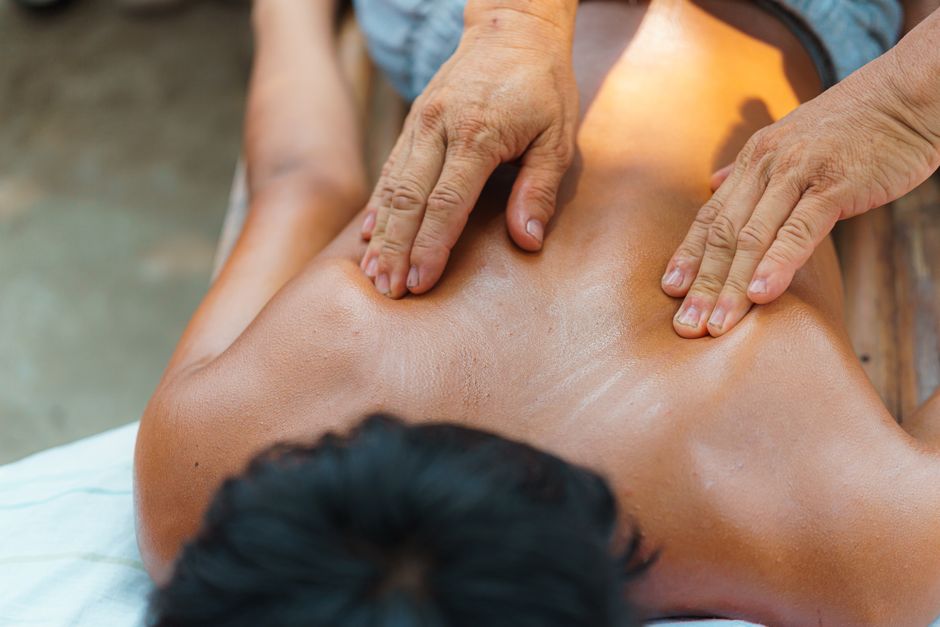
Some interventions have modest support in specific contexts. Ice baths and cold water immersion are commonly used by athletes and may reduce soreness, but evidence on whether they improve actual healing or performance recovery is mixed. Massage can reduce soreness temporarily. Compression garments may help with comfort. None of these have been shown to speed the underlying tissue repair in a meaningful way.
Others have little to no evidence behind them for muscle healing. That includes many topical creams, most “recovery” powders, and devices that claim to accelerate repair through vibration, light, or electrical stimulation. Some may help with pain or relaxation. That is not the same as healing tissue faster.
Anti-inflammatory medications are a special case. They reduce pain and swelling, which can be useful. But using them aggressively right after an injury may interfere with the inflammatory signals that start repair. The timing and choice are best discussed with a clinician rather than decided by habit.
The unglamorous truth is that the biggest drivers of muscle healing are the ones with no marketing budget: time, sleep, food, and not re-injuring the area.
When Should You See a Doctor for a Muscle Injury?
Most muscle strains heal on their own. Some signs suggest something more serious.
See a doctor if you heard a pop at the time of injury, if you cannot bear weight or use the limb at all, if there is significant swelling or bruising that keeps getting worse, if you have numbness or tingling, or if the pain is not improving after a week or two. These can point to a severe tear, nerve involvement, or another problem that needs evaluation.
Also seek care if you have a muscle injury along with dark urine, severe weakness, or swelling that feels tight and painful out of proportion to the injury. These are uncommon but worth taking seriously.
For everyone else, the plan is straightforward. Protect the area briefly. Move gently as pain allows. Sleep well. Eat enough protein and calories. Give it time. Your body is already running the repair process — your job is to not get in its way.
Frequently Asked Questions
How long does it take for a strained muscle to heal?
A mild strain often improves within one to two weeks, while a more significant partial tear can take several weeks to a few months. Complete tears may need surgical repair and a longer recovery.
Does stretching help muscles heal faster?
There is no strong evidence that stretching speeds muscle healing or prevents strains. It can improve flexibility, but it has not been convincingly shown to accelerate tissue repair.
Should you rest completely or keep moving after a muscle injury?
Brief protection in the first day or two makes sense, but prolonged complete rest works against you. Gentle, pain-free movement is generally better for maintaining strength and guiding new tissue to align properly.
Do recovery supplements actually help muscles heal?
Most supplements marketed for muscle recovery have weak or absent evidence. Sleep, adequate protein, and enough calories have far stronger support for supporting the body’s natural repair process.
