
Sore legs after a long day on your feet, a hard workout, or a stretch of sitting are common and usually not a sign of anything serious. For ordinary muscle soreness and heaviness, the basics work well: rest the legs, elevate them above heart level, apply a cold pack for fresh soreness or warmth for stiff achy muscles, and move gently to keep blood flowing. If the soreness comes with swelling in one leg, redness, warmth, or pain that keeps getting worse, that is a different situation and needs medical attention rather than a home remedy.
Most everyday leg soreness comes from tired muscles, minor strain, or fluid that pools in the lower legs after too much standing or sitting. That kind of soreness responds to simple measures at home. The key is knowing which symptoms fit that picture and which ones do not.
What Usually Causes Sore Legs?
Everyday leg soreness almost always traces back to muscle fatigue, minor overuse, or circulation that slows when you stay in one position too long.
When you exercise or stand for hours, tiny tears form in muscle fibers. That triggers inflammation, which is part of how muscles adapt and get stronger. The soreness that shows up a day or two after unaccustomed activity is called delayed onset muscle soreness, or DOMS. It is normal, it peaks within roughly 24 to 72 hours, and it fades on its own.
A different kind of soreness comes from fluid pooling. Your veins rely partly on the calf muscles to push blood back up to the heart. When you sit or stand still for a long time, that pumping action stops, blood and fluid collect in the lower legs, and you get heaviness, swelling, and a dull ache. This is why your legs feel worse at the end of a long day and better after you lie down and put your feet up.
Other everyday contributors include dehydration, low potassium or magnesium from heavy sweating, and shoes that do not support your feet well. None of these are dangerous on their own. They simply add up to legs that feel tired and sore.
Which Home Remedies Actually Help Sore Legs?
The remedies with the best track record are unglamorous: rest, elevation, temperature, gentle movement, and hydration.
Elevation is the single most useful step for heaviness and swelling. Lying down and raising your legs above the level of your heart lets gravity help drain pooled fluid. A stack of pillows works. Ten to fifteen minutes a few times a day is enough for most people.
Cold and heat do different jobs. A cold pack or cool cloth can ease the ache of fresh muscle soreness and calm inflammation in the first day or two after hard activity. Warmth — a warm bath, a heating pad, or a warm shower — relaxes tight, stiff muscles and feels better once the acute soreness has passed. Wrap any pack in a cloth so it does not sit directly on bare skin.
Gentle movement beats total stillness for most soreness. A short walk, easy stretching, or simply flexing and pointing your ankles gets the calf pump working and moves fluid out of the legs. This is why a light walk often makes legs feel better rather than worse.
Hydration and food matter more than people expect. Water supports normal muscle function, and potassium from foods like bananas, potatoes, and beans helps replace what you lose through sweat. There is no strong evidence that fancy recovery drinks beat plain water and a normal meal for typical soreness.
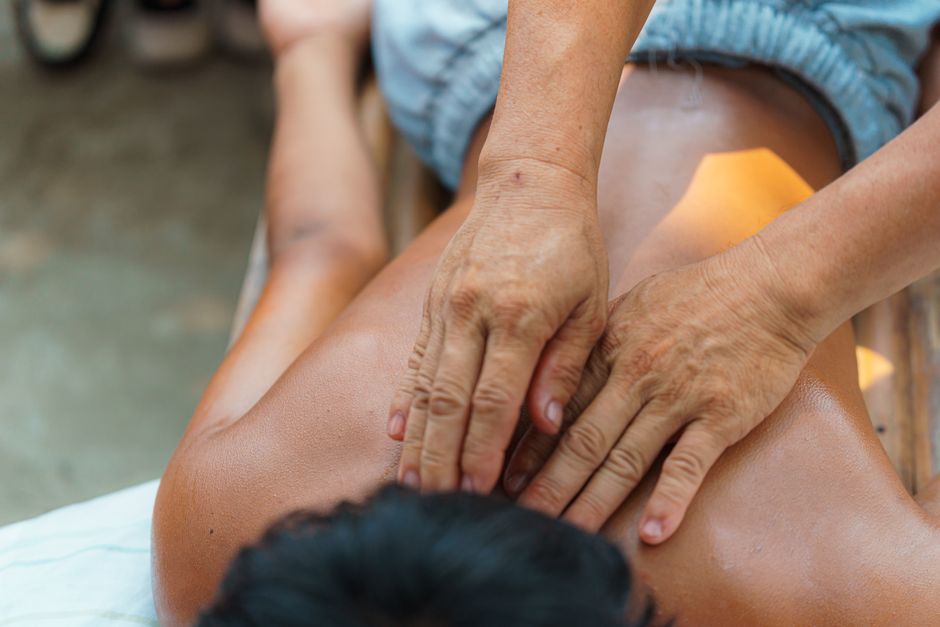
Massage can reduce the feeling of tightness and may ease soreness for a while. The relief is real but usually short-lived, and it does not speed up healing in any proven way.
Does Stretching or Foam Rolling Really Work?
Stretching and foam rolling can make sore legs feel better in the moment, but the evidence that they speed recovery is weak.
Some studies suggest foam rolling and massage reduce the perception of soreness and improve how loose the muscles feel. What the research does not clearly show is that either one repairs muscle faster or prevents soreness from happening in the first place. If rolling your calves feels good and helps you move, there is no harm in it. Just do not expect it to be a treatment that fixes the underlying cause.
The same caution applies to stretching before activity. Stretching feels pleasant and can improve range of motion over time, but it has not been shown to reliably prevent soreness. The honest position is that these tools are comfort measures, not cures.



When Should Sore Legs Worry You?
Certain leg symptoms are not ordinary soreness and should not be treated at home. The most important is a blood clot, or deep vein thrombosis, which can form in a leg vein and become life-threatening if it travels to the lungs.
Get medical help promptly if you notice:
- Swelling in one leg only, especially if it comes on suddenly
- Warmth, redness, or a change in skin color in that leg
- Pain or tenderness that feels deep rather than in the muscle
- Soreness that gets worse instead of better over days
- Shortness of breath or chest pain alongside leg swelling
Long periods of immobility — a long flight, a long car ride, bed rest after surgery — raise clot risk, which is why moving your legs and staying hydrated during travel matters. Leg pain that comes on reliably with walking and eases with rest can point to narrowed arteries in the legs, a condition called peripheral artery disease. Persistent swelling in both legs can also reflect heart, kidney, or liver problems. None of these are home-remedy situations. They need a clinician to sort out.
There is a useful distinction here. Ordinary soreness is usually felt in the muscle, is roughly equal on both sides, and improves with rest and elevation. A clot or circulation problem tends to be one-sided, deep, and does not improve the way normal soreness does.
Can You Prevent Sore Legs in the First Place?
Prevention mostly comes down to not letting your legs sit still for too long and not overdoing new activity.
If you stand or sit for work, take short breaks to walk around. Flex your ankles and circle your feet while seated to keep the calf pump active. Build up new exercise gradually rather than jumping into a hard session. Wear supportive shoes, and drink enough water, especially in heat.
For people who get heavy legs at the end of the day, compression stockings can help. These apply gentle pressure that supports the veins and reduces fluid pooling. They are widely used, and there is reasonable evidence they reduce swelling and heaviness, though fit matters and they are not right for everyone. Anyone with arterial circulation problems should check with a clinician before using them.
Do Supplements or Creams Help Sore Legs?
Most creams and supplements marketed for sore legs have little or no good evidence behind them.
Topical menthol and cooling gels can create a tingling sensation that distracts from soreness, which some people find helpful. That is a comfort effect, not a repair effect. Arnica creams are popular, and some small studies suggest a modest benefit, but the evidence is not strong enough to call them reliable.
Oral supplements like magnesium, branched-chain amino acids, and tart cherry are often promoted for muscle recovery. The results across studies are mixed. Some show small benefits, others show none, and the quality of the trials varies. No supplement has been shown to reliably prevent or cure ordinary soreness. If you take one and feel better, that is fine, but it is worth being honest that the proof is thin. Anyone who is pregnant, breastfeeding, or taking medication should talk to a clinician before starting any supplement, since reliable dosing guidance for those groups is often lacking.
How Long Should Sore Legs Last?
Ordinary muscle soreness from activity usually peaks within a day or two and eases within about three to five days. Heaviness from standing or sitting typically improves within minutes to hours of lying down and elevating your legs.
If soreness lingers beyond a week, keeps returning without a clear cause, or comes with swelling, color changes, or pain that worsens, that pattern does not fit normal muscle soreness. It is a signal to get it checked rather than keep waiting it out.
Frequently Asked Questions
How do you soothe sore legs fast at home?
Lie down and raise your legs above heart level, then apply a cold pack for fresh muscle soreness or warmth for stiff muscles. Gentle movement like a short walk helps more than staying completely still.
Is heat or ice better for sore legs?
Ice is generally better for fresh soreness and swelling in the first day or two, while heat works better for tight, stiff muscles later on. Either one mainly eases comfort and does not speed up healing.
When should sore legs be a medical emergency?
Swelling in one leg, warmth, redness, or pain that keeps getting worse can signal a blood clot and needs prompt medical care. Shortness of breath or chest pain along with leg swelling is an emergency.
Do compression socks help sore legs?
Compression stockings can reduce swelling and heaviness by supporting the veins, and there is reasonable evidence for that effect. They are not right for everyone, so people with circulation problems should check with a clinician first.
