
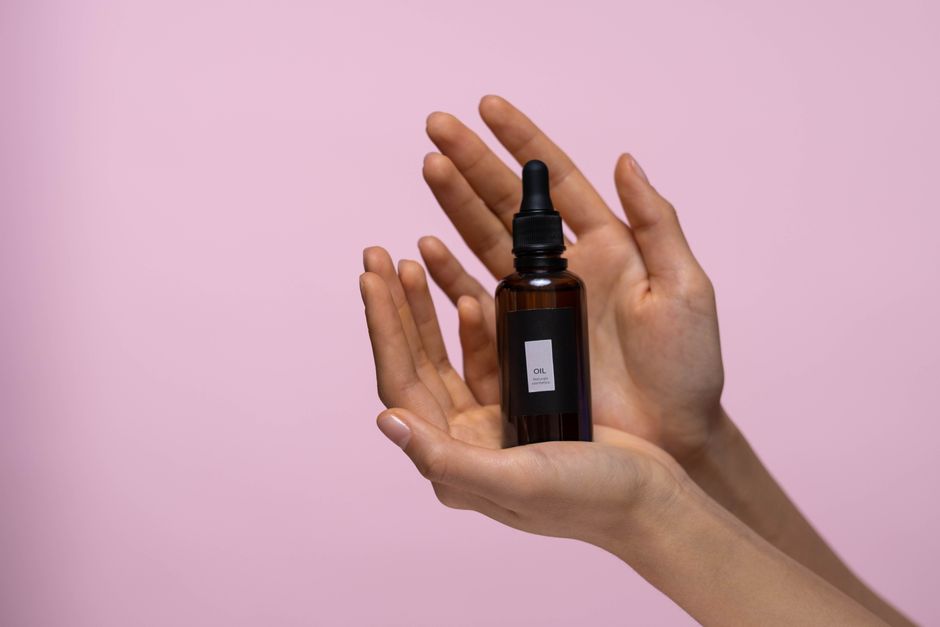
Jojoba oil has become a staple in hair care aisles and online routines, often marketed as a natural way to grow thicker, longer hair. The short answer is that no good evidence shows jojoba oil grows hair. It is not a hair growth treatment. What it can do is condition the scalp and hair shaft, which may improve how hair looks and feels.
The confusion comes from mixing up two different things: making hair healthier versus making it grow. Jojoba oil belongs firmly in the first category. It can moisturize, smooth, and reduce breakage. It does not appear to wake up dormant follicles or speed up the rate at which hair grows.
What Is Jojoba Oil and How Is It Different From Other Oils?
Jojoba oil is not actually an oil in the traditional sense. It is a liquid wax ester, pressed from the seeds of the jojoba plant, a shrub native to the deserts of the southwestern United States and northern Mexico.
That chemical difference matters. Most plant oils, like coconut or olive oil, are triglycerides. Jojoba is a wax ester, and its structure closely resembles sebum, the oily substance your scalp produces naturally. Because of this similarity, jojoba tends to spread easily and absorb without leaving a heavy, greasy film. It is also relatively stable and slow to go rancid compared with many plant oils.
This resemblance to sebum is the source of a popular claim. Some people say jojoba “tricks” the scalp into thinking it has produced enough oil, which then balances oil production. That is a plausible-sounding idea, but it is not well supported by research. The scalp’s oil production is controlled mainly by hormones and genetics, not by what you put on the surface.
What is well established is that jojoba oil is an emollient. It can soften and condition the skin and hair. That is a real, if modest, benefit.
Does Jojoba Oil Really Promote Hair Growth?
There is no reliable clinical evidence that jojoba oil promotes hair growth. No large human trials have shown that applying it increases hair count, hair thickness, or the rate of growth.
Hair growth is driven by the hair follicle and its growth cycle. Each follicle cycles through phases: a growing phase, a transition phase, and a resting phase, after which the hair sheds and the cycle restarts. Conditions that affect growth, such as pattern hair loss, usually involve changes to this cycle or to the follicle itself. A conditioning oil applied to the surface of the scalp does not reach or alter these deeper processes.
This is where biological plausibility gets misused. Jojoba oil contains vitamin E and some fatty acids. These are real components, and it is true that certain nutrients matter for hair health. But having a nutrient present in an oil is not the same as that oil delivering a benefit to the follicle. The skin is a barrier, and most of what you apply stays near the surface.
Some lab and animal studies have looked at plant oils and hair. Their results do not translate reliably into what happens in people. A finding in a petri dish or a mouse is not proof of a human effect. This is a common gap between marketing and evidence.
So when a product claims jojoba oil “stimulates growth,” treat that as a claim, not a finding. No study has confirmed it.
What Can Jojoba Oil Actually Do for Your Hair?
Jojoba oil can improve the appearance and manageability of hair. That is a genuine benefit, even if it is not growth.
As a conditioner, it coats the hair shaft and helps smooth the outer layer, called the cuticle. Smoother cuticles reflect light better, so hair looks shinier. They also snag less, which can reduce friction and breakage during combing. Less breakage means you keep more of the length you already have.
This is an important distinction. If your hair breaks easily, it may not grow as long as it could, even if the follicles are working normally. Reducing breakage can help you retain length. But retaining length is not the same as growing faster. The hair still grows at its own pace from the root.
Jojoba oil may also help with a dry, flaky, or tight-feeling scalp by adding moisture to the surface. It will not treat a scalp condition that has an underlying medical cause.
- Conditioning: softens hair and adds shine
- Reducing friction: may lower breakage from combing and styling
- Scalp moisture: can soothe dryness on the surface
- Lightweight feel: absorbs more readily than many heavy oils

How Does Jojoba Oil Compare to Proven Hair Loss Treatments?
Jojoba oil and evidence-based hair loss treatments are not in the same category. The difference is the strength and type of evidence behind them.
For common pattern hair loss, a small number of treatments have been studied in controlled human trials and are supported by clinical guidance. These include certain topical and oral medications. This article is not recommending or dosing any of them; that is a conversation for a clinician. The point is that these treatments have human trial data behind them, while jojoba oil does not.
Even proven treatments tend to work by slowing loss or partially regrowing hair, not by restoring a full head of hair. That context matters. If the best-studied options have limits, an untested oil is very unlikely to outperform them.
Where jojoba fits is as a cosmetic and conditioning product. You can use it alongside real treatment if a clinician approves, but it should not replace it. Do not delay care for a treatable cause of hair loss by relying on an oil.
| Product | Primary role | Human trial evidence for growth |
|---|---|---|
| Jojoba oil | Conditioning and moisture | None reliable |
| Minoxidil (topical) | Treats pattern hair loss | Yes, in controlled trials |
| Finasteride (oral) | Treats pattern hair loss in men | Yes, in controlled trials |
| Biotin supplements | Corrects a deficiency | Only if deficient |
Note the biotin row. Biotin helps hair only when a person is actually deficient, which is uncommon in people eating a typical diet. Taking it when you are not deficient has not been shown to grow hair.
When Should You See a Doctor About Hair Loss?
Hair loss has many causes, and some are treatable. That is why getting the cause identified matters more than picking the right oil.
Common causes include pattern hair loss, which runs in families and is driven by genetics and hormones. Others include thyroid problems, iron deficiency, certain medications, and a condition called telogen effluvium, where shedding increases after a stress on the body such as illness, major stress, or childbirth. Some scalp conditions cause inflammation and hair loss together.
Because these look similar on the surface but need different approaches, a clinician’s evaluation can change the outcome. See a doctor if you notice:
- Sudden or rapid hair loss
- Patches of missing hair
- Scalp pain, itching, scaling, or redness along with loss
- Loss that continues despite your efforts
- Loss along with other symptoms like fatigue or weight changes
This is not a complete list. When in doubt, ask. A treatable cause found early is easier to manage than one left alone.
How Do You Use Jojoba Oil Safely?
If you want to use jojoba oil for conditioning, a few practical points help. These are general use tips, not medical recommendations.
Start with a small amount. Jojoba is lightweight, but too much can still leave hair looking greasy, especially near the roots. A few drops warmed between your palms and worked through the ends is usually enough for most hair types. You can apply it to damp or dry hair.
For the scalp, a light massage with a small amount may feel soothing. There is no strong evidence that scalp massage itself grows hair, though some small studies have looked at it. Do not scrub or scratch the scalp, which can cause irritation.
Patch test first if you have sensitive skin or a history of reactions. Apply a little to your inner forearm and wait a day to see how your skin responds. Stop using it if you notice redness, itching, or irritation.
One honest caution: jojoba oil is generally well tolerated, but “natural” does not mean risk-free for everyone. Any product can cause a reaction in some people. If you have a scalp condition or a diagnosed hair disorder, check with a clinician before adding oils to your routine.
Frequently Asked Questions
Does jojoba oil help hair grow?
No reliable evidence shows jojoba oil grows hair. It can condition hair and scalp, which may improve how hair looks, but it does not appear to affect the hair growth cycle.
Can jojoba oil regrow hair on a bald spot?
There is no evidence jojoba oil regrows hair on a bald spot. Bald spots have specific causes that need a clinician’s evaluation, and some are treatable with proven options.
Is jojoba oil good for your scalp?
Jojoba oil can add moisture to a dry scalp and feels lightweight because its structure resembles natural scalp oil. It will not treat a scalp condition that has a medical cause.
How often should you apply jojoba oil to your hair?
There is no established clinical guideline for how often to apply jojoba oil, since it is a cosmetic product rather than a treatment. Many people use it a few times a week or as needed for conditioning.
