

Jamaican black castor oil has become one of the most talked-about hair products online, with countless videos and testimonials claiming it regrows thinning edges and thickens hair. The honest answer is that no well-designed human trial has shown that castor oil, Jamaican or otherwise, regrows hair. What does have real evidence behind it is a specific compound found in castor oil called ricinoleic acid, and even that evidence is mostly from laboratory and animal studies, not from controlled trials in people.
That gap between what people report and what science has actually proven is the heart of this topic. Understanding it helps you decide whether the oil belongs in your routine, and what to expect if you try it.
Does Jamaican Castor Oil Grow Hair What Science Says
No controlled human study has confirmed that Jamaican black castor oil grows hair. That is the direct answer, and it is worth sitting with before reading the rest.
Jamaican black castor oil is made by roasting castor beans, then pressing them. The roasting step gives it a dark color and a distinct smoky smell. Traditional Jamaican production also leaves the ash from the burnt beans in the oil, which is why it looks thick and dark. Regular castor oil is cold-pressed from the same beans without roasting, so it stays pale and clear.
Here is the part most marketing skips. The main fatty acid in all castor oil is ricinoleic acid, and it makes up roughly 85 to 90 percent of the oil. Roasting changes the color, the smell, and some of the minor compounds. It does not turn the oil into a hair-growth drug. So when someone claims Jamaican black castor oil works better than plain castor oil for growth, that specific comparison has not been tested in any study I am aware of.
What does exist is laboratory and animal research on ricinoleic acid. Some of this work suggests it can interact with a receptor called prostaglandin E2 receptor 4, or EP4. That receptor is involved in the hair growth cycle in animal models. This is a real finding in test tubes and mice. It is not the same as proving that rubbing oil on a human scalp regrows hair. Biological plausibility is not the same as demonstrated benefit, and that distinction matters here.
What Does Research Actually Show About Castor Oil and Hair?
The research base is thin, and it splits into two very different categories.
The first category is basic science. Studies in cells and animals have looked at ricinoleic acid and its effect on hair follicle signaling. These findings are interesting and worth following. They are also a long way from a human scalp. A mouse study is not a clinical trial, and results in a petri dish often do not translate to people.
The second category is human evidence, and here the picture is nearly empty. There is no large randomized controlled trial comparing castor oil to a placebo for hair regrowth that I can point to with confidence. What exists instead is anecdotal reporting. Many people say their hair looks thicker or their edges filled in after regular use. Those reports are worth noting. They are also easy to explain in ways that have nothing to do with new growth.
That explanation is simple. Oil coats the hair shaft. Coating makes each strand look shinier, feel smoother, and appear slightly thicker. It also reduces friction, which means less breakage when you comb or style. If your hair has been breaking at the ends, less breakage means more length is retained over time. The hair did not grow faster. You simply stopped losing as much of it.
This is not a trick or a dismissal. Less breakage is a real benefit. It is just a different benefit than the one being advertised.
Why Do So Many People Say It Worked for Them?
Several things can create the impression of new growth, and none of them require the oil to act on the follicle.
- Reduced breakage. If hair was snapping off, it now stays. Length increases without any change in growth rate.
- Added shine and volume. Oil on the surface makes hair look fuller immediately.
- Scalp massage. Most people rub the oil in. Massage increases blood flow to the scalp, and some research suggests scalp massage may support hair in its growing phase. The effect, if any, likely comes from the massage, not the oil.
- Natural regrowth cycles. Hair loss from stress, illness, or a bad reaction often reverses on its own over months. If you start oiling during that window, the oil gets the credit.
- Seasonal and hormonal shifts. Shedding and regrowth vary naturally. Timing alone can make a product look effective.
None of this means the people reporting results are wrong about what they saw. It means the cause is probably not what they think it is.

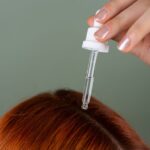



Does Jamaican Black Castor Oil Work Better Than Regular Castor Oil?
There is no evidence that Jamaican black castor oil outperforms regular castor oil for hair growth. That comparison has not been studied.
The two oils share the same dominant fatty acid. The difference is processing. Roasting creates the dark color and the strong smell, and traditional methods leave ash in the finished product. Some people prefer the texture of the black version. Others find it too heavy or dislike the scent. That is a preference question, not a performance question.
One practical point: the ash content and the roasting process do not add anything that has been shown to stimulate follicles. If you are choosing between the two, pick based on how it feels on your hair and scalp, not on a growth claim that has not been tested.
What Is Castor Oil Actually Good For?
Castor oil is a legitimate moisturizer and sealant. That is its honest strength.
Applied to hair, it coats the strand and slows moisture loss. This can help dry, brittle hair feel softer and look healthier. Applied to the scalp, it can relieve dryness and flaking in some people. It is also a common ingredient in skincare and in certain medical products, where its properties are used for specific purposes unrelated to hair.
What it is not is a treatment for pattern hair loss, also called androgenetic alopecia. That condition has a known hormonal mechanism, and it has treatments with real clinical evidence behind them. Castor oil is not among them. If you are losing hair in a patterned way, oiling your scalp is unlikely to change the underlying process.
This is where honesty matters most. Using castor oil for moisture and manageability is reasonable. Using it instead of a treatment that has been shown to work can cost you time you cannot get back, because some forms of hair loss become harder to reverse the longer they go untreated.
How Do You Use It Without Causing Problems?
Castor oil is thick and sticky, and how you apply it matters more than most people expect.
A few practical points:
- Patch test first. Apply a small amount to your inner arm and wait a day. Reactions to castor oil are uncommon but do happen.
- Use it on the scalp and ends, not the whole strand. Heavy oil on fine hair can weigh it down and make it look thinner, which is the opposite of the goal.
- Mix it if it is too thick. Castor oil is viscous. Many people blend it with a lighter oil like jojoba or coconut to make it easier to spread.
- Wash it out. Leaving heavy oil on for days can trap debris and irritate the scalp. If you notice itching, redness, or bumps, stop.
- Be careful with essential oils. Some recipes add essential oils like rosemary or peppermint. These can irritate skin and should be diluted, and some are not safe during pregnancy.
One caution worth stating plainly: castor oil is a known laxative when swallowed. Do not ingest it for hair purposes, and keep it away from children and pets.
When Should You See a Doctor About Hair Loss?
Hair loss has many causes, and some of them need medical attention rather than a topical oil.
See a doctor or dermatologist if you notice sudden shedding, patches of missing hair, a widening part, a receding hairline, or loss that comes with scalp pain, scaling, or itching. These patterns can point to conditions like thyroid problems, iron deficiency, alopecia areata, or androgenetic alopecia. Each has its own approach, and some respond well to treatment when caught early.
This is not about scaring anyone. It is about matching the fix to the problem. Castor oil cannot correct a thyroid issue or a nutrient deficiency, and no amount of it will reverse a scarring form of hair loss. A doctor can tell you which situation you are in.
Frequently Asked Questions
Does Jamaican black castor oil actually grow hair?
No controlled human study has shown that it grows hair. Any thickness or length people notice is most likely from less breakage and added shine, not faster growth.
Is Jamaican black castor oil better than regular castor oil for hair growth?
There is no evidence that it works better for growth, and the two have not been compared in a study. Both contain mostly the same fatty acid, ricinoleic acid, and the main difference is the roasting process that darkens the oil.
Can castor oil regrow hair on a receding hairline?
No clinical evidence supports castor oil for regrowing a receding hairline, which is usually a sign of pattern hair loss. Pattern hair loss has treatments with real evidence behind them, so it is worth talking to a doctor rather than relying on oil alone.
How long does castor oil take to show results on hair?
There is no established timeline, because no study has measured hair growth from castor oil in people. If you are using it for moisture and less breakage, those effects are visible right away, while any real change in growth would take months and has not been proven.
