
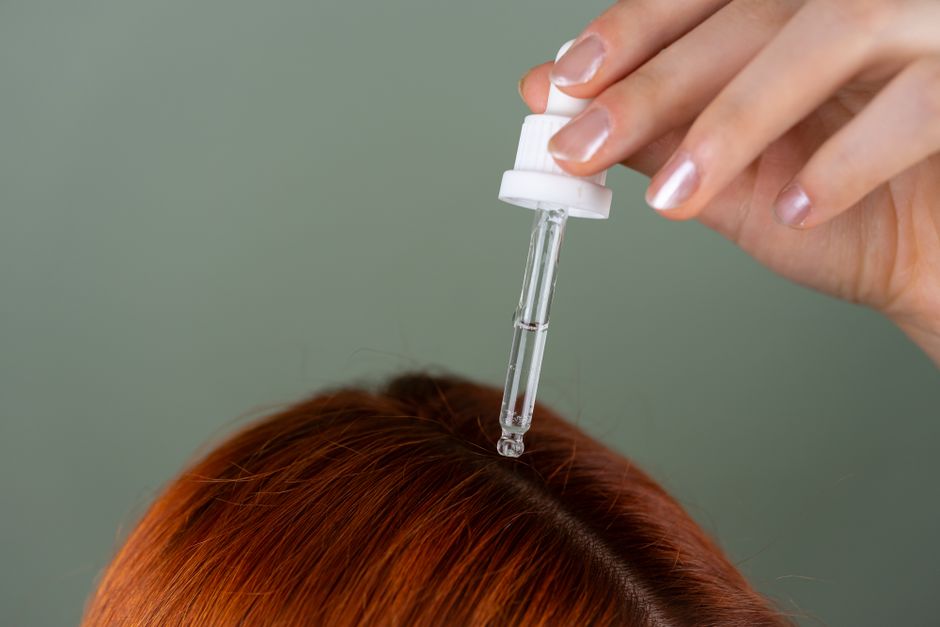
Castor oil is a thick, sticky oil pressed from castor beans. To apply it to hair, warm a small amount — roughly a teaspoon for short hair, up to a tablespoon for long hair — and work it through your strands and scalp with your fingertips, focusing on the ends if your hair is dry. Leave it on for 30 minutes to a few hours, then shampoo it out thoroughly. That is the basic method. What the method cannot do is make hair grow faster, and it is worth understanding why before you invest in a bottle.
What Is Castor Oil, and Why Do People Use It on Hair?
Castor oil is mostly ricinoleic acid, a fatty acid that makes up the large majority of the oil. That single fact explains most of its behavior. Ricinoleic acid is what makes castor oil unusually thick and what gives it a strong ability to hold moisture against a surface.
When people apply it to hair, they are usually chasing one of three things: softer strands, a less flaky scalp, or faster hair growth. The first two have some plausible support. The third does not, at least not from the oil itself.
Castor oil is a humectant, meaning it draws water toward itself. It also coats the hair shaft, which can temporarily smooth the outer layer of each strand and reduce friction. That coating is why hair can feel softer and look shinier after a castor oil treatment. It is a surface effect, not a change to the hair’s structure.
One clarification worth making: castor oil is not the same as Jamaican black castor oil, though both come from castor beans. Jamaican black castor oil is made by roasting and grinding the beans first, which leaves ash in the oil. Some users prefer it, but there is no strong evidence that the ash adds anything for hair. The base oil is doing the work in either case.
How Do You Apply Castor Oil To Hair Step by Step?
The process is simple, but a few details make the difference between a good result and a greasy mess that takes three washes to remove.
- Start with dry or slightly damp hair. Dry hair absorbs less oil, but it is easier to see where you have applied it. Damp hair spreads the oil more evenly. Either works.
- Warm the oil. Castor oil is thick and does not flow well at room temperature. Place the bottle in a cup of warm water for a few minutes, or rub the oil between your palms. Do not microwave it.
- Use less than you think. A teaspoon is enough for short hair. A tablespoon covers long or thick hair. Castor oil goes much further than most people expect.
- Work from scalp to ends. Part your hair in sections and use your fingertips to massage the oil into the scalp, then pull the remaining oil down through the strands.
- Pay extra attention to the ends. The ends are the oldest and driest part of your hair. They benefit most from the coating effect.
- Leave it on. Thirty minutes is enough for a surface treatment. Some people leave it on overnight. There is no evidence that longer contact time produces better results.
- Shampoo it out. Castor oil does not rinse out with water alone. You will likely need to shampoo twice, especially if you used a heavy application.
A common mistake is applying castor oil to soaking wet hair and then trying to rinse it out. Water and oil do not mix, and the result is a slick, heavy coating that resists removal.
Does Castor Oil Actually Make Hair Grow?
No established clinical evidence shows that castor oil increases hair growth rate, hair thickness, or hair count. This is the single most important thing to understand about castor oil and hair.
The claim traces back to ricinoleic acid’s possible effect on prostaglandins, which are signaling molecules in the body. One prescription hair growth drug works partly by affecting prostaglandin pathways. From that, the idea spread that castor oil must work the same way. That is a logical leap, not a finding. Biological plausibility is not the same as demonstrated benefit.
What castor oil can reasonably do is improve the appearance and feel of hair you already have. By coating the shaft and holding in moisture, it can reduce the look of frizz and make hair feel smoother. If breakage is what is thinning your hair, reducing friction between strands could help in a minor way. But if the cause is genetics, hormones, illness, or a nutritional deficiency, no oil applied to the outside of your head will change it.
If you are losing hair and want to know why, that is a conversation with a doctor, not a search for a stronger oil. Several treatable conditions cause hair loss, and some are worth catching early.
What Are the Risks and Downsides of Castor Oil on Hair?
Castor oil is generally well tolerated on the skin and scalp. That does not mean it is risk-free, and the risks are mostly about how you use it.
Clogged pores and scalp buildup. Castor oil is heavy. Applied too often or left on too long, it can sit on the scalp and contribute to buildup. Some people develop itching or small bumps along the hairline. If that happens, stop using it and give your scalp a break.
Allergic reaction. Castor oil allergy is uncommon but real. Signs include redness, swelling, or a rash where the oil touched your skin. Stop using it if you notice any of these.
Hair that feels worse, not better. For fine or low-porosity hair, castor oil can be too heavy. Instead of softness, it can leave hair limp and weighed down. Fine hair often does better with lighter oils or with castor oil diluted in a carrier oil like jojoba or coconut.
Do not swallow it as a hair treatment. Castor oil has a long history as a laxative, and it is not meant to be taken for hair reasons. Ingesting it can cause cramping and diarrhea. Pregnant women in particular should avoid oral castor oil unless a doctor directs it, because it can stimulate contractions.
One more caution: castor oil sold for hair is often cosmetic grade, not food grade or medical grade. Do not assume a hair product is safe to ingest just because the base ingredient appears in other products.
How Often Should You Use It, and What Should You Mix It With?
Once a week is a reasonable starting point for most people. Some use it twice a week, others monthly. There is no standard schedule backed by clinical guidelines, so the honest answer is that frequency comes down to how your hair and scalp respond.
Start with one application and see how your hair feels after washing it out. If it feels soft and manageable, you can repeat it weekly. If it feels greasy or heavy, use less next time or space it out further.
Because castor oil is so thick, many people mix it with lighter oils. This is a practical choice, not a medical one. Common pairings include:
- Coconut oil — lighter, spreads easily, and helps castor oil rinse out more readily.
- Jojoba oil — closest in structure to the natural oils your scalp produces.
- Olive oil — widely available and easy to combine.
- Argan oil — lighter and often used for the ends.
A simple ratio is one part castor oil to two or three parts of a lighter oil. Adjust based on how heavy your hair can handle.
Some people add essential oils like peppermint or rosemary for scent or in hopes of growth benefits. Be cautious here. Essential oils can irritate the scalp, and any growth claims tied to them come from limited research, not established guidance. If you use them, dilute them well and test on a small patch first.
Who Should Skip Castor Oil?
Castor oil is not for everyone, and a few groups should be careful.
People with a known allergy to castor oil or its components should avoid it entirely. Anyone with an active scalp condition — psoriasis, seborrheic dermatitis, or an open wound — should talk to a doctor before applying oil to the area, since heavy oils can worsen some conditions.
If you have fine, thin, or low-porosity hair, castor oil may simply be the wrong fit. It is not harmful, but it can leave hair flat and difficult to manage. Lighter oils are usually a better match.
And if your goal is to regrow lost hair, castor oil is not the tool. A doctor can help identify whether the cause is treatable and what options exist.
Is Castor Oil Worth Trying?
As a conditioning treatment, castor oil is worth a try if you have dry or coarse hair and want a heavier oil. It is inexpensive, easy to find, and the application method is straightforward. As a hair growth remedy, the evidence is not there, and no amount of careful application will change that.
The practical takeaway: use it for moisture and softness, use less than you think, and wash it out well. Expect realistic results. If your hair feels better, keep going. If it does not, there is no reason to force it.
Frequently Asked Questions
How long should I leave castor oil in my hair?
Thirty minutes is enough for a surface conditioning treatment. Some people leave it on overnight, but there is no evidence that longer contact time produces better results.
Can I put castor oil on my scalp every day?
Daily use is not necessary and can lead to buildup and clogged pores on the scalp. Once a week is a reasonable starting point for most people.
Does castor oil really grow hair?
No established clinical evidence shows that castor oil increases hair growth rate or thickness. It can improve how existing hair feels and looks by coating the strands and holding in moisture.
Can I leave castor oil in my hair overnight?
Yes, some people do, but you should protect your pillowcase and be prepared to shampoo twice in the morning. If you notice scalp itching or bumps, stop leaving it on overnight.
