
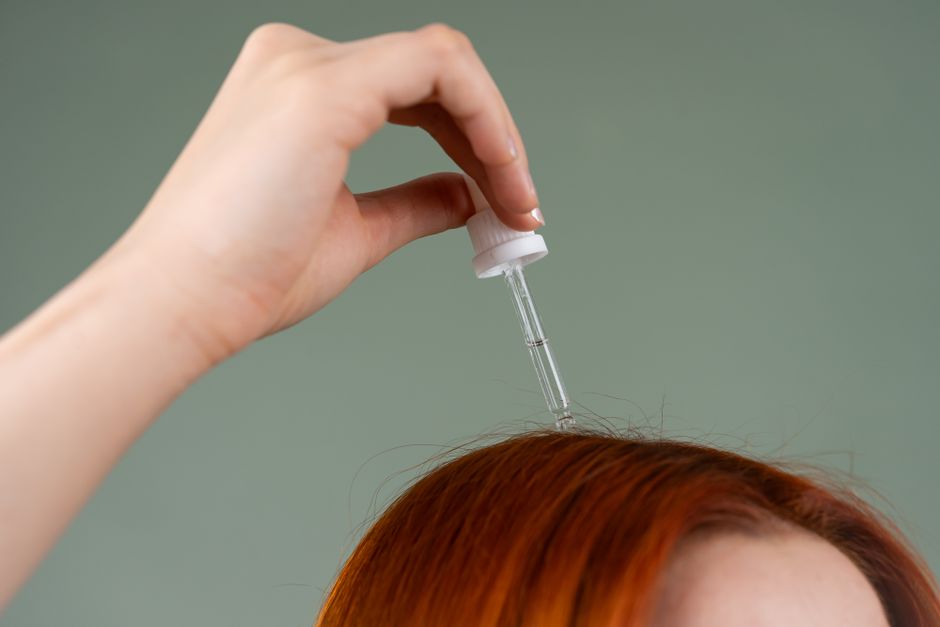
Castor oil is not an established treatment for alopecia or hair loss. No large human trials have shown that applying it regrows hair in people with male pattern baldness, female pattern hair loss, or other forms of alopecia. It is a traditional remedy with a long history of use, but history is not the same as evidence.
That answer may be disappointing if you have read that castor oil thickens hair, fills in bald patches, or “wakes up” dormant follicles. Those claims circulate widely online. Most trace back to personal stories and marketing, not to controlled studies. Here is what is actually known about castor oil, what it can and cannot do, and what the evidence says about treating hair loss.
What Is Castor Oil and What Does It Do to Hair?
Castor oil is a thick vegetable oil pressed from the seeds of the castor plant, Ricinus communis. Its main fatty acid is ricinoleic acid, which makes up roughly 85 to 90 percent of the oil. That unusual fatty acid gives castor oil its heavy, sticky texture and its reputation as a moisturizer.
Applied to hair, castor oil coats the strand. This can make hair look shinier and feel softer. It can also reduce frizz by smoothing the outer layer of the hair shaft. These are cosmetic effects on the hair you already have. They do not involve the follicle, which is the structure under the skin where hair actually grows.
This distinction matters. Hair loss happens at the follicle level. A coating on the hair shaft cannot change what a follicle does. No oil, castor or otherwise, has been shown to reverse the follicle miniaturization that drives common pattern baldness.
Is Castor Oil Good For Alopecia And Hair Loss?
The evidence does not support castor oil as a treatment for alopecia. There are no large randomized controlled trials — the kind of study that can show cause and effect — testing castor oil on hair regrowth. What exists is mostly animal research, laboratory work, and anecdotal reports.
Some laboratory studies have looked at ricinoleic acid and its effects on prostaglandin pathways, which are involved in inflammation. One theory is that this could influence hair growth signaling. That is a hypothesis from test-tube and animal work, not a demonstrated clinical benefit in people. Biological plausibility is not the same as proof that something works.
There is one small study sometimes cited involving castor oil and hair growth. It was a pilot study with a small number of participants, and it did not isolate castor oil as the cause of any improvement. A pilot study like that cannot establish effectiveness. It can only suggest something worth testing further.
Where castor oil may genuinely help is in hair appearance. If your concern is dull, dry, or brittle-looking hair, an oil can improve the look and feel of the strands. If your concern is losing hair or thinning at the scalp, castor oil has not been shown to change that.
Why Do People Believe Castor Oil Regrows Hair?
The belief comes from a few places, and it is worth understanding why it spread.
- Castor oil is thick and heavy. When it coats thinning hair, strands can look temporarily fuller and darker. That visual change is easy to mistake for new growth.
- Massaging oil into the scalp increases blood flow to the area. Some people credit the massage, not the oil, for any benefit they notice. Scalp massage is being studied for hair growth, though the evidence is still limited.
- Castor oil has real antibacterial and anti-inflammatory properties in laboratory settings. That has been stretched into claims about scalp health and hair growth that go beyond what has been shown.
- Before-and-after photos online are easy to stage with different lighting, angles, and hair styling. They are not evidence.
None of this means people are lying about their experience. It means that noticing a change and proving that castor oil caused it are two different things.





What Types of Hair Loss Are There?
“Alopecia” is a general term for hair loss, and it covers several conditions with different causes. This matters because a treatment that helps one type may do nothing for another.
- Androgenetic alopecia is the most common form. It affects men as male pattern baldness and women as female pattern hair loss. It is driven by genetics and hormones, and it involves gradual miniaturization of the follicle.
- Alopecia areata is an autoimmune condition. The immune system attacks hair follicles, causing smooth round patches of hair loss. It can affect the scalp, beard, eyebrows, and other areas.
- Telogen effluvium is a temporary shedding triggered by stress, illness, surgery, childbirth, or major weight loss. It usually resolves on its own once the trigger passes.
- Traction alopecia results from tight hairstyles that pull on the hair over time.
- Cicatricial alopecia refers to scarring hair loss, where inflammation destroys the follicle permanently.
These conditions look different, behave differently, and respond to different treatments. A doctor can usually tell them apart by examining the scalp and asking about your history. Some cases need a scalp biopsy.
What Treatments Have Real Evidence Behind Them?
For common pattern hair loss, a few treatments have solid evidence from controlled trials. This is where the honest comparison lies.
Minoxidil is a topical treatment available over the counter. It is approved by the FDA for androgenetic alopecia. Studies show it can slow hair loss and promote some regrowth in many users, though results vary and hair loss returns if you stop using it.
Finasteride is an oral prescription medication approved for men with male pattern baldness. It works by blocking the conversion of testosterone to dihydrotestosterone (DHT), a hormone that drives follicle miniaturization in susceptible people. It is not approved for women of childbearing age because of risks during pregnancy.
Other options include low-level laser therapy, which has some supporting evidence, and procedures like platelet-rich plasma injections, where the evidence is more mixed. Hair transplant surgery moves hair follicles from one part of the scalp to another and can produce lasting results in the right candidates.
For alopecia areata, treatment is different. Corticosteroid injections, topical immunotherapy, and newer medications that target specific immune pathways have shown effectiveness in clinical trials. A dermatologist manages these.
Castor oil does not appear on this list. It is not because no one has looked. It is because the studies that would put it there have not been done, and the existing evidence does not support it.
Can Castor Oil Cause Any Harm?
Castor oil is generally well tolerated on the skin, but it is not risk-free for everyone.
Some people develop irritation, redness, or an itchy rash where they apply it. That is a contact reaction, and it means stopping use.
Castor oil is thick and can clog pores. On the scalp, that can contribute to folliculitis, an inflammation of the hair follicles. Ironically, a product marketed for hair growth can, in some people, cause a scalp problem that makes hair loss worse.
There is also a safety point that gets overlooked. Castor oil sold for skin and hair use is not the same as castor oil taken by mouth. Ingesting castor oil is a strong laxative and can cause severe diarrhea and cramping. It should not be swallowed as a hair treatment. Castor beans themselves contain ricin, a highly toxic substance, though the oil sold in stores is processed to remove it.
If you are pregnant or breastfeeding, or applying anything to a child’s scalp, check with a clinician first. No clinical guidelines support using castor oil for hair growth in these groups, and it is better to be cautious than to guess.
How Should You Use Castor Oil If You Choose To?
If you want to try castor oil for the look and feel of your hair, that is a reasonable personal choice. Just keep your expectations realistic. It is a conditioning oil, not a treatment for hair loss.
A few practical points:
- Patch test first. Apply a small amount to your inner forearm and wait a day to see if your skin reacts.
- Dilute it. Castor oil is very thick. Mixing it with a lighter oil like coconut or jojoba makes it easier to spread and rinse out.
- Apply to the hair, not a heavy layer on the scalp, if you are prone to clogged pores.
- Wash it out within a few hours. Leaving it on overnight is common but can worsen irritation for some people.
- Do not expect regrowth. Judge it only on how your hair looks and feels.
If your goal is to treat hair loss, castor oil is not the tool. See a doctor or dermatologist. Many causes of hair loss are treatable, and some are reversible, but the right treatment depends on the correct diagnosis.
When Should You See a Doctor About Hair Loss?
Hair loss is common, and most of it is not a sign of something dangerous. Still, certain patterns and timing warrant a medical visit.
See a doctor if you notice sudden shedding, patches of smooth bald skin, loss of eyebrows or eyelashes, scalp pain, itching, or scaling, or hair loss that comes with fatigue, weight changes, or other symptoms. These can point to thyroid problems, nutritional deficiencies, autoimmune conditions, or other issues that need treatment.
For pattern hair loss, earlier treatment tends to work better than waiting. Once a follicle is permanently scarred or fully miniaturized, regrowth becomes much harder. That is another reason not to spend months on an unproven remedy while a treatable condition progresses.
Frequently Asked Questions
Does castor oil regrow hair?
No large human trials show that castor oil regrows hair. It can make existing hair look shinier and fuller, but it has not been shown to reverse hair loss at the follicle level.
Can castor oil help with alopecia areata?
There is no evidence that castor oil treats alopecia areata, which is an autoimmune condition. It is managed with treatments such as corticosteroid injections and other medications prescribed by a dermatologist.
How long does castor oil take to work for hair growth?
There is no established timeline, because castor oil has not been shown to grow hair in controlled studies. Any timeline you see online is not based on clinical evidence.
Is it safe to leave castor oil on your scalp overnight?
Many people do this without problems, but castor oil is thick and can clog pores and cause irritation in some users. If you notice redness, itching, or bumps, stop using it.
