
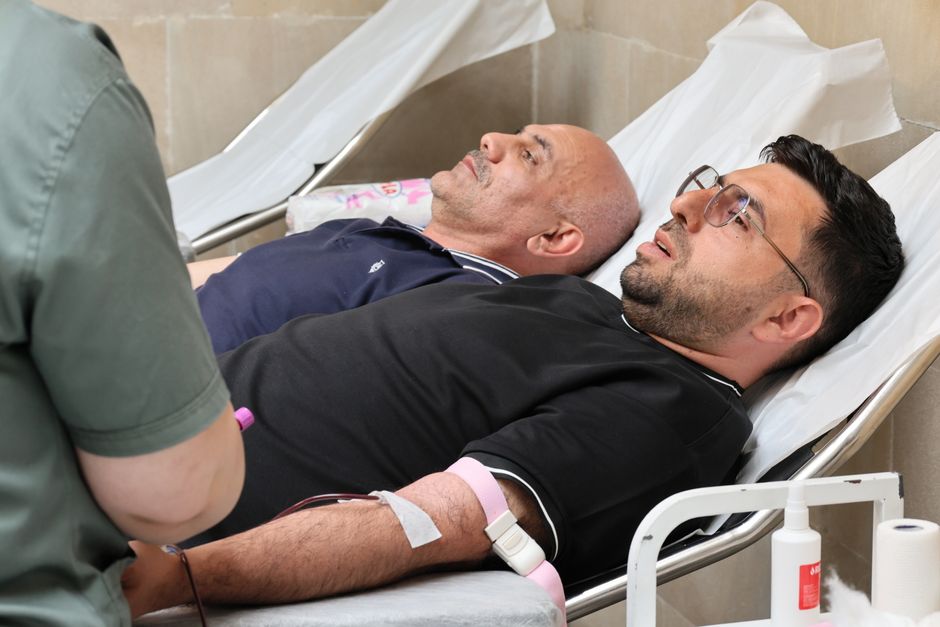
Most people feel a brief pinch when the needle goes in. That is usually the worst of it. The actual donation takes about 8 to 10 minutes, and for most donors the sensation during that time is mild pressure or nothing at all.
If you have never donated before, the fear of pain is one of the most common reasons people avoid it. That fear is understandable, but it is usually bigger than the reality. Here is what the process actually feels like, why it feels that way, and what you can expect afterward.
Does Donating Blood Hurt?
The needle insertion is the only part most donors describe as painful, and it lasts a second or two. After that, the sensation is usually pressure, coolness, or a mild ache rather than sharp pain.
The needle used for a standard whole blood donation is larger than the one used for a routine blood test. That size matters. A larger needle allows red blood cells to flow without being damaged or broken apart as they pass through. It also means the donation finishes faster. A smaller needle would take much longer and risk damaging the cells.
Because the needle is bigger, the pinch at insertion can be more noticeable than what you feel during a typical blood draw at a doctor’s office. Some donors rate it a 2 or 3 out of 10. Others barely notice it. A small number find it genuinely uncomfortable. There is no way to predict which group you will fall into until you try.
Once the needle is in and taped down, it stays still. You are not being poked repeatedly. You just lie or sit there while blood flows into a bag. Many donors scroll on their phone, chat with staff, or watch TV during this part.
What Does the Donation Process Actually Feel Like?
Understanding each step removes most of the uncertainty. The whole appointment usually takes about an hour, but only a small part of that involves the needle.
- Registration and screening: You answer health questions and get a quick finger prick to check your hemoglobin level. The finger prick feels like a small snap and lasts a moment.
- Needle insertion: A brief pinch or sting. This is the part most people remember.
- Collection: About 8 to 10 minutes for whole blood. You may feel a cool sensation in your arm as the blood flows. Some people feel nothing at all.
- Needle removal: Quick and usually painless. Staff apply pressure and a bandage.
- Recovery: You rest for 10 to 15 minutes and have a snack and drink. This helps your body adjust to the small drop in blood volume.
The finger prick surprises some first-time donors more than the needle does. It is quick, but it is a distinct sensation. Staff do it to check that your hemoglobin is high enough to donate safely. If it is too low, you will be turned away that day, which is a safety measure, not a judgment about your health.
Why Do Some People Feel More Pain Than Others?
Pain perception during donation varies widely, and several factors explain why. Needle placement is one. Everyone’s veins sit slightly differently under the skin, and a vein that is easy to access tends to mean less discomfort.
Hydration matters more than most people realize. Well-hydrated veins are fuller and easier to find, which can mean fewer adjustment attempts. Drinking water in the hours before your appointment is one of the simplest things you can do.
Anxiety plays a real role too. Feeling tense can make you more sensitive to sensations and can also make veins constrict, which sometimes makes the needle stick harder. If you are nervous, tell the staff. They deal with nervous donors constantly and can adjust their approach.
Body temperature, caffeine intake, and how recently you ate can all influence how you feel. None of these guarantee a painless experience, but they shift the odds in your favor.





What Happens After the Needle Comes Out?
Most donors feel completely normal within minutes. Some feel a mild soreness or a small bruise at the needle site that can last a few days. That bruising is common and not a sign that something went wrong.
A minority of donors feel lightheaded or dizzy right after donating. This is usually related to the temporary drop in blood volume and often passes within minutes once you sit or lie down and drink something. Staff are trained to handle this and will keep you resting until you feel steady.
More noticeable for many people is the tiredness that can show up later that day or the next. Your body is replacing plasma and red blood cells, and that takes energy. Plasma is replaced within about 24 to 48 hours. Red blood cells take longer, which is why donation centers set a minimum interval between whole blood donations. For most people in the US, that interval is 8 weeks. This is a regulatory standard, not a suggestion.
Planning a lighter schedule for the rest of the day is a reasonable idea, especially if it is your first time. Heavy lifting, intense exercise, and long stretches on your feet are usually best avoided for the remainder of the day.
How Can You Reduce Discomfort Before and During Donation?
You cannot guarantee a pain-free experience, but you can improve your odds. These steps are widely recommended by donation centers and align with basic physiology.
- Drink plenty of water in the 24 hours before your appointment.
- Eat a normal meal within a few hours of donating. Do not donate on an empty stomach.
- Avoid heavy caffeine right before, since it can narrow blood vessels.
- Wear a short-sleeved shirt or one with sleeves that roll up easily.
- Tell staff if you are anxious or if you have had a hard stick before.
- Look away during needle insertion if that helps you.
- Do the muscle-tensing exercise staff may suggest to keep blood pressure steady.
One detail worth knowing: the “cough” trick some donors use, where they cough gently as the needle goes in, can distract the nervous system and reduce the sting. It is not a cure, but some people find it helps.
When Should You Not Donate?
Donation is safe for most healthy adults, but certain conditions and situations make it unsafe or mean you should wait. Donation centers screen for these during the health questionnaire.
You should generally not donate if you are currently sick, have a fever, or are taking certain medications. Recent travel to areas with specific infection risks, recent surgery, pregnancy, and some chronic conditions can also affect eligibility. Rules vary by center and change over time based on public health guidance.
The most reliable way to know is to check with the donation center directly. Their eligibility criteria are updated regularly and are more current than any general advice. If you are turned away, it is almost always about protecting you or the person who receives your blood, not about rejecting you.
Is the Pain Worth It?
A single whole blood donation can be separated into components that may help more than one patient. Red cells, plasma, and platelets each serve different purposes, and demand for all three is ongoing.
The discomfort, for most donors, is brief. A second or two of pinch, a few minutes of mild pressure, and some tiredness afterward. That is the typical experience. It is not nothing, and it is fair to acknowledge that needles bother some people more than others.
If you have never donated and are unsure how you will handle it, you can ask to speak with staff before committing. They can walk you through the process and answer questions. Some people find that a short conversation removes most of the worry.
What the evidence does not support is the idea that donation is painless for everyone. It is not. But for the large majority of donors, the pain is minor, brief, and far less than they expected.
Frequently Asked Questions
How much does donating blood hurt on a scale of 1 to 10?
Most donors describe the needle insertion as a 2 or 3 out of 10, lasting only a second or two. After that, the sensation is usually mild pressure rather than pain.
Does the needle for blood donation hurt more than a regular blood test?
The donation needle is larger than the one used for a routine blood test, so the pinch at insertion can feel more noticeable. The trade-off is that the larger needle lets blood flow faster and protects the red blood cells from damage.
How long does the soreness last after donating blood?
Any soreness or bruising at the needle site usually fades within a few days. Tiredness from the donation itself often passes within a day, though red blood cell replacement takes longer.
Can I donate blood if I am afraid of needles?
Yes, many people who dislike needles donate successfully. Telling staff about your fear lets them adjust their approach, and looking away during insertion helps some donors.
