
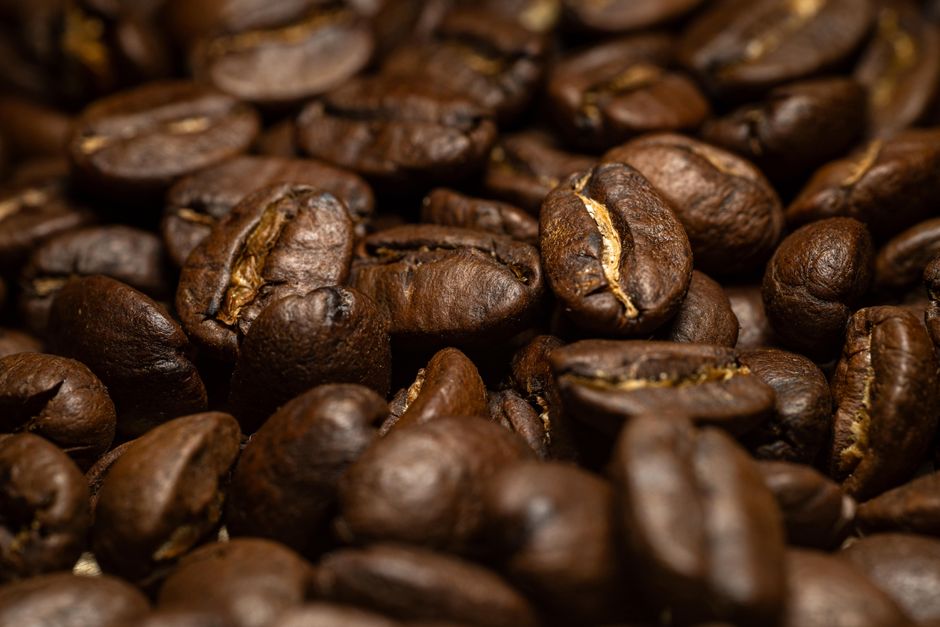
No. Dark roast coffee does not have more caffeine than light roast. In fact, when you measure by the scoop, dark roast usually has slightly less caffeine than light roast — because the roasting process burns off a small amount of mass, and darker beans are less dense. The confusion comes from taste: dark roast tastes stronger and more intense, so people assume it must hit harder. It doesn’t. Bitterness and caffeine are two different things.
Does Dark Roast Have More Caffeine? What Research Says
The research is fairly consistent on this. Studies that have measured caffeine content across roast levels — including work published in the Journal of Food Science and the Journal of Agricultural and Food Chemistry — have generally found that caffeine stays remarkably stable during roasting. The caffeine molecule is heat-resistant. It survives the roasting process largely intact.
What changes is everything around it. Dark roasting breaks down some of the bean’s mass, drives off moisture, and alters the structure of the bean. So while the caffeine per bean stays roughly the same, the bean itself gets lighter and less dense.
That matters when you measure coffee the way most people actually do — by volume, using a scoop. A scoop of dark roast holds fewer beans than a scoop of light roast because the dark beans are less dense. Fewer beans means slightly less caffeine per scoop.
When researchers measure by weight instead of volume, the difference mostly disappears. Some studies have even found slightly higher caffeine concentration in lighter roasts by weight, though the gap is small.
One point worth clarifying: the idea that dark roast is “stronger” in caffeine is a taste perception issue. Dark roast has a bolder, more bitter flavor because roasting creates bitter compounds. Your tongue reads that as “stronger.” Your nervous system doesn’t get more caffeine from it.
Why Do People Think Dark Roast Has More Caffeine?
The confusion is understandable. Dark roast coffee tastes more intense, and intensity feels like it should mean more of the active ingredient. But bitterness and caffeine are separate things.
During roasting, a chemical reaction called the Maillard reaction creates hundreds of new flavor compounds. Many of these taste bitter or roasty. The longer the roast, the more of these compounds form. So dark roast tastes stronger even when the caffeine level is the same or slightly lower.
There’s also a misconception about the “burning off” of caffeine. Some people believe dark roasting destroys caffeine. It doesn’t, at least not in any meaningful way. Caffeine is stable at roasting temperatures. The small differences that do exist come from mass loss and density, not from caffeine being destroyed.
Another factor: espresso. Dark roast is often used for espresso because it produces a thicker, more intense shot. People associate espresso with a big caffeine hit. But a standard espresso shot actually contains less caffeine than a standard cup of drip coffee — roughly 60-75 mg versus about 95 mg for an 8-ounce drip coffee, according to widely cited USDA figures. The intensity is in the flavor and concentration, not the total caffeine.
How Roasting Actually Affects Caffeine Content
Caffeine is a stable molecule. It doesn’t break down easily under heat, which is why it survives roasting largely unchanged. What does change is the bean’s weight and density.
As beans roast longer and darker, they lose moisture and some organic mass. A dark roasted bean weighs less than a light roasted bean of the same original size. So if you weigh out 10 grams of each, you’re using more dark beans than light beans to hit that weight. That slightly offsets the caffeine difference.
By volume, the effect reverses. A scoop of dark roast contains fewer beans because the beans are less dense. Fewer beans, slightly less caffeine.
The net result: the difference between light and dark roast caffeine content is small. It’s not the dramatic gap people imagine. For most drinkers, it’s not a meaningful difference at all.
Here’s a rough comparison based on typical values:
- Light roast, measured by scoop: Slightly more caffeine per scoop due to higher bean density
- Dark roast, measured by scoop: Slightly less caffeine per scoop due to lower bean density
- Measured by weight: The difference is minimal and may favor light roast slightly
- Per bean: Essentially the same caffeine content
These differences are small enough that they’re unlikely to matter for most people. If you’re sensitive to caffeine, the roast level isn’t the variable to focus on. The amount you drink and how it’s brewed matter far more.




What Actually Determines How Much Caffeine Is in Your Cup?
Roast level is one of the least important factors. The bigger variables are the ones most people overlook.
The coffee-to-water ratio. This is the biggest factor. More coffee grounds per cup means more caffeine. A strong brew with a high ratio will always beat a weak brew, regardless of roast.
Brewing method. Espresso, drip, French press, and cold brew all extract caffeine differently. Cold brew, for example, often has a higher caffeine concentration than drip coffee because of the long steep time and higher coffee-to-water ratio, though it depends on how it’s made.
Serving size. A 16-ounce cup has more caffeine than an 8-ounce cup, obviously. But people often don’t account for this when comparing drinks.
Bean origin and variety. Arabica and robusta beans differ in caffeine content. Robusta has roughly twice the caffeine of arabica. Most specialty coffee is arabica, but some blends include robusta for cost or crema.
Grind size. Finer grinds expose more surface area, which can increase extraction efficiency. This matters more for espresso than for drip.
The takeaway: if you’re trying to manage your caffeine intake, focus on how much coffee you use and how you brew it. The roast level is a minor player.
Does Roast Level Change the Health Effects of Coffee?
This is a more interesting question than the caffeine one, and the evidence is more mixed. Some research suggests that light and dark roasts differ in their antioxidant content. Light roast tends to retain more chlorogenic acid, a polyphenol with antioxidant properties. Dark roast has less of it because roasting degrades some of these compounds.
But whether that translates to meaningful health differences is not established. Coffee consumption in general has been associated with lower risk of several conditions in large observational studies, including type 2 diabetes and certain liver conditions. Those studies mostly don’t distinguish between roast levels.
Some research has looked at whether dark roast might affect stomach acid or heartburn differently. The evidence is limited and inconsistent. Some people report that dark roast is easier on their stomach, but this is anecdotal and not well supported by clinical trials.
The honest position: the health differences between light and dark roast are not well established. Coffee itself has a reasonably strong evidence base for certain health associations. The roast level is a secondary question that hasn’t been well studied.
Which Roast Should You Choose?
Choose based on taste, not caffeine. That’s the most honest answer. The caffeine difference between light and dark roast is small and unlikely to matter for most people.
If you genuinely want more caffeine, the levers that work are straightforward: use more coffee, brew it stronger, or drink a larger serving. Switching from dark to light roast will not give you a meaningful boost.
If you’re sensitive to caffeine or trying to cut back, the same logic applies. Reducing your serving size or switching to decaf will do far more than changing the roast.
There’s a practical point here too. Dark roast is often used for espresso because it’s forgiving and produces a consistent, bold flavor. Light roast is often preferred for pour-over and drip because it preserves more of the bean’s origin character. These are flavor decisions, not caffeine decisions.
One more thing worth knowing: decaffeination happens before roasting, not after. So decaf coffee can be roasted light or dark, and the decaffeination process removes most of the caffeine regardless of roast level.
Frequently Asked Questions
Does dark roast have more caffeine than light roast?
No. Dark roast generally has the same or slightly less caffeine than light roast, especially when measured by scoop. The difference is small and comes from density changes during roasting, not from caffeine being created or destroyed.
Why does dark roast taste stronger if it has less caffeine?
Dark roast tastes stronger because roasting creates bitter flavor compounds, not because it has more caffeine. Bitterness and caffeine are separate qualities, and your tongue reads the roasted flavor as intensity.
Is espresso more caffeine than regular coffee?
A standard espresso shot has less caffeine than a standard cup of drip coffee — roughly 60-75 mg versus about 95 mg for an 8-ounce drip coffee. The intensity of espresso is in the concentration and flavor, not the total caffeine.
Does decaf coffee have caffeine?
Decaf coffee contains a small amount of caffeine, typically a few milligrams per cup, but far less than regular coffee. The decaffeination process removes most but not all caffeine before the beans are roasted.
