
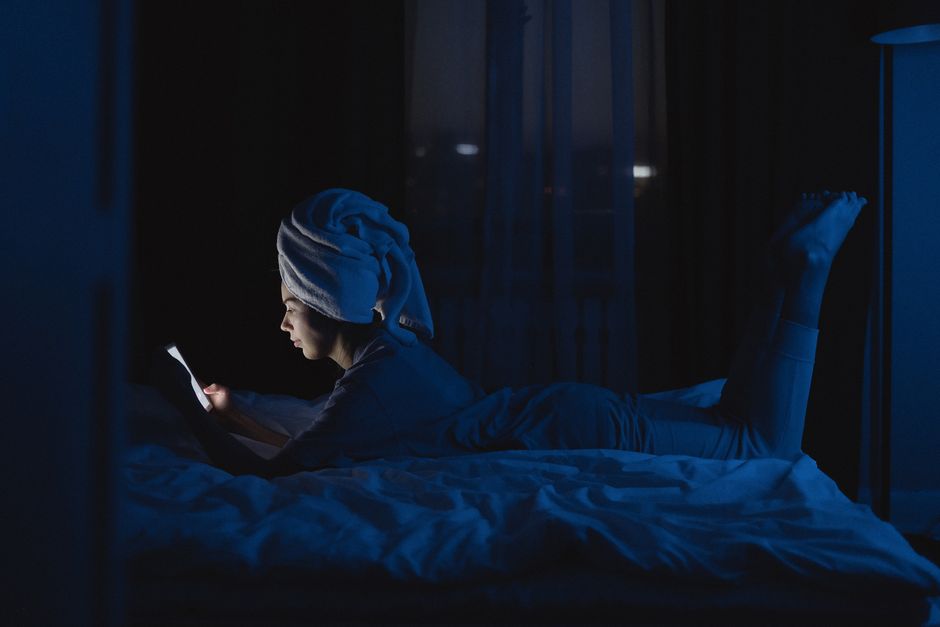
Blue light from screens can affect your sleep, but it is not the whole story. Research shows that light exposure in the evening, especially bright light, can delay your body’s natural sleep drive. The effect is real, but the size of that effect depends on the brightness of your screen, how close you hold it, and how long you use it. The bigger question is what you are doing on that screen and how it affects your brain and body before bed.
What Blue Light Does to Your Body
Your body runs on a roughly 24-hour internal clock called the circadian rhythm. This clock tells you when to feel alert and when to feel sleepy. Light is the strongest signal that sets this clock.
Special cells in your eyes, called intrinsically photosensitive retinal ganglion cells, detect light and send signals to the brain’s suprachiasmatic nucleus. That is the master clock. When these cells detect bright light, especially light with a blue wavelength around 460 to 480 nanometers, the brain suppresses melatonin. Melatonin is the hormone that helps you fall asleep.
When melatonin release is delayed, your body does not get the “time to sleep” signal at its usual hour. You feel less sleepy at bedtime, and your sleep schedule can shift later. This effect is strongest with bright, cool-toned light. Dim warm light has much less impact.
This is not a myth. Laboratory studies consistently show that evening exposure to bright blue-enriched light suppresses melatonin more than dim or warm light. The effect is measurable in healthy adults.
How Much Blue Light Is Too Much
Here is where the nuance comes in. A phone screen in a dark room is not the same as standing in bright daylight. The brightness of a typical phone or tablet screen is far lower than outdoor light. Some research suggests that a standard phone at full brightness delivers only a fraction of the light intensity needed to strongly shift the circadian clock.
But that does not mean screens have no effect. Several studies have found that extended evening screen use is linked to later bedtimes and shorter sleep duration. The effect is modest for most people, but it is more pronounced in people who are already sensitive to light or who have irregular sleep schedules.
Distance matters too. Holding a tablet close to your face delivers more light to your eyes than watching a television across the room. A bright tablet at arm’s length can produce a measurable melatonin suppression in some people. A dim laptop screen at a normal distance produces less.
The evidence supports a simple conclusion: screens can affect sleep, but the effect is dose-dependent. More light, closer to your eyes, for a longer time means more impact.
What Research Actually Shows About Screens and Sleep
Some studies indicate that reading on a backlit device before bed delays melatonin onset and reduces next-morning alertness compared to reading a printed book. These studies are well designed and have been replicated. The effect sizes are real but not dramatic for most people.
Other research has looked at teenagers and young adults, who tend to use phones heavily at night. This group shows stronger associations between screen time and poor sleep. But the direction of cause and effect is not always clear. People who have trouble sleeping may use screens more because they cannot fall asleep, not the other way around.
One important finding is that blue light alone is not the only problem. The content you consume matters. Social media, news, and fast-paced games can raise alertness through emotional arousal and stress. That stimulation can keep you awake even if you turn on a blue light filter. A calm e-book on a dim screen may affect sleep much less than a tense video game on the same device.
Research also shows that the timing of light exposure matters. Light in the late evening shifts the clock later. Light in the early morning shifts it earlier. This is why morning sunlight is recommended for people who want to fall asleep earlier at night.




Do Blue Light Filters and Glasses Help
Blue light filters on phones and computers reduce the amount of blue light emitted by the screen. Many devices now have a night mode that shifts the display to warmer colors. Some research suggests these filters reduce melatonin suppression modestly. The effect is small but measurable in laboratory settings.
Blue light blocking glasses are a different matter. The evidence is mixed. Some small studies show that wearing amber-tinted glasses in the evening improves sleep quality. Other studies find no significant benefit over regular glasses. The glasses that block the most blue light are heavily tinted and change color perception, which makes them impractical for many people.
Here is what you should know: no device filter or pair of glasses will fix a poor sleep schedule. If you are already sleeping well, a filter is unlikely to make a noticeable difference. If you struggle with sleep, reducing overall evening light and screen use is more effective than relying on a filter alone.
Practical Steps That Actually Work
You do not need to throw away your phone to protect your sleep. Small changes in behavior have a larger effect than most gadgets.
- Dim your screens in the hour before bed. Lower brightness matters more than color temperature.
- Hold devices farther away. Distance reduces the light reaching your eyes.
- Use night mode if you have it, but do not assume it cancels all effects.
- Keep a consistent bedtime. A regular schedule strengthens your circadian rhythm.
- Get bright light in the morning. Morning light anchors your clock and makes evening light less disruptive.
- Stop scrolling if you feel alert. The stimulation from content can override the sleepiness signal.
These steps are supported by the basic science of circadian rhythms. They are not expensive, and they do not require special equipment. They work because they address the real mechanism: light intensity, light timing, and cognitive arousal.
The Role of Other Factors in Poor Sleep
Blue light gets a lot of attention, but it is only one factor in sleep quality. Caffeine, alcohol, stress, and irregular schedules often play a larger role. A person who drinks coffee in the afternoon and sleeps poorly at night may blame their phone when the caffeine is the bigger problem.
Alcohol is worth special mention. It can make you feel drowsy, but it fragments sleep later in the night. The result is lighter, less restorative sleep. This effect is well documented and has nothing to do with screens.
Stress and anxiety are also major contributors. Racing thoughts at bedtime keep people awake regardless of how much blue light they saw. If your mind will not quiet down, turning off the phone may help, but addressing the underlying stress matters more.
Who Is Most Sensitive to Blue Light
Some people are more affected by evening light than others. Older adults may have less light reaching their retinas due to changes in the lens, which can reduce the light signal. However, they also tend to have earlier circadian phases, which can make them more vulnerable to evening light delays.
People with delayed sleep phase syndrome, a condition where the internal clock runs late, are particularly sensitive to evening light. For these individuals, evening light can push their already-late schedule even later. Morning bright light therapy is a common recommended approach for this condition.
Night shift workers face a unique challenge. They need light at night to stay alert and dark during the day to sleep. Managing light exposure in both directions is essential for their health, but it is difficult to do perfectly. The evidence strongly supports the importance of light management for shift workers.
What the Research Does Not Support
Some claims about blue light go beyond the evidence. There is no strong proof that blue light from screens damages your eyes. The eye strain people feel after long screen use is mostly due to reduced blinking and focusing fatigue, not blue light damage. This is an important distinction because many products are marketed as eye-protecting when the evidence does not support that claim.
There is also no convincing evidence that blue light blocking glasses improve sleep in the general population. The studies are small, and results vary. Some people report subjective improvement, but objective sleep measures do not consistently confirm it. This may be a placebo effect, or it may be that some individuals are genuinely sensitive. The evidence does not currently allow a firm conclusion.
Be cautious with products that claim to “fix” sleep with a single solution. Sleep is regulated by multiple systems. No filter, supplement, or app replaces the fundamentals of consistent timing, appropriate light exposure, and good sleep habits.
Frequently Asked Questions
Does blue light from phones actually keep you awake?
Yes, bright blue light in the evening can suppress melatonin and delay sleepiness, but the effect depends on screen brightness, distance, and duration. For most people, the effect is modest compared to other sleep disruptors like caffeine or stress.
Do blue light glasses help you sleep better?
The evidence is mixed. Some small studies show benefit, but others find no measurable improvement in sleep quality. They are unlikely to help if your sleep problem comes from stress, caffeine, or an irregular schedule.
Is night mode on a phone enough to protect sleep?
Night mode reduces blue light but does not eliminate all effects of screen use. Lowering brightness and limiting screen time in the hour before bed are more effective than relying on night mode alone.
How long before bed should you stop using screens?
There is no universal cutoff that works for everyone. Reducing screen use in the last 30 to 60 minutes before bed is a reasonable goal, but consistency in your sleep schedule matters more than a strict screen curfew.
