
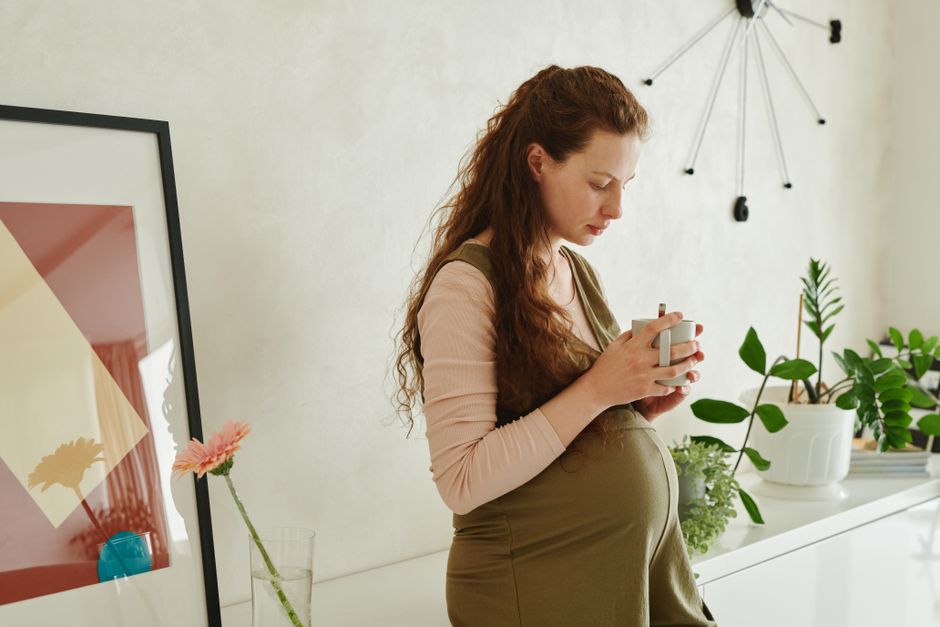
Most health organizations agree that up to 200 milligrams of caffeine per day is safe during pregnancy. That is roughly the amount in one 12-ounce cup of coffee. Staying under this number is linked to a lower risk of miscarriage and low birth weight, though the evidence for exact limits continues to evolve.
How Much Caffeine Pregnant? Numbers You Need to Know
The 200-milligram guideline is the most widely accepted number in prenatal care. It comes from the American College of Obstetricians and Gynecologists and similar bodies in Europe and Australia.
To put that in perspective: a standard 8-ounce cup of brewed coffee has about 95 milligrams. A 12-ounce Starbucks Pike Place roast has about 235 milligrams — already over the limit. Espresso shots vary, but a single 1-ounce shot averages around 63 milligrams.
Black tea contains roughly 47 milligrams per 8-ounce cup. Green tea has about 28 milligrams. A 12-ounce can of cola has around 34 milligrams. These numbers matter because caffeine hides in many drinks you might not think of as caffeinated.
Why 200 Milligrams? What the Research Shows
The limit is not arbitrary. It comes from decades of observational research looking at pregnancy outcomes.
Studies have consistently found that caffeine crosses the placenta freely. The developing fetus cannot metabolize it the way an adult can. Caffeine and its breakdown products build up in fetal tissues and amniotic fluid. This is why researchers worry about high intake during pregnancy.
Research published in major obstetric journals has linked high caffeine intake — generally above 300 milligrams daily — to higher rates of miscarriage and lower birth weights. Some studies suggest the risk increases even at lower levels, but the data is not consistent enough to change the official guidance.
A 2020 review in the journal BMJ Evidence-Based Medicine examined multiple studies and concluded that no level of caffeine intake is clearly risk-free. The authors suggested that the safest choice is to avoid caffeine entirely. However, most major medical organizations have not adopted this stricter stance, and the 200-milligram limit remains the standard clinical recommendation.
Hidden Sources of Caffeine
Many people track their morning coffee and stop there. But caffeine appears in more products than most expect.
- Chocolate: A 1.5-ounce bar of dark chocolate has about 30 milligrams. Milk chocolate has less, around 10 milligrams per bar.
- Decaf coffee: Still contains caffeine. An 8-ounce cup has about 2 to 5 milligrams.
- Energy drinks: These vary wildly. Some contain 100 milligrams per can, others exceed 300 milligrams.
- Pre-workout supplements: Often contain 150 to 300 milligrams per scoop. These are easy to overlook.
- Some medications: Excedrin and certain headache formulas contain 65 milligrams of caffeine per tablet.
- Matcha and chai: Matcha has about 70 milligrams per 8-ounce cup. Chai tea varies but often falls between 30 and 60 milligrams.
If you drink a morning coffee and an afternoon soda, you are likely around 130 milligrams. Add a square of dark chocolate and you are still under 200. The risk comes when multiple sources stack up without being counted.





Caffeine Sensitivity Changes During Pregnancy
Pregnancy changes how your body processes caffeine. The half-life of caffeine — the time it takes your body to clear half of it — increases significantly.
In non-pregnant adults, caffeine has a half-life of about 5 hours. During the third trimester, that can extend to 10 hours or more. This means the same cup of coffee you drank before pregnancy now stays in your system much longer. The fetus is exposed to caffeine for a longer duration because your body is clearing it more slowly.
This is why some women who normally drink coffee without issues suddenly feel jittery or develop heartburn after a single cup during pregnancy. The same dose hits harder because it lingers longer.
Genetic variation also plays a role. Some women carry a gene variant that makes them slow metabolizers of caffeine even outside of pregnancy. For these women, the same 200-milligram limit may still result in higher fetal exposure than average. Most clinicians cannot test for this easily, so the general guideline applies to everyone.
What About the First Trimester?
The first trimester is when most clinicians are most cautious. This is the period of organ development, and it is also when miscarriage risk is highest.
Some research has suggested that caffeine’s association with miscarriage is strongest in the first trimester. A well-known 2008 study in the American Journal of Obstetrics and Gynecology found that women consuming 200 milligrams or more per day had roughly double the miscarriage risk compared to those consuming less.
However, this type of study has limitations. Women who miscarry often recall their intake differently. Nausea in early pregnancy also reduces caffeine consumption naturally, which complicates the data. The association is real in the research, but proving direct causation is difficult.
If you are in your first trimester and feeling anxious, the most conservative approach is to cut caffeine entirely. If that feels too restrictive, staying well under 200 milligrams — closer to 100 milligrams — is a reasonable middle ground that many clinicians informally suggest.
How to Cut Back Without Withdrawal Misery
Caffeine withdrawal is real. Headaches, fatigue, and irritability can hit within 12 to 24 hours of stopping. These symptoms peak around day two and usually fade within a week.
Sudden withdrawal is not dangerous to the pregnancy, but it is miserable. A gradual reduction is easier on your body.
Try these steps:
- Mix regular coffee with decaf. Start with half and half, then shift to mostly decaf.
- Switch from coffee to black tea for a week, then to green tea, then stop.
- Replace one daily caffeinated drink with a non-caffeinated alternative like herbal tea or sparkling water.
- Track your intake for three days before changing anything. You might be consuming more than you think.
If you get a withdrawal headache, acetaminophen (Tylenol) is generally considered safe during pregnancy when used as directed. Ibuprofen and aspirin are not recommended during pregnancy without a clinician’s guidance.
When to Talk to Your Doctor
Your prenatal care team should know your caffeine habits. This is not because caffeine is dangerous at typical levels — it is because they need a full picture of your intake to give you personalized advice.
If you have had previous miscarriages, a history of low birth weight, or are carrying multiples, your clinician may recommend a stricter limit than 200 milligrams. There is no strong evidence that this stricter limit changes outcomes, but it is a common precaution.
If you struggle to cut back, be honest about it. Some women find that caffeine helps manage pregnancy fatigue, and the trade-off of staying at 150 milligrams may be acceptable. Your clinician can help you weigh the risks and benefits for your specific situation.
Does Caffeine Affect Fertility or Breastfeeding?
These are separate questions, but they come up often in the same conversation.
For fertility, the evidence is mixed. Some studies have found that high caffeine intake is associated with longer time to conception, while others found no effect. The strongest data suggests that moderate intake — under 200 milligrams — does not meaningfully impair fertility.
For breastfeeding, caffeine does pass into breast milk, but only about 1 percent of the mother’s dose reaches the infant. Most babies clear it fine. However, premature infants and newborns clear caffeine very slowly. If your baby seems unusually fussy or has trouble sleeping, reducing your caffeine intake is worth trying.
Frequently Asked Questions
Can I have one cup of coffee a day while pregnant?
Yes, one standard 8-ounce cup of brewed coffee contains about 95 milligrams, which is under the 200-milligram daily limit. Larger coffee shop sizes often exceed the limit, so check the ounce size.
Is decaf coffee safe during pregnancy?
Yes, decaf is safe, but it is not caffeine-free. An 8-ounce cup contains about 2 to 5 milligrams, which is negligible.
What happens if I go over 200 milligrams of caffeine while pregnant?
Going over occasionally is unlikely to cause harm, but regular intake above 200 milligrams is associated with higher risks of miscarriage and low birth weight in research studies. If you exceed the limit, simply reduce your intake going forward.
Does caffeine cause miscarriage?
High caffeine intake is associated with an increased risk of miscarriage, but it is not a direct cause in every case. Most miscarriages result from chromosomal abnormalities unrelated to diet.
The bottom line is simple: 200 milligrams is the number to remember. Count your sources, be honest about your intake, and talk to your clinician if you have concerns. Most women can have a daily cup of coffee without worry — the key is knowing what is actually in that cup.
