
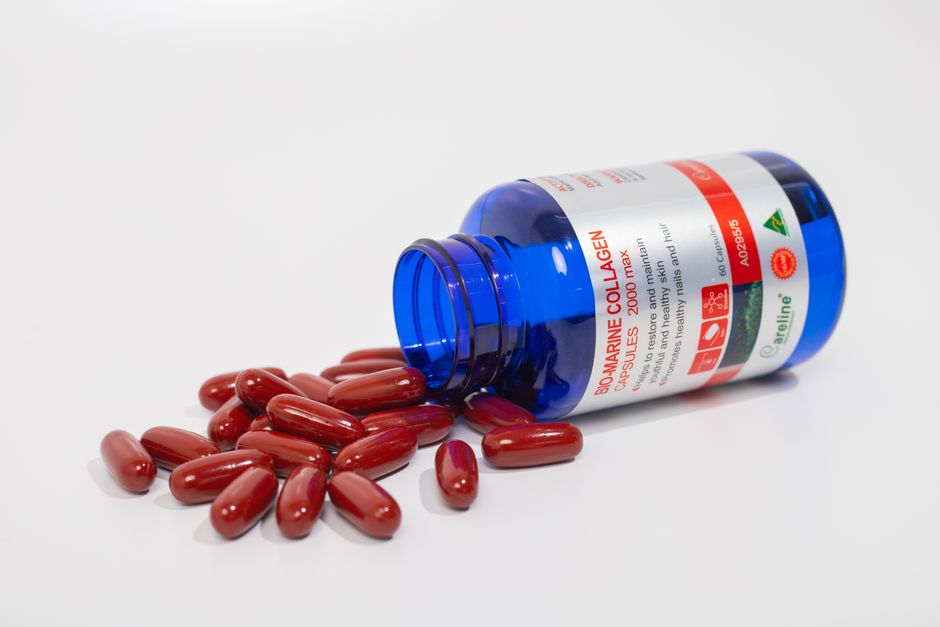
Collagen supplements do not lower testosterone. No human study has shown that collagen or its component amino acids reduce testosterone production in men. The claim appears to come from a misunderstanding of how amino acids affect a brain signal called GnRH, and that reasoning does not hold up when you look at what actually happens in the body.
Collagen is a protein. Like all proteins, it breaks down into amino acids during digestion. Some of those amino acids do interact with pathways that touch hormone signaling. But an interaction in a lab dish is not the same as a change in your blood testosterone level. Those are very different things, and the gap between them is where this myth lives.
Where Did The Idea That Collagen Lowers Testosterone Come From?
The claim traces back to a specific amino acid: glycine. Glycine is the most abundant amino acid in collagen, making up roughly a third of its structure. Glycine also acts as a neurotransmitter in the brain, and it can influence a signaling molecule called GnRH, which stands for gonadotropin-releasing hormone.
GnRH is the starting gun for testosterone production. The hypothalamus releases it, the pituitary responds by sending luteinizing hormone to the testes, and the testes make testosterone. So anything that suppresses GnRH could, in theory, suppress testosterone. That chain of logic is real. The problem is what happens next.
Glycine’s effect on GnRH has been studied mainly in isolated cells and animal models, not in men taking collagen supplements. Even in those settings, the effect is not a simple suppression. Glycine is an inhibitory neurotransmitter in some contexts and a co-agonist at NMDA receptors in others, which can push signaling in either direction depending on where and how it acts. There is no clean line from “glycine touches GnRH pathways” to “your testosterone drops.”
This is a common pattern in nutrition science. A mechanism gets identified in a petri dish, and it gets repeated online as if it were a proven outcome in people. Biological plausibility is not the same as demonstrated effect. That distinction matters here.
What Does Research Actually Show About Collagen And Testosterone?
No published human trial has found that collagen supplementation lowers testosterone. That is the straightforward answer, and it is worth stating plainly because the opposite claim circulates widely.
What the research on collagen does show is mostly about skin, joints, and connective tissue. Studies have looked at collagen peptides for skin elasticity, joint pain, and tendon health. Some of these show modest benefits, though the evidence varies by outcome and study quality. Testosterone has not been a primary endpoint in this body of work, which means we cannot point to large trials that measured it directly and found nothing. The honest position is that the question has not been well studied, and the studies that exist do not support a testosterone-lowering effect.
There is also a practical point about protein intake. Collagen is an incomplete protein. It lacks tryptophan, an essential amino acid, so it cannot serve as your only protein source. But eating collagen alongside other proteins does not create a hormonal problem. Your body handles mixed protein intake constantly.
One clarification worth making: the concern sometimes gets tangled up with a different claim about high-protein diets and testosterone. Some research has looked at very low-carbohydrate or extreme diets and hormonal changes, but that is a separate question from collagen specifically. Do not let the two get merged.
Does Glycine Really Affect Testosterone In Men?
Glycine is the amino acid most often blamed, so it deserves a direct look. Glycine is not a foreign substance. It is abundant in your own body and in foods like bone broth, gelatin, and many plant and animal proteins. Your body also makes it.
Some research has explored glycine’s role in sleep and in conditions like schizophrenia, where it acts on brain receptors. Sleep quality itself can influence testosterone, since most testosterone release happens during sleep. But that is a sleep effect, not a glycine-suppresses-testosterone effect. If anything, better sleep tends to support normal testosterone production.
There is no reliable human evidence that dietary or supplemental glycine at typical intake levels reduces testosterone. The studies that raised the alarm were not designed to answer that question in men. They examined cellular signaling, not circulating hormone levels in people taking a supplement.





What Actually Affects Testosterone Levels?
If you are worried about testosterone, the factors with real evidence behind them are worth more attention than collagen. Testosterone naturally declines with age, starting gradually in the 30s and continuing over time. That decline is normal and expected.
Other factors with clearer links to lower testosterone include:
- Obesity, which is strongly associated with lower testosterone levels
- Chronic sleep deprivation
- Severe or prolonged stress, which raises cortisol
- Certain medications, including some steroids and opioids
- Medical conditions affecting the testes, pituitary, or hypothalamus
- Excessive alcohol use
- Anabolic steroid use, which suppresses natural production
Notice what is not on that list. Collagen. Protein powders. Glycine. These are not established causes of low testosterone. The factors that matter most are the ones with decades of clinical research behind them.
If you have symptoms like persistent fatigue, low sex drive, or loss of muscle mass, those deserve a conversation with a doctor and possibly a blood test. Symptoms alone do not diagnose low testosterone, and neither does an internet article. A fasting morning testosterone measurement is the standard starting point, and results need to be interpreted by a clinician.
Should You Avoid Collagen If You Are Worried About Testosterone?
There is no evidence-based reason to avoid collagen out of concern for testosterone. That said, collagen supplements are not essential either. They are a source of protein and some amino acids, and the evidence for their benefits is strongest for skin and joints, not for hormones.
If you take collagen and feel fine, there is no documented hormonal reason to stop based on the testosterone myth. If you are taking it specifically hoping to raise testosterone, that is not what the evidence supports. Collagen is not a testosterone booster, and it is not a testosterone suppressant. It is a protein supplement with specific, limited uses.
One reasonable caution: collagen is not a complete protein, so it should not replace your main protein sources. It also is not a substitute for addressing the factors above that genuinely influence testosterone.
How Do You Tell Hormone Myths From Real Risks?
A useful habit is to ask what kind of evidence sits behind a claim. Human trials measuring blood hormone levels carry far more weight than cell studies or animal models. When a claim rests only on a mechanism, treat it as a hypothesis, not a fact.
Another habit: check whether the source is selling something. Testosterone-boosting supplements and anti-collagen warnings both often come from people with a product to move. That does not automatically make them wrong, but it raises the bar for evidence.
The collagen and testosterone question is a good example of a mechanism being mistaken for an outcome. The pathway exists. The effect in people does not follow from it. That gap is where most nutrition myths are born.
Frequently Asked Questions
Does collagen lower testosterone in men?
No human study has shown that collagen lowers testosterone in men. The claim is based on lab and animal findings about glycine that do not translate into a proven effect on blood testosterone levels.
Is glycine bad for testosterone?
There is no reliable human evidence that glycine at typical dietary or supplemental levels reduces testosterone. Glycine is an amino acid your body makes and gets from many foods, not a hormone suppressant.
Can I take collagen while trying to raise my testosterone?
Yes, there is no documented hormonal reason to avoid collagen for that purpose. Collagen is not a testosterone booster, but it is also not an established cause of low testosterone.
What actually lowers testosterone?
Obesity, chronic sleep loss, severe stress, certain medications, excessive alcohol use, and anabolic steroid use are among the factors with clearer evidence. Normal aging also gradually lowers testosterone over time.
