
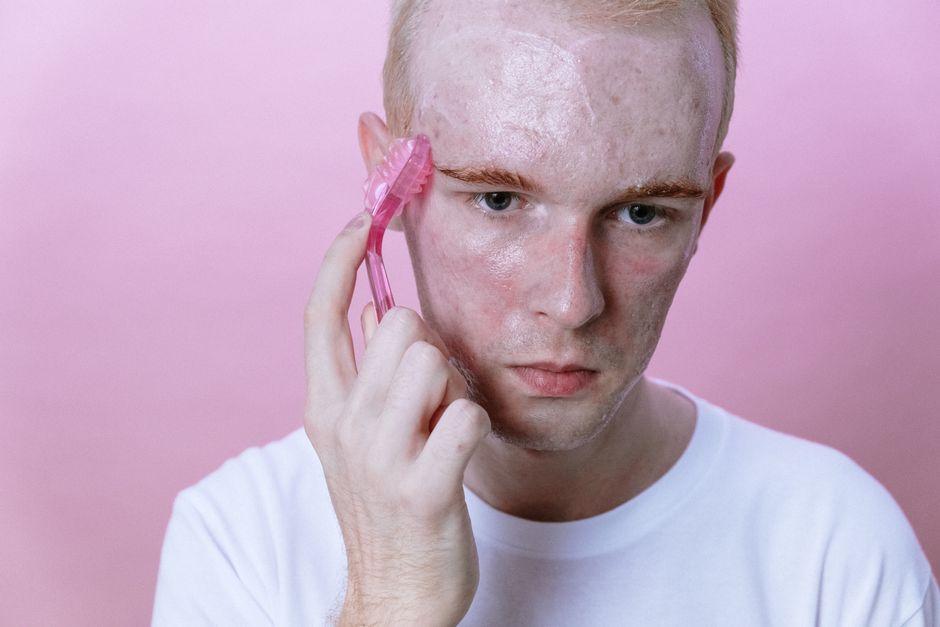
Coconut oil does not help acne. It is highly comedogenic, meaning it tends to clog pores, and it is more likely to worsen acne than clear it. The fatty acids in coconut oil can feed the bacteria involved in acne and trap oil and dead skin inside the pore. For most people with acne-prone skin, putting coconut oil on the face works against them.
That answer surprises people. Coconut oil has a reputation as a natural, gentle moisturizer. For dry skin on the body, it can be. For acne-prone facial skin, it usually is not. Here is what is actually going on.
Why Does Coconut Oil Clog Pores?
Pores clog when oil, dead skin cells, and debris build up inside a hair follicle and block its opening. What matters is how a substance behaves on skin, not whether it sounds natural.
Coconut oil is roughly half lauric acid, a fatty acid that gives it its texture and its behavior on skin. It also contains myristic and palmitic acids. These fatty acids make coconut oil thick and slow to absorb. It sits on the skin surface and inside the pore rather than sinking in and disappearing.
There is a standard way researchers test this. They apply a substance to the inner ear of a rabbit and watch for blocked follicles. On that scale, coconut oil scores high for comedogenicity. It is widely rated as one of the more pore-clogging plant oils. This is not a fringe claim. It is a consistent finding across the comedogenicity ratings that dermatologists use.
Some people with oily skin find that coconut oil feels heavy or greasy within minutes. That sensation is a fair signal. The oil is not absorbing. It is sitting there, and some of it is collecting in the pore.
Does Coconut Oil Help Acne or Make It Worse?
Coconut oil does not treat acne, and the evidence points toward it making acne worse for many people. There is no clinical trial showing coconut oil clears acne. None.
The mechanism is fairly clear. Acne involves four things working together: excess oil production, dead skin cells that shed abnormally and block the follicle, the bacterium Cutibacterium acnes, and inflammation. Coconut oil touches at least three of those.
- It adds oil to skin that is already producing too much.
- Its thickness can trap dead skin cells that would otherwise shed.
- Lauric acid can feed C. acnes in a lab setting. Some research suggests lauric acid has activity against the bacterium, but that work was done in test tubes, not on human skin. A lab result is not proof of a benefit on a face. The same fatty acid that shows antibacterial activity in a dish is also a food source for the bacteria living in a blocked pore.
This is where the marketing gets ahead of the science. A test-tube finding about lauric acid gets repeated as “coconut oil fights acne bacteria.” That leap has not been shown in people. Meanwhile, the pore-clogging property is well documented.
What About Coconut Oil Pulling or Eating It for Acne?
Oil pulling means swishing oil in your mouth. It has nothing to do with acne on your face. There is no evidence that oil pulling clears skin, and the practice does not address the follicle blockage that causes acne.
Eating coconut oil does not treat acne either. Diet can influence acne in some people, and the strongest dietary signal in the research relates to high-glycemic diets, not coconut oil specifically. No study shows that adding coconut oil to your food improves acne.
Coconut oil is high in saturated fat. The American Heart Association advises limiting saturated fat for heart health. That is a separate issue from your skin, but it matters if you are considering eating more of it for any reason.




Is Coconut Oil Ever Safe for Acne-Prone Skin?
Coconut oil is not dangerous, and some people with acne-prone skin use it without obvious problems. Skin varies. Someone with mild, occasional breakouts may tolerate a small amount on the body without issue.
The risk goes up for people with oily skin, active inflammatory acne, or a history of clogged pores. If you are prone to blackheads and whiteheads, a heavy oil on the face is a reasonable thing to avoid. The same applies to other high-oleic plant oils and to coconut-derived ingredients in cosmetics, which can appear on labels as cocos nucifera oil.
If you want to test your own tolerance, a common approach is to patch test a small area away from the face first and watch it for several days. That is sensible practice, not a guarantee. A patch test on your arm does not perfectly predict how your face will respond.
What Should You Use Instead for Acne?
Acne treatment rests on ingredients with real evidence behind them. These are the ones dermatologists reach for first.
- Benzoyl peroxide reduces C. acnes and helps with inflammation. It is available over the counter.
- Salicylic acid helps unclog pores by encouraging dead skin cells to shed. It is a common over-the-counter option for blackheads and whiteheads.
- Adapalene is a topical retinoid available without a prescription in the US. It helps prevent new clogged pores. Retinoids are a mainstay of acne treatment.
- Prescription options exist for moderate to severe acne, including stronger retinoids, topical antibiotics, and oral medications. A dermatologist can match treatment to your skin.
For moisturizing acne-prone skin, lighter options are generally better tolerated. Gel-based and oil-free moisturizers labeled non-comedogenic are designed for this. Non-comedogenic is not a guarantee, but it is a more useful starting point than a heavy oil.
One clarification worth knowing: “non-comedogenic” has no single enforced standard in the US. It is a claim, not a regulated certification. It still tends to reflect better-formulated products for acne-prone skin, but read it as a helpful signal rather than a promise.
Can Coconut Oil Be Used for Anything Skin-Related?
Coconut oil has legitimate uses, just not on acne-prone facial skin. It works well as a body moisturizer for dry skin, and many people use it on rough elbows, knees, and feet. It can soften dry hair.
For the face, the picture is different. Even people without acne can find coconut oil too heavy and prone to causing breakouts. If your skin is dry and not acne-prone, a small amount may be fine. If you have acne, the oil is working against you.
The takeaway is simple. Coconut oil is a good moisturizer for some parts of the body and a poor choice for acne-prone skin. It clogs pores, it does not treat acne, and the antibacterial claims come from lab studies, not from evidence in people.
Frequently Asked Questions
Does coconut oil clog pores?
Yes, coconut oil is highly comedogenic and tends to clog pores. Its fatty acids make it thick and slow to absorb, so it can collect inside the follicle.
Can I use coconut oil on my face if I have acne?
It is not a good choice for acne-prone facial skin because it can worsen breakouts. If you have active acne, ingredients like benzoyl peroxide, salicylic acid, or adapalene have actual evidence behind them.
Is coconut oil good for acne scars?
No, there is no evidence that coconut oil fades acne scars. It also does not treat the acne that causes scarring, and a dermatologist can advise on options with better support.
Does coconut oil kill acne bacteria?
Some lab research suggests lauric acid in coconut oil has activity against acne bacteria, but this has not been shown to clear acne on human skin. The pore-clogging effect is better documented.
