
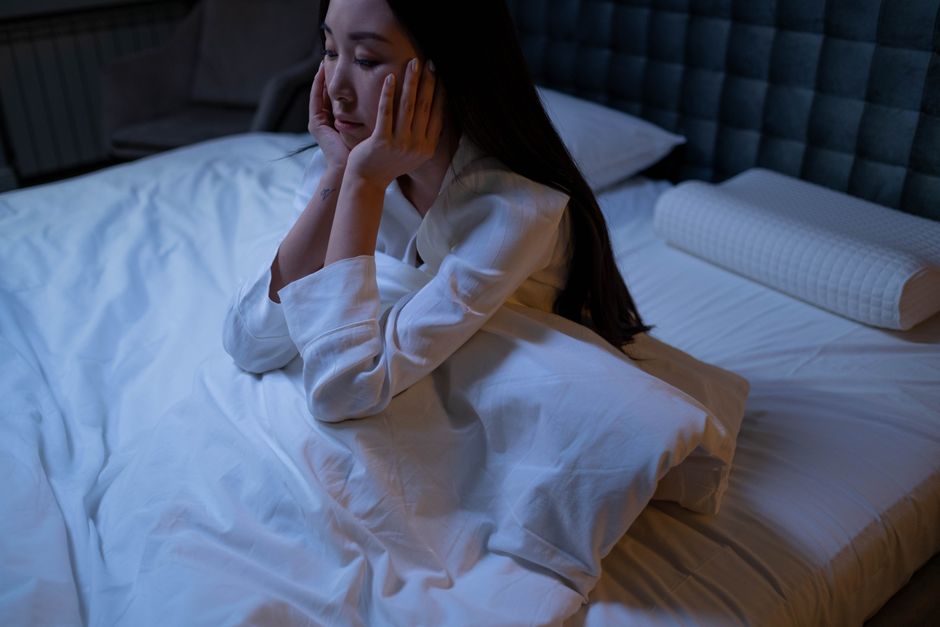
Anxiety and sleep have a two-way relationship that most people feel before they can explain it. Anxiety does affect sleep — it can make it harder to fall asleep, cause you to wake during the night, and reduce the amount of deep, restorative sleep you get. The effect is not just in your head; it shows up in measurable changes to how your body moves through the stages of sleep.
How Does Anxiety Affect Sleep?
Anxiety keeps the body’s stress response switched on when it should be winding down. The nervous system releases hormones like cortisol and adrenaline, heart rate stays elevated, and the brain remains in a state of alertness. Sleep needs the opposite: a shift toward the parasympathetic “rest and digest” branch of the nervous system.
When that shift does not happen, sleep changes in specific ways. People with anxiety tend to take longer to fall asleep, spend more time in lighter stages of sleep, and wake more often. Rapid eye movement (REM) sleep — the stage linked to emotional processing — can become fragmented. That matters because REM sleep appears to help the brain work through emotional experiences. Disrupt it, and anxiety can feel worse the next day, which makes the next night harder. This is part of why the relationship runs in both directions.
The pattern is well documented in sleep research. Anxiety is one of the most common reasons people report insomnia symptoms, and the two conditions frequently appear together. Having one raises the likelihood of having the other.
Why Does Anxiety Get Worse at Night?
Night removes the distractions that keep anxious thoughts at a distance during the day. With no emails, conversations, or tasks to occupy your attention, the mind turns inward. Worries that felt manageable at noon can feel larger in a quiet, dark room.
There is also a biological layer. The body follows a daily rhythm called the circadian cycle, and part of that rhythm involves a rise in cortisol in the early morning to help you wake. For some people with anxiety, this system is less stable, and stress hormones do not follow the usual curve. The result can be a jolt of alertness at exactly the wrong time.
Anticipating a bad night makes things worse. If you have struggled to sleep for several nights, you may start dreading bedtime. That dread is itself a form of anxiety, and it triggers the same alerting response that keeps you awake. Sleep specialists call this conditioned arousal, and it is one of the most stubborn patterns in chronic insomnia.
What Are the Signs Anxiety Is Affecting Your Sleep?
The signs are usually easy to recognize once you know what to look for. They tend to cluster around how you fall asleep, how you stay asleep, and how you feel the next day.
- Trouble falling asleep even when you feel tired
- Waking up during the night and struggling to fall back asleep
- Racing thoughts or a mental “to-do list” at bedtime
- Waking earlier than you intended and not being able to return to sleep
- Feeling unrested despite spending enough hours in bed
- Physical symptoms at night such as a racing heart, tight chest, or tense muscles
- Daytime fatigue, irritability, or trouble concentrating
One sign people often miss is sleeping enough hours but still feeling exhausted. Time in bed is not the same as time asleep, and it is certainly not the same as time in deep sleep. If your sleep is fragmented, the total hours can look fine on paper while your body still feels deprived.





Is It Insomnia or Anxiety — or Both?
This is one of the most common points of confusion, and it is worth clearing up. Insomnia and anxiety are separate conditions, but they overlap heavily and often feed each other.
Insomnia is defined by difficulty falling asleep, staying asleep, or waking too early, along with daytime problems, occurring despite adequate opportunity to sleep. Anxiety is defined by excessive worry or fear that is hard to control. You can have either one on its own. Many people have both.
What makes the overlap tricky is that the treatment focus can differ. If anxiety is the main driver, addressing the anxiety often improves sleep. If insomnia has become its own entrenched pattern — where the bed itself triggers alertness — then sleep-focused treatment may be needed even after anxiety is better managed. A clinician can help sort out which is driving which in your case.
What Actually Helps?
The most strongly supported approach for chronic insomnia is a structured behavioral program called cognitive behavioral therapy for insomnia, or CBT-I. It is not the same as general talk therapy. CBT-I targets the specific thoughts and behaviors that keep insomnia going, including the bedtime dread described earlier. It is considered a first-line treatment for chronic insomnia in clinical guidelines, and it addresses anxious sleep patterns directly.
For anxiety itself, treatment options include psychotherapy, medication, or a combination, depending on severity and personal history. These decisions are best made with a doctor or mental health professional, because what works well for one person may not fit another.
General sleep habits support both conditions, though they work better as a foundation than as a standalone fix:
- Keep a consistent wake time, even after a poor night
- Get out of bed if you are awake and frustrated for a long stretch, and return when sleepy
- Limit caffeine in the afternoon and evening
- Keep the bedroom cool, dark, and quiet
- Give yourself a wind-down period without screens or stressful tasks
One clarification worth making: sleep aids and alcohol may feel like they help, but both can fragment sleep architecture and make the underlying problem worse over time. That does not mean they are never appropriate — it means they are not a solution to an anxiety-driven sleep problem.
When Should You Talk to a Professional?
Talk to a doctor or mental health professional if sleep problems last more than a few weeks, if they are affecting your work or relationships, or if you are relying on alcohol or sleep medication to get through the night. Those are reasonable thresholds, not signs of weakness.
Seek help promptly if you have thoughts of harming yourself or others. In the US, you can call or text 988 to reach the Suicide and Crisis Lifeline at any time.
You do not need to wait until things are severe. Anxiety and insomnia are both treatable, and the earlier they are addressed, the easier they usually are to turn around. Many people assume poor sleep is just something to live with. It is not.
Frequently Asked Questions
Can anxiety cause insomnia?
Yes. Anxiety is one of the most common reasons people develop insomnia symptoms, and the two conditions frequently occur together. Anxiety can delay sleep onset, cause night waking, and reduce sleep quality.
Why do I wake up at 3am with anxiety?
Waking in the early hours is common with anxiety because stress hormones and a racing mind can pull you out of sleep. If you cannot fall back asleep, getting out of bed until you feel sleepy often works better than lying there.
Does anxiety affect sleep even when I feel calm at bedtime?
Yes. Even without obvious worry at bedtime, an overactive stress response can keep the nervous system alert and disrupt sleep stages. The effect is physiological, not just mental.
Can fixing my sleep reduce my anxiety?
Improving sleep often reduces daytime anxiety, since poor sleep worsens mood and emotional regulation. However, if anxiety is the primary driver, it usually needs to be addressed directly as well.
