
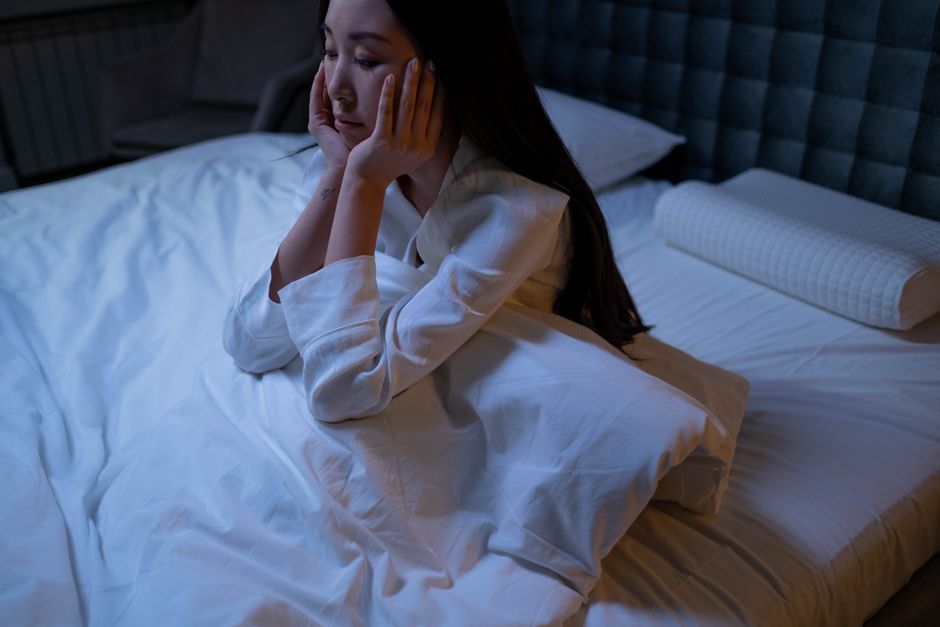
Anxiety and sleep are closely connected. When anxiety spikes, sleep often suffers. When sleep is poor, anxiety tends to get worse. Breaking that cycle requires practical steps that target your nervous system, not just your bedtime routine. The most effective approach combines calming your body, quieting your mind, and building habits that make falling asleep easier over time.
Why Does Anxiety Get Worse At Night?
At night, distractions disappear. Your mind has nothing else to focus on, so it turns inward. Worries that seemed manageable during the day can feel overwhelming in a quiet, dark room.
There is also a biological reason. Your brain has a built-in alarm system called the amygdala. It detects threats and prepares your body to respond. When anxiety is high, this alarm system stays active even when you are safe in bed. Your heart rate may rise. Your muscles may tense. Your breathing may become shallow. These are physical signs that your body is still in “alert mode” rather than rest mode.
Sleep requires the opposite state. Your nervous system needs to shift from the sympathetic branch, which handles stress, to the parasympathetic branch, which handles rest and digestion. This shift does not happen automatically. It responds to signals from your behavior and environment.
What Actually Helps You Fall Asleep With Anxiety?
Several methods have solid evidence behind them. They do not require special equipment or prescriptions. They work because they address the physical and mental components of anxiety that interfere with sleep.
Controlled breathing is one of the most effective tools. Slow, extended exhales activate the parasympathetic nervous system. A common technique is the 4-7-8 pattern: inhale through your nose for 4 seconds, hold for 7 seconds, exhale slowly through your mouth for 8 seconds. Repeating this for several cycles signals your body that it is safe to relax.
Progressive muscle relaxation also helps. This involves tensing and then releasing each muscle group in your body, starting at your toes and moving upward. The physical release of tension sends feedback to your brain that reduces overall arousal. Studies have found this technique improves sleep quality in people with insomnia.
Stimulus control is a behavioral method with strong research support. The core idea is simple: your bed should be for sleep and intimacy only. If you are lying awake for more than 20 minutes, get up. Go to another room, do something quiet in dim light, and return to bed only when you feel sleepy. This trains your brain to associate your bed with sleep rather than with worry.
How To Quiet A Racing Mind At Bedtime
A racing mind is the mental side of nighttime anxiety. Physical relaxation helps, but many people need a cognitive strategy as well.
Brain dumping is a practical technique. Before bed, write down everything on your mind. Tasks, worries, reminders, concerns. Putting them on paper externalizes them. Your brain no longer needs to hold onto them, which reduces the pressure to keep thinking about them.
Worry time is another evidence-based approach. Schedule a specific 15-minute window earlier in the day, ideally not close to bedtime, to think about your worries. When a worry appears at night, remind yourself that you have a designated time for it tomorrow. This containment strategy helps break the habit of nighttime rumination.
Cognitive reframing involves changing how you interpret being awake. Many people with anxiety panic when they cannot sleep. They think “I will be exhausted tomorrow” or “Something is wrong with me.” This panic fuels more wakefulness. A more helpful thought is “Resting quietly is still restful. I will be okay even if I do not fall asleep right away.” This shift reduces the pressure that keeps you awake.





What Is The Best Position And Environment For Sleep?
Your environment sends signals to your brain about whether it is safe to sleep. Getting these basics right can make a meaningful difference.
Temperature matters. Your body needs to cool down slightly to fall asleep. A cooler room, around 65 degrees Fahrenheit, supports this natural process. If your room is too warm, your body struggles to reach the temperature drop that initiates sleep.
Darkness is also important. Light suppresses melatonin, the hormone that regulates your sleep-wake cycle. Blackout curtains, an eye mask, or simply turning away from electronic screens can help. Screens emit blue light that is particularly effective at delaying melatonin release. Try to stop using phones, tablets, and computers at least 30 minutes before bed.
Sound can either help or hurt. Some people sleep better with white noise or a fan because it masks sudden noises that might startle them awake. Others prefer complete silence. There is no right answer. Pay attention to what works for you.
As for position, there is no single best position for everyone. Side sleeping is common and generally comfortable. People with acid reflux often sleep better on their left side. People with sleep apnea typically do worse on their back. The best position is the one where you feel physically comfortable and can maintain good breathing.
Should You Use Supplements Or Medication?
This is where caution is needed. The supplement market is full of products claiming to cure insomnia. The evidence does not support most of these claims.
Melatonin is the most studied sleep supplement. It is a hormone your brain naturally produces as darkness falls. Supplementing with it can help shift your sleep schedule or ease jet lag. Some research suggests it may help people fall asleep slightly faster. However, it is not a strong sedative. If your anxiety is severe, melatonin alone is unlikely to solve the problem. Doses commonly used in studies range from 0.5 to 5 milligrams, but there is no universal recommendation. Start low and talk to your doctor.
Magnesium is often marketed for sleep. Some studies suggest magnesium may improve sleep quality, particularly in people who are deficient. The evidence is not strong enough to call it a reliable treatment for anxiety-related insomnia. If you try it, choose a form like magnesium glycinate, which is well absorbed. Avoid exceeding the recommended daily allowance unless your doctor advises otherwise.
Herbal supplements like valerian root and chamomile have a long history of traditional use. Some small studies show modest benefits. Others show no effect. The evidence is mixed. These products are not regulated by the FDA the way medications are, so quality and potency vary widely between brands.
Prescription sleep medications exist, but they come with trade-offs. Many work by calming the central nervous system. They can be effective in the short term. However, they carry risks of dependence, daytime drowsiness, and rebound insomnia when stopped. They do not treat the underlying anxiety. They only mask the symptom.
If your anxiety is severe or persistent, talking to a doctor or mental health professional is the most reliable path. Cognitive behavioral therapy for insomnia, known as CBT-I, has strong evidence behind it and addresses the root causes of poor sleep. It is considered the first-line treatment for chronic insomnia by many experts.
How Long Does It Take To See Improvement?
This varies widely between individuals. Some people notice a difference within a few nights of changing their routine. Others need several weeks of consistent effort.
Behavioral techniques like stimulus control and worry time require repetition. Your brain learns new associations gradually. A single night of good sleep does not mean the problem is solved. A single night of poor sleep does not mean your efforts are failing.
If you have been struggling for more than three months, you may have chronic insomnia. In that case, professional support is worth seeking. CBT-I typically involves several sessions over a period of weeks. Many people see meaningful improvement by the end of treatment.
What If You Wake Up In The Middle Of The Night?
Waking up at night is normal. Everyone does it. The problem is when you cannot fall back asleep and anxiety takes over.
The same rules apply as at bedtime. If you are awake for more than 20 minutes, get out of bed. Do not lie there watching the clock. Go to another room, read something boring under a dim light, or do a quiet activity. Avoid checking your phone. The light and information will stimulate your brain further.
Breathing exercises work here too. A few minutes of slow, extended exhales can lower your heart rate and make falling back asleep easier. Keep the lights low and the environment calm.
One common mistake is trying to force sleep. Sleep does not respond to effort. It responds to relaxation. The more you try to control it, the more elusive it becomes. Shifting your goal from “I must sleep” to “I will rest quietly” often produces better results.
Frequently Asked Questions
Can anxiety keep you awake even when you are exhausted?
Yes. Anxiety activates your body’s stress response, which keeps your nervous system alert even when you are physically tired.
This is why relaxation techniques that lower your heart rate and breathing can be more helpful than simply trying harder to fall asleep.
Is it better to get out of bed when you cannot sleep?
Yes, if you have been awake for more than 20 minutes, getting up is recommended.
Staying in bed while awake trains your brain to associate your bed with wakefulness, which makes future insomnia more likely.
Does melatonin actually work for anxiety-related insomnia?
Melatonin can help you fall asleep slightly faster, but it does not treat anxiety itself.
It is most useful for adjusting your sleep schedule, and it works best in combination with good sleep habits rather than on its own.
How long should you try sleep techniques before seeing a doctor?
If consistent effort over several weeks does not improve your sleep, or if your anxiety feels overwhelming, seek professional help.
Chronic insomnia lasting more than three months usually responds well to cognitive behavioral therapy, which is more effective long-term than sleep medications.
