
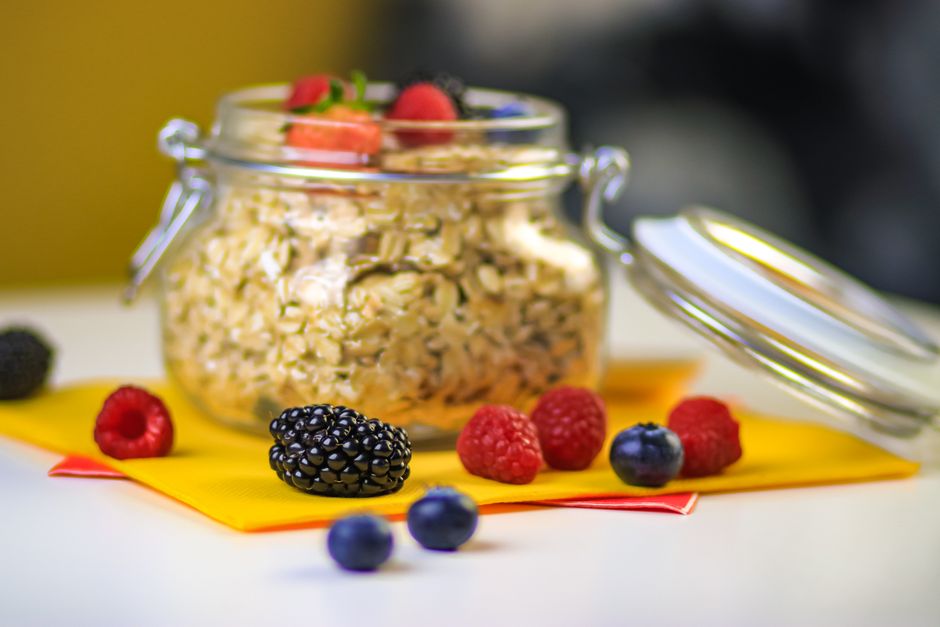
Oats do raise blood sugar, but usually more slowly and gently than many other breakfast grains. The reason comes down to fiber, processing, and how the body digests starch. How much your own blood sugar rises depends heavily on the type of oats you eat, what you eat with them, and your individual metabolism.
Do Oats Spike Blood Sugar?
Oats contain carbohydrate, and all carbohydrate raises blood sugar to some degree. What makes oats different from many refined grains is their fiber content, especially a soluble fiber called beta-glucan.
Beta-glucan forms a thick gel in the digestive tract. This gel slows the emptying of the stomach and the absorption of glucose into the bloodstream. The result is a slower, flatter rise in blood sugar rather than a sharp spike.
That said, “oats” is not one food. Steel-cut oats, rolled oats, and instant oats all come from the same grain but behave very differently in the body. The more processed the oat, the faster it tends to raise blood sugar.
Research consistently shows that less processed oats produce a lower blood sugar response than highly processed ones. This is one of the more reliable findings in nutrition science.
Why Does Oat Processing Matter So Much?
The structure of the grain is the main factor. Steel-cut oats are chopped whole groats. Rolled oats are steamed and flattened. Instant oats are cooked, dried, and often ground finer still.
Each step breaks down the grain’s physical structure. When that structure is broken, digestive enzymes get faster access to the starch inside. Starch converts to glucose more quickly, and blood sugar rises faster.
Think of it like a log versus sawdust. Both are wood. But sawdust catches fire almost instantly because there is so much more surface area exposed. Finely processed oats behave a bit like that in the gut.
This is why a bowl of instant oatmeal can push blood sugar up noticeably faster than the same amount of steel-cut oats, even though both are “oats.”
How Do Different Types of Oats Compare?
The table below ranks common oat forms by how quickly they tend to raise blood sugar. Lower processing generally means a slower rise.
| Type of Oats | Processing Level | Typical Blood Sugar Impact |
|---|---|---|
| Steel-cut oats | Minimal | Slowest rise |
| Rolled (old-fashioned) oats | Moderate | Moderate rise |
| Quick oats | Higher | Faster rise |
| Instant oats | Highest | Fastest rise |
One clarification worth making: rolled oats and old-fashioned oats are the same thing. The label just varies by brand. Quick oats are cut finer and cook faster, which is why they tend to raise blood sugar more.
Flavored instant packets often add sugar, which pushes the blood sugar response higher still. Plain instant oats without added sugar are a different story from the sweetened flavored kind.




Does the Glycemic Index of Oats Tell the Whole Story?
The glycemic index (GI) is a scale that ranks foods by how quickly they raise blood sugar compared with a reference food. Lower numbers mean a slower rise.
Oats generally fall in the low-to-moderate range on this scale, but the exact number varies widely by type and preparation. Steel-cut oats tend to score lower than instant oats. This is a consistent pattern across studies.
Here is where it gets interesting. The GI is measured on a fixed amount of carbohydrate eaten alone. Most people do not eat oats alone. They eat them with milk, yogurt, nuts, seeds, or fruit. Those additions change the real-world blood sugar response, often for the better.
So the GI is a useful starting point, but it does not predict exactly what will happen in your body at breakfast.
What Can You Add to Oats to Slow the Blood Sugar Rise?
Pairing oats with protein, fat, and additional fiber tends to blunt the blood sugar response. This is well established. These nutrients slow digestion and smooth out the release of glucose.
Practical additions include:
- Nuts or nut butter
- Seeds such as chia, flax, or pumpkin
- Plain Greek yogurt or cottage cheese
- Eggs on the side
- Berries, which add fiber with less sugar than many other fruits
The order you eat food in may also matter. Some research suggests that eating protein and vegetables before starchy foods can reduce the blood sugar rise from the starch. The effect appears modest, and results vary between studies.
Portion size matters too. A large bowl of oats will raise blood sugar more than a small one, regardless of what you add. Carbohydrate load is still carbohydrate load.
Are Oats a Good Choice for People With Diabetes?
Oats can fit well into a diabetes eating plan, but the type and portion matter. Less processed oats, eaten with protein and fat, tend to produce a gentler response than instant or sweetened oats.
This does not mean oats are a free food. They still contain carbohydrate, and they still affect blood sugar. People who manage diabetes with insulin or certain medications need to account for that carbohydrate.
Blood sugar responses to the same food vary a lot between individuals. Two people can eat identical bowls of oatmeal and see different results. Checking your own blood sugar before and after eating, if you have a meter or monitor, gives you more useful information than any general ranking.
Anyone adjusting their diet for diabetes should work with their care team rather than relying on general guidance alone.
Do Oats Have Health Benefits Beyond Blood Sugar?
Oats are a source of beta-glucan, a soluble fiber with documented effects on cholesterol. Research published in the American Journal of Clinical Nutrition and similar journals has found that regular oat intake can modestly lower LDL cholesterol. This is one of the better-supported claims about oats.
Oats also provide B vitamins, iron, magnesium, and other minerals. They are a whole grain, and whole grains are consistently linked with better long-term health outcomes in large population studies.
What oats are not is a treatment for any disease. They are a nutritious food that can be part of a balanced diet. Marketing that frames oats as a cure or a way to “reverse” a condition is not supported by evidence.
What About Oat Milk and Oat-Based Products?
Oat milk is not the same as eating oats. Most oat milk is highly processed, and the starch has often been broken down into simpler sugars during manufacturing. This means it can raise blood sugar faster than whole oats.
Many commercial oat milks also contain added oils and sugars. Reading the label matters here. Unsweetened varieties tend to be a better choice than sweetened ones, though they still contain carbohydrate.
Oat-based cereals, granola bars, and flavored oat products are similar. They often contain far more sugar than plain oats, and the processing changes how the body handles them. The health halo around “oats” does not automatically transfer to every product with oats in the name.
How Should You Choose and Prepare Oats?
The general principle is simple: the less processed, the better for blood sugar control. Steel-cut oats sit at one end of the spectrum. Sweetened instant packets sit at the other.
Cooking method matters less than the type of oat, but overcooking softens the grain further and can speed digestion. Cooking steel-cut oats to a firm texture rather than a mush keeps more of the structure intact.
If you want the convenience of instant oats, plain unsweetened versions are a reasonable middle ground. Add your own protein and fat rather than relying on a flavored packet.
For most people without diabetes, the exact blood sugar response to oats is not something to worry about. For people managing blood sugar, the type, portion, and pairings are the levers that matter most.
Frequently Asked Questions
Do oats spike blood sugar more than other breakfast foods?
Usually less than refined cereals, white toast, or sweetened instant oatmeal, because oat fiber slows glucose absorption. Plain steel-cut or rolled oats tend to produce a gentler rise than most processed breakfast grains.
Which oats are best for blood sugar?
Steel-cut oats generally produce the slowest rise because they are the least processed. Rolled oats are a reasonable middle option, while instant and flavored oats tend to raise blood sugar fastest.
Can diabetics eat oatmeal?
Yes, many people with diabetes can include oats in their eating plan, especially less processed types eaten with protein and fat. Portions and individual blood sugar responses vary, so working with a care team is important.
Does adding milk or nuts to oats lower the blood sugar spike?
Adding protein and fat, such as nuts, seeds, or plain yogurt, tends to slow digestion and blunt the rise. This effect is well established, though the exact size of the benefit varies between people.
