
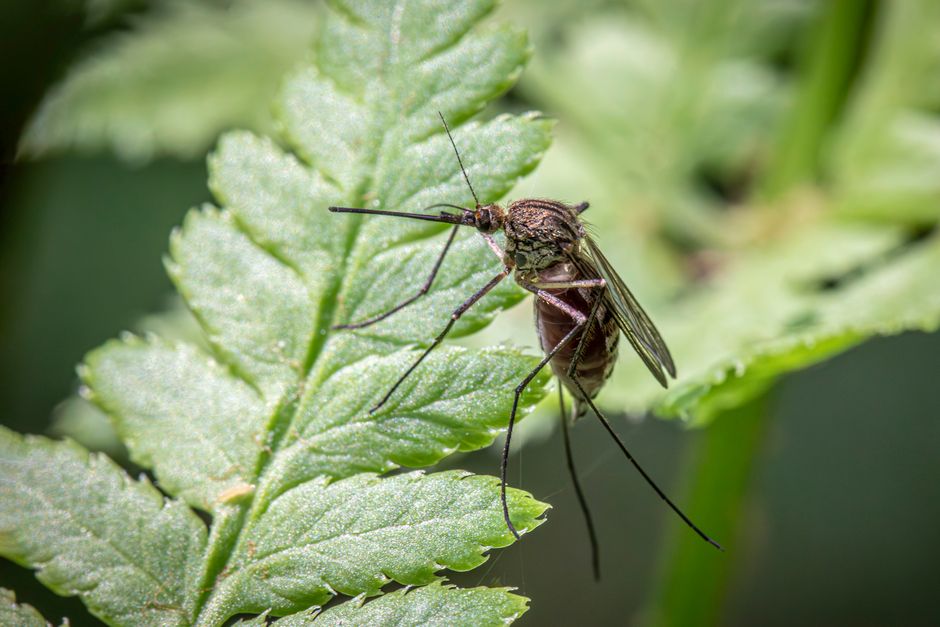
Most people assume that any mosquito buzzing around is looking for blood. That assumption is wrong for about half of the mosquito population. Only female mosquitoes bite. Male mosquitoes do not bite humans or animals at all. They lack the mouthparts needed to pierce skin, and their biology is built for a completely different diet.
Do Male Mosquitoes Bite? What Research Says
Research is clear on this point: male mosquitoes do not bite. The scientific consensus holds that male mosquitoes physically cannot bite because they lack the necessary anatomy. Female mosquitoes have a proboscis designed for cutting skin and drawing blood. Male mosquitoes have a proboscis too, but it is not built for piercing.
This difference is not a behavioral choice. It is a structural one. The mouthparts of a male mosquito are too soft and too short to break through human skin. Even if a male mosquito wanted to bite, its anatomy would not allow it.
Why Do Female Mosquitoes Need Blood?
Female mosquitoes need blood for one specific reason: egg production. Blood provides proteins and iron that are essential for developing eggs. A female mosquito that cannot find a blood meal may still lay eggs, but the number and quality of those eggs are significantly reduced.
Male mosquitoes have no role in egg production. Their only biological job is reproduction. They mate with females, and their nutritional needs are met entirely through plant sugars.
What Do Male Mosquitoes Eat Instead?
Male mosquitoes feed on nectar and other plant sugars. They use their proboscis to drink from flowers, much like a butterfly or a bee. This sugar source provides them with the energy they need to fly, mate, and survive.
Both male and female mosquitoes actually rely on plant sugars as their primary energy source. Females use sugar for daily energy needs and reserve blood meals specifically for egg development. Males never need blood at any point in their lives.
Because male mosquitoes feed on nectar, they can play a minor role in plant pollination. This is not their main ecological function, but it is a natural part of their feeding behavior.





How Can You Tell Male and Female Mosquitoes Apart?
You cannot reliably tell the difference by size alone. Female mosquitoes are often larger, but size varies by species and by how recently the female fed. The most reliable difference is in the antennae.
Male mosquitoes have feathery antennae that look bushy or plume-like. These antennae are covered in receptors that detect the sound of female wings beating. Female mosquitoes have smoother, less bushy antennae with fewer hairs.
Another difference is in the mouthparts. Female mosquitoes have a long, thin proboscis that is clearly visible. Male mosquitoes have a proboscis that looks similar at a glance, but it is not capable of piercing skin.
In practical terms, if a mosquito is biting you, it is a female. If a mosquito is hovering near flowers or resting on vegetation, it could be either sex, but it is more likely to be a male if it shows no interest in approaching you.
Why Do Mosquitoes Bite Some People More Than Others?
While male mosquitoes never bite, female mosquitoes show clear preferences between people. Research has identified several factors that make some people more attractive to biting females.
Body heat plays a role. Female mosquitoes detect warmth and are drawn to people who run slightly warmer. Carbon dioxide is another major attractant. People who exhale more carbon dioxide, such as larger individuals or pregnant women, tend to attract more mosquitoes.
Skin chemicals also matter. Mosquitoes are sensitive to certain compounds in human sweat and skin bacteria. Lactic acid, uric acid, and ammonia are all known attractants. The specific mix of bacteria on your skin influences how attractive you are to mosquitoes. Some research suggests that people with more diverse skin bacteria are less attractive to mosquitoes.
Blood type may play a minor role as well. Some studies indicate that people with Type O blood are more attractive to mosquitoes than people with Type A blood. The evidence for this is not as strong as the evidence for heat and carbon dioxide, but it has been observed in multiple studies.
Alcohol consumption has also been linked to increased mosquito attraction. One small study found that people who drank beer attracted more mosquitoes than people who did not. The reason for this is not fully understood.
Do Male Mosquitoes Serve Any Purpose?
Male mosquitoes are not useless, even though they do not bite. Their primary purpose is reproduction. A female mosquito must mate before she can lay fertile eggs. Without males, mosquito populations would collapse.
Males also contribute to the ecosystem through their feeding habits. When they drink nectar, they can transfer pollen between flowers. Their role as pollinators is not as significant as bees or butterflies, but it is a real ecological function.
Male mosquitoes are also a food source for other animals. Bats, birds, spiders, and dragonflies all eat mosquitoes at various life stages. Larvae and pupae are consumed in water, while adults are eaten in the air.
From a human perspective, male mosquitoes are harmless. They do not transmit diseases, they do not cause itchy welts, and they do not disturb sleep with biting. The mosquitoes that bother you are always female.
Do Mosquito Repellents Work on Male Mosquitoes?
This question rarely comes up because male mosquitoes are not the problem. Repellents are designed to deter female mosquitoes from biting. Since males do not bite, repellents are not needed against them.
That said, some repellents may still deter males from landing on you. Ingredients like DEET and picaridin work by confusing the mosquito’s ability to detect human scent. A male mosquito might be deterred by these chemicals, but it was never going to bite you anyway.
The practical takeaway is simple: if you are being bitten, you are dealing with females. Focus your repellent efforts on preventing those bites. Male mosquitoes are not a threat to your comfort or your health.
Frequently Asked Questions
Can male mosquitoes bite through clothing?
No. Male mosquitoes cannot bite through clothing or bare skin because they lack the mouthparts needed to pierce any surface. Only female mosquitoes can bite, and even they struggle with thick fabrics.
Why do male mosquitoes fly near my face?
Male mosquitoes are drawn to carbon dioxide, which you exhale with every breath. They are also attracted to the sound of female wings, so hovering near your head is often a search for a mate, not a search for blood.
Are male mosquitoes dangerous?
No. Male mosquitoes pose no threat to humans. They do not bite, they do not feed on blood, and they cannot transmit any blood-borne diseases. Only female mosquitoes are capable of spreading illnesses like malaria, dengue, and West Nile virus.
Do male mosquitoes live as long as females?
No. Male mosquitoes live only about one to two weeks in the wild. Females can live several weeks, and some species can survive for months under the right conditions, especially when they enter a dormant state for winter.
